SPECIAL TREASURE: THE TRUTH REVEALED — THE TEMPLAR KNIGHT’S NOTEBOOK FOUND AT A DEPTH OF 97 FEET

A remarkable new development has emerged from the ongoing Oak Island excavation narrative, centered on the reported discovery of what is being described as a “Templar Knight’s notebook” recovered at a depth of 97 feet. While such a claim immediately raises questions of verification and context, its implications—if even partially accurate—would represent one of the most significant interpretive shifts in the history of the Oak Island investigation.
From an analytical perspective, this discovery introduces a new layer of complexity to an already multi-century mystery, potentially linking deep subsurface structures to medieval European historical frameworks.
A 97-FOOT DEPTH FIND THAT CHANGES THE CONTEXT
Depth is one of the most critical variables in Oak Island analysis. At approximately 97 feet below surface level, investigators are operating within a geological and archaeological zone that typically indicates either deliberate human excavation or long-term natural sediment compression over centuries.
If an artifact described as a “notebook” were indeed recovered at this depth, it would immediately suggest intentional placement within a structured environment rather than random deposition. In Oak Island research terms, this would place the object within the same interpretive category as engineered shafts, sealed deposits, and deliberately constructed containment systems.
Such depth also aligns with previous theories regarding layered construction phases on the island, where multiple generations of activity may have built upon or concealed earlier structures.
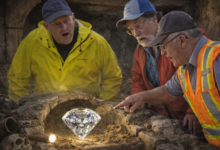
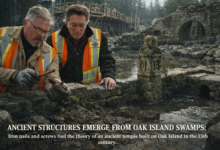
THE TEMPLAR CONNECTION: HISTORY MEETS HYPOTHESIS
The association of the artifact with the Knights Templar adds a highly controversial but frequently discussed dimension to the Oak Island narrative. The Templar theory has long been one of the central speculative frameworks used to interpret unusual structural and artifact anomalies discovered on the island.
In this context, a “notebook” would be interpreted not simply as a written record, but as potential documentation of logistics, navigation, or ritual practices associated with medieval European organizations.
However, from an analytical standpoint, it is important to emphasize that no confirmed historical chain directly links Oak Island to verified Templar activity. Instead, the theory persists because it provides a structured explanation for complex patterns of underground engineering, symbolic placement of artifacts, and repeated evidence of intentional concealment.

STRUCTURAL IMPLICATIONS OF A DEEP-LEVEL DEPOSIT
If we analyze the reported find strictly from a structural geology and archaeology perspective, the key question is not the identity of the artifact, but its context of deposition.
A controlled placement at 97 feet would imply:
- Pre-excavated vertical access infrastructure
- Stabilized shaft engineering capable of long-term integrity
- Intentional sealing or burial strategy
- Possible multi-layered construction phases
These conditions are consistent with previous interpretations of Oak Island’s deeper features, where repeated evidence suggests the presence of engineered vertical systems rather than naturally formed sinkholes or erosion channels.
In that sense, the “notebook” becomes less important as a literary object and more significant as a marker of human intention at extreme depth.
ANALYTICAL CHALLENGES AND VERIFICATION GAPS
Despite the excitement surrounding such a discovery, several critical analytical challenges must be addressed before any conclusions can be drawn.
First, material authentication is essential. Organic or paper-based artifacts rarely survive intact at significant depth without exceptional preservation conditions. Second, stratigraphic integrity must be confirmed to ensure the object was not displaced from a higher layer through collapse, flooding, or later excavation disturbances.
Third, contextual association with surrounding artifacts is crucial. Without corroborating items in the same stratigraphic layer, the interpretation remains speculative.
From an investigative standpoint, these gaps highlight the difference between narrative interpretation and verified archaeological evidence.
WHY THE TEMPLAR THEORY RESURFACES AGAIN
The reason Templar-based interpretations continue to resurface in Oak Island analysis is not due to confirmed evidence, but due to structural pattern recognition.
Researchers often point to recurring themes:
- Deep vertical shafts
- Sealed compartments
- Layered stone and timber constructions
- Metallic artifacts inconsistent with later colonial tools
These elements, when combined, create a framework that some interpret as consistent with organized medieval activity, even if direct historical documentation is absent.
In this case, the alleged “notebook” serves as a symbolic reinforcement of that framework, regardless of its eventual verification status.
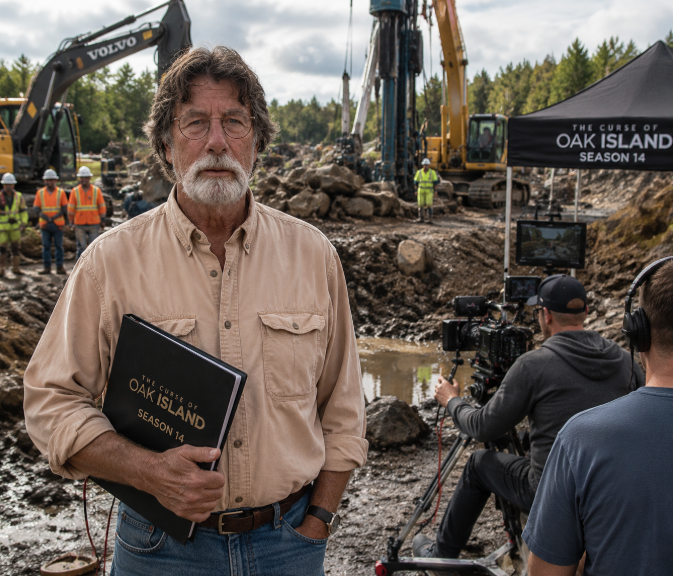
POSSIBLE FUTURE DEVELOPMENTS IN THE INVESTIGATION
If further analysis confirms the authenticity and context of the artifact, several investigative pathways would likely emerge:
- Extended Deep Excavation Zones
Targeting similar depth ranges around the 97-foot level to identify structural continuity. - Material Forensics and Dating
Advanced testing to determine composition, age, and environmental exposure history. - Spatial Mapping of Subsurface Features
Correlating artifact locations with known shafts and tunnels to reconstruct potential layouts. - Comparative Historical Analysis
Cross-referencing artifact characteristics with known medieval documentation styles.
Each of these steps would be essential in determining whether this discovery represents an isolated anomaly or part of a larger engineered system.
CONCLUSION: A MYSTERY EXPANDING, NOT RESOLVING
The reported discovery of a “Templar Knight’s notebook” at 97 feet depth does not currently resolve any core Oak Island questions. Instead, it expands the interpretive boundaries of the investigation, introducing new possibilities while raising additional verification requirements.
From an analytical perspective, the most important takeaway is not the identity of the artifact, but its context: deep subsurface placement within a site already rich in layered structural anomalies.
Whether this ultimately proves to be a medieval record, a misinterpreted object, or a later intrusion into earlier deposits, it reinforces one central reality of Oak Island research—each new discovery does not close the mystery, but deepens it further.