Good news for Clarkson Farm fans: Clarkson Farm season 5 is officially returning after the unfortunate incident at Jeremy’s farm.
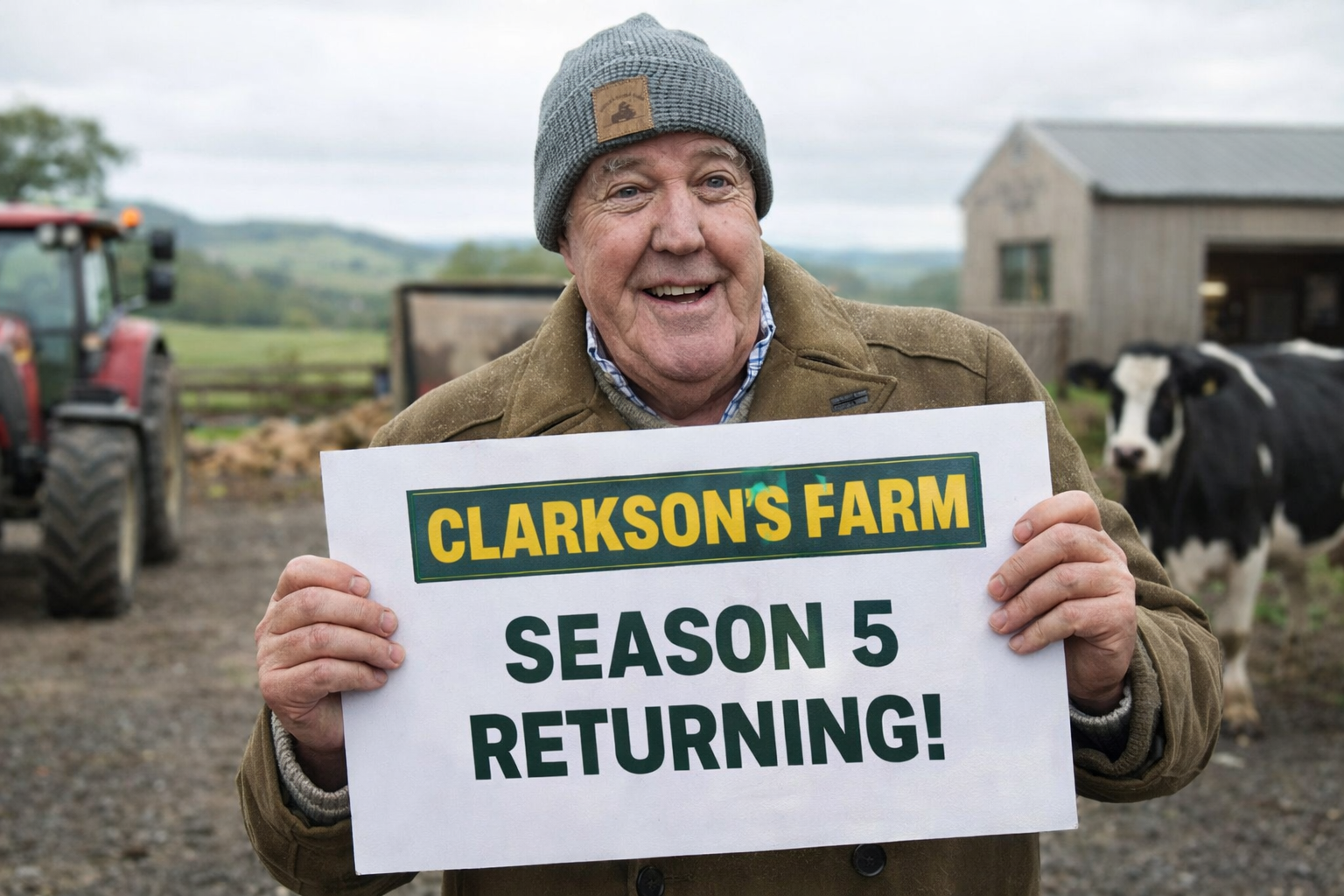
The return of Clarkson’s Farm Season 5 has been officially confirmed, bringing relief and excitement to fans following reports of an unfortunate incident at Jeremy Clarkson’s farm. The announcement signals not only the continuation of one of the UK’s most popular factual series but also the beginning of a new narrative phase shaped by both recovery and operational resilience.
From an analytical standpoint, this renewal is more than just entertainment news—it reflects the ongoing strength of the Clarkson’s Farm brand, which continues to grow despite real-world disruptions affecting agricultural operations and production schedules.
A SERIES BUILT ON REAL-WORLD UNCERTAINTY
One of the defining features of Clarkson’s Farm is its foundation in real agricultural risk. Unlike traditional scripted reality programming, the series evolves alongside actual farm conditions, weather challenges, livestock issues, machinery failures, and regulatory constraints.
The “unfortunate incident” referenced in relation to Jeremy Clarkson’s farm underscores this reality-based structure. While details remain limited, such events typically influence both filming logistics and seasonal planning, forcing production teams to adapt narrative arcs around unpredictable developments.
In analytical terms, this unpredictability is not a weakness of the show—it is its core identity. The series thrives precisely because it mirrors the volatility of modern farming life.


WHY SEASON 5’S RETURN MATTERS STRATEGICALLY
The confirmation of Season 5 carries significant implications for both audience engagement and production continuity. In television analytics, returning seasons after real-world disruptions often generate higher viewer interest due to increased emotional investment in outcomes.
For Clarkson’s Farm, this effect is amplified by the established connection between viewers and the farm’s evolving storylines, including crop performance, livestock management, and rural business challenges.
Season 5 is therefore positioned not just as a continuation, but as a narrative recovery phase—where consequences from previous events may directly shape future decisions on the farm.
This structure creates a layered viewing experience where entertainment and real-world agricultural economics intersect.
OPERATIONAL CHALLENGES AS A STORY ENGINE
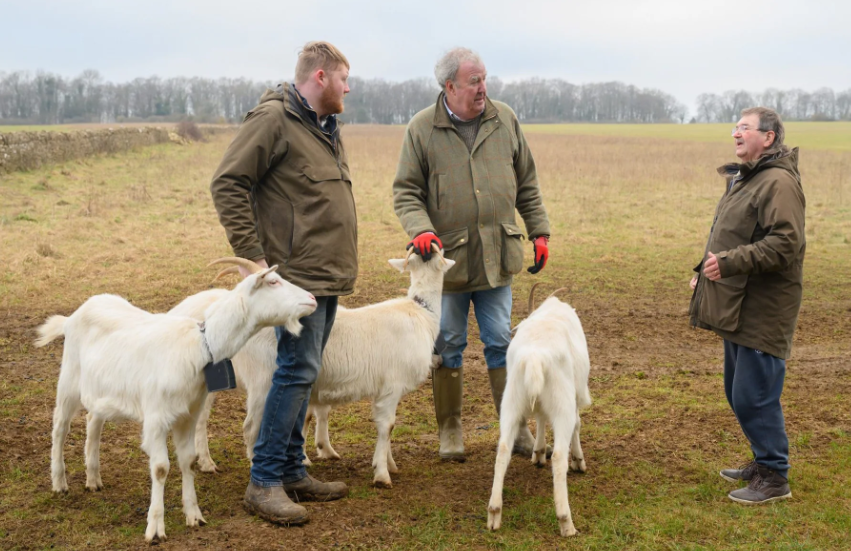
The mention of an “unfortunate incident” is particularly important from a storytelling perspective. In previous seasons, unexpected disruptions have often become central plot drivers, influencing everything from farm strategy to interpersonal dynamics between Jeremy Clarkson and his farming team.
Such incidents typically lead to:
- Adjustments in crop planning or livestock management
- Reallocation of resources and manpower
- Delays in production schedules
- Reevaluation of farm profitability strategies
Rather than halting the narrative, these challenges usually intensify it, providing the structural tension that defines the series.
From a production standpoint, this ensures that Season 5 will likely maintain its signature balance between humor, realism, and operational pressure.
AUDIENCE EXPECTATIONS AND VIEWER DYNAMICS
The announcement of Season 5’s return has also triggered strong audience anticipation. Viewer engagement patterns for Clarkson’s Farm indicate that audiences are particularly drawn to moments where farming optimism is tested by real-world setbacks.
This dynamic creates a cycle where uncertainty increases interest, and resolution delivers satisfaction. As a result, incidents such as the one referenced often enhance long-term audience retention rather than diminish it.
Additionally, the continuation of the series reinforces its role as a cultural lens into modern British agriculture, particularly at a time when farming economics and rural policy remain widely debated topics.
WHAT COULD COME NEXT IN SEASON 5
Based on previous narrative structures and observed production patterns, several potential developments may shape Season 5:
- Recovery and Adaptation Arc
The farm may undergo strategic adjustments following the incident, influencing crop or livestock direction. - Increased Operational Efficiency Focus
Jeremy Clarkson and his team may prioritize infrastructure improvements to reduce future disruptions. - Expansion of Rural Business Elements
Continued development of farm-based commercial ventures such as retail, hospitality, or branded products. - Deeper Exploration of Agricultural Risk
The series may place stronger emphasis on the financial realities of farming under unpredictable conditions.
Each of these trajectories aligns with the show’s established blend of entertainment and agricultural education.
THE BROADER IMPACT ON THE CLARKSON’S FARM BRAND
Beyond Season 5 itself, this renewal reinforces the resilience of the Clarkson’s Farm brand. Despite setbacks and operational challenges, the series continues to maintain strong viewer interest and cultural relevance.
From a media analysis perspective, this demonstrates a key principle: authenticity-driven content often gains strength from imperfection rather than avoiding it.
In this case, real-world incidents do not disrupt the narrative—they define it.
CONCLUSION: A RETURN BUILT ON REALITY, NOT PERFECTION
The confirmation of Clarkson’s Farm Season 5 marks a continuation of a format that thrives on unpredictability, resilience, and real agricultural pressure. The reported incident at Jeremy Clarkson’s farm, rather than halting progress, has instead become part of the evolving story landscape that defines the series.
As Season 5 approaches, one thing is clear: the farm’s challenges are not separate from the show—they are the show.
And for fans, that means the next chapter is likely to be shaped as much by reality as it is by storytelling.