Revealing the actual amount of money Jeremy will earn after selling his wheat harvest.
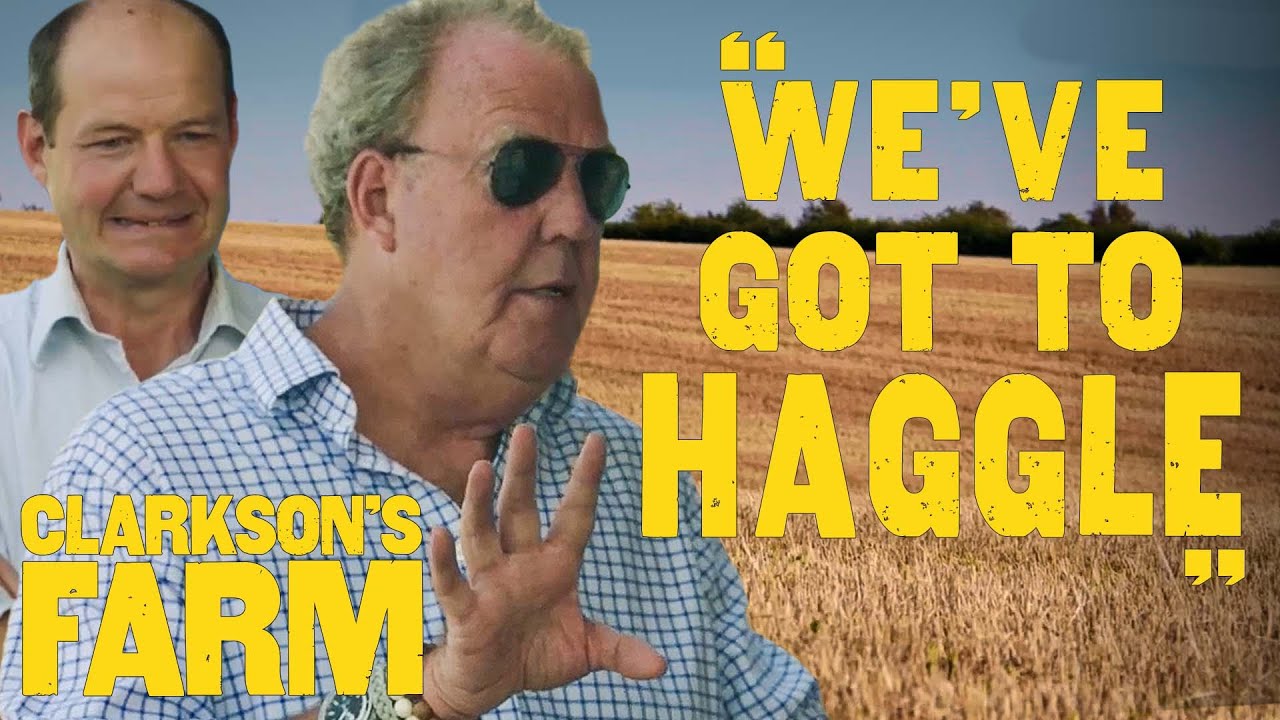
In a striking development on Clarkson’s agricultural operation, a routine wheat quality assessment has turned into a high-value market opportunity after Jeremy Clarkson’s grain achieved premium protein classification. What began as a simple harvest check quickly evolved into a commercial negotiation scenario, with milling experts confirming the crop’s eligibility for top-tier flour production and significantly higher pricing brackets.
The outcome not only highlights the importance of grain quality in modern farming economics but also demonstrates how small variations in protein content can dramatically shift agricultural profitability.
A CRITICAL MOMENT IN GRAIN VALUATION
At the center of the assessment was a key technical metric: protein percentage. According to milling standards discussed on site, wheat with approximately 13% protein is considered optimal for high-quality flour production, placing it within the most valuable commercial category.
Jeremy Clarkson’s sample was tested by milling specialist Paul, who confirmed the grain’s classification as premium milling wheat. Early readings indicated protein levels slightly above the benchmark threshold, immediately placing the crop into a higher-value pricing tier.
In agricultural markets, this distinction is crucial. Wheat that meets premium specifications can command significantly higher per-ton rates compared to standard feed-grade grain, sometimes creating price differentials of 30–50% or more depending on market conditions.




FROM FARM GATE TO PREMIUM MARKET VALUE
The discussion quickly shifted from agronomic quality to commercial strategy. Once the grain was confirmed as suitable for top-tier milling, attention turned to pricing negotiations and market positioning.
Standard milling wheat prices were referenced at approximately £85 per ton, while lower-grade feed wheat values reached around £155 per ton. However, premium classification opened the possibility of even higher valuation, with speculative pricing discussions suggesting figures approaching £180–£200 per ton depending on buyer demand and negotiation strength.
From a market analysis perspective, this moment illustrates a key principle in agricultural economics: quality certification directly determines bargaining power. Once grain is classified as premium, producers gain leverage that can significantly alter revenue outcomes.
LAB CONFIRMATION AND COMMERCIAL IMPACT
The rapid laboratory testing process played a decisive role in validating the crop’s value. Within minutes, protein content data confirmed that the wheat met the required threshold for high-end milling applications.
This type of fast turnaround is increasingly important in modern grain trading, where pricing decisions often depend on real-time quality verification. In this case, the result allowed immediate discussion of sale strategy rather than delayed post-harvest evaluation.
The milling expert also indicated strong enthusiasm for the sample quality, reinforcing the commercial viability of the crop and suggesting that it represented one of the stronger batches assessed in recent evaluations.
NEGOTIATION DYNAMICS IN AGRICULTURAL COMMODITIES
Once quality was established, the conversation naturally shifted toward pricing negotiation. Clarkson explored potential selling strategies, including whether to push for higher per-ton values based on premium classification.
This reflects a broader reality in agricultural markets: pricing is not fixed at harvest but influenced by timing, buyer competition, and quality certification. Producers who understand these dynamics can significantly increase profitability by strategically managing sale timing and buyer engagement.
The suggestion of targeting a £200 per ton benchmark reflects this negotiation mindset—testing the upper limits of market willingness rather than accepting baseline commodity pricing.

THE ROLE OF QUALITY IN MODERN FARM PROFITABILITY
This case highlights a critical shift in contemporary farming: profitability is increasingly driven by quality differentiation rather than sheer volume alone. High-protein wheat, in particular, has become a key driver of value due to its suitability for premium bread production and industrial milling applications.
For operations like Clarkson’s, this creates an opportunity to move beyond commodity farming into value-based agriculture, where market positioning and quality control become just as important as yield.
In this context, the wheat sample effectively transforms from a raw agricultural output into a negotiable industrial input with tiered pricing potential.
STRATEGIC IMPLICATIONS FOR THE FARM
From an operational standpoint, the successful classification of premium wheat has several implications:
- Increased revenue per harvested ton
- Greater bargaining leverage with milling buyers
- Potential for long-term contract opportunities
- Reinforced importance of soil and crop management practices
However, it also introduces new strategic considerations, particularly around storage, timing of sale, and market timing decisions.
If managed effectively, premium-grade classification could significantly improve overall farm profitability for the season.
CONCLUSION: SMALL SAMPLE, LARGE FINANCIAL IMPACT
What began as a routine grain test has evolved into a high-value commercial opportunity, underscoring how precision agriculture directly influences financial outcomes. Jeremy Clarkson’s wheat not only met milling standards but entered a pricing category capable of transforming revenue expectations for the crop cycle.
In modern farming, success is no longer defined solely by how much is grown—but by how precisely that output meets market demand. This case serves as a clear example of how a single protein reading can shift an entire economic trajectory, turning a field harvest into a premium commodity negotiation at the highest level.