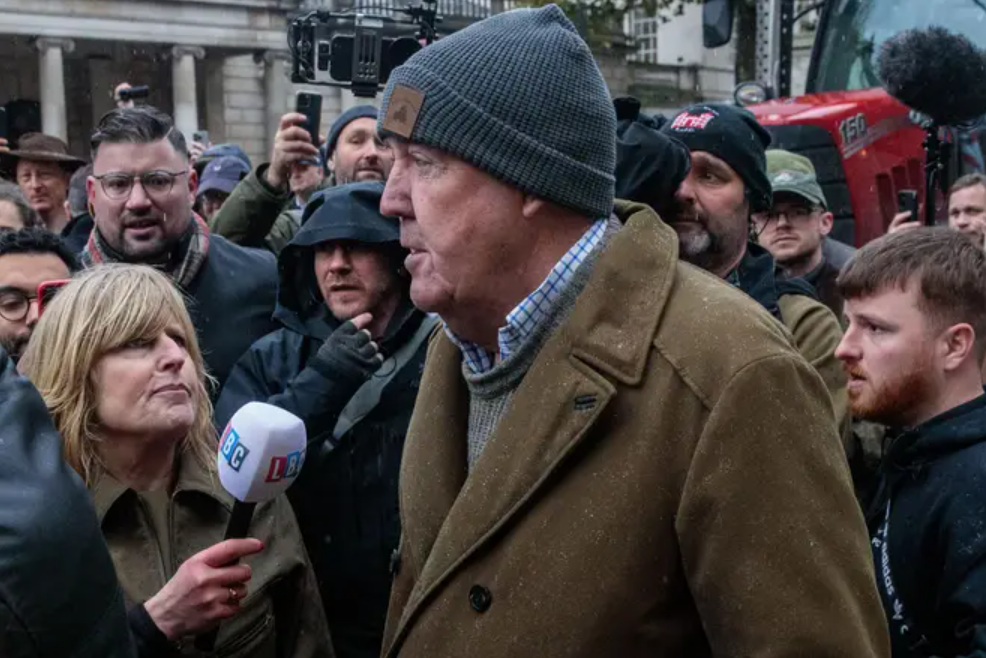
Jeremy Clarkson made a bold statement when he claimed that Brexit was the reason why British farms were struggling.
A STATEMENT THAT REIGNITES A NATIONAL DEBATE
Jeremy Clarkson’s recent claim that Brexit is the reason British farms are struggling has once again pushed the agricultural sector into the center of political and economic discussion. While Clarkson is primarily known as a television presenter rather than a policymaker, his public commentary carries unusual weight due to the widespread influence of Clarkson’s Farm, which has brought rural economics into mainstream entertainment.
From an analyst’s perspective, this statement is less about political positioning and more about highlighting structural pressure points already visible within UK agriculture. Brexit did not create these challenges in isolation—but it significantly accelerated and reshaped them.
BEYOND THE HEADLINE: WHAT BREXIT CHANGED FOR FARMERS
To understand Clarkson’s argument, it is necessary to separate perception from operational reality. Since Brexit, British farms have faced several measurable disruptions:
- Labor shortages due to reduced EU seasonal workforce access
- Changes in subsidy frameworks replacing the EU Common Agricultural Policy
- Increased administrative compliance requirements
- Shifts in export friction and border logistics
These are not abstract policy effects—they directly impact cash flow, harvest timing, and operational planning.
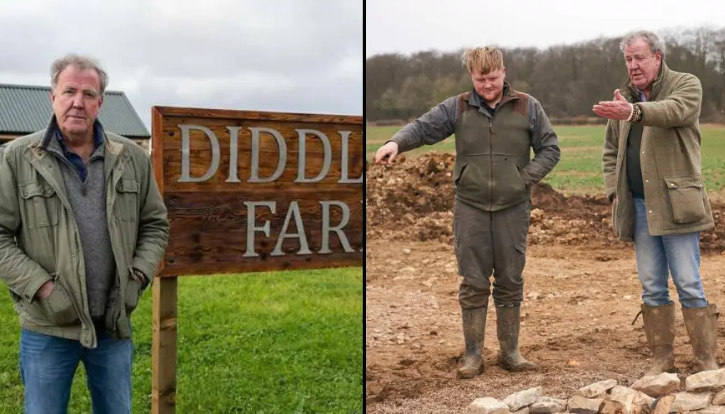
In Clarkson’s Farm, these pressures are often translated into real-world frustration: missed planting windows, staffing gaps, and unpredictable regulatory constraints. The show has effectively become a public case study of post-Brexit agricultural adaptation.
THE CLARKSON EFFECT: WHEN TELEVISION BECOMES INDUSTRY COMMENTARY
What makes Clarkson’s statement particularly influential is not just its content, but its platform. Unlike traditional agricultural analysts, Clarkson reaches millions of viewers who may have never considered the economics of farming before.
As the series has progressed, it has highlighted recurring themes:
- The volatility of farming income
- The dependency on seasonal labor
- The complexity of modern agricultural regulation
- The narrowing margin between profit and loss
From an industry analysis standpoint, Clarkson’s Farm has unintentionally functioned as a communication bridge between policymakers, farmers, and the general public.
Clarkson’s Brexit statement therefore lands not as isolated commentary, but as part of a broader narrative already familiar to his audience.
IS BREXIT THE ROOT CAUSE OR A CATALYST?
A more technical interpretation suggests that Brexit is not the sole cause of agricultural strain, but rather a structural catalyst that exposed underlying vulnerabilities.
Even before Brexit, British farming was already under pressure from:
- Global commodity price competition
- Climate variability and weather volatility
- Long-term decline in farm subsidies
- Rising input costs (fuel, feed, fertilizer)
Brexit intensified these pressures by removing stabilizing mechanisms that had previously offset risk.
In analytical terms, it is more accurate to describe Brexit as an “amplifier event” rather than a singular root cause.
WHAT CLARKSON’S FARM REVEALS ABOUT INDUSTRY ADAPTATION
One of the most important insights from the show is not crisis—but adaptation.
Across multiple seasons, the farm demonstrates evolving responses to systemic pressure:
- Diversification into retail and hospitality
- Experimentation with crop rotation and livestock balance
- Increased reliance on mechanization and external contractors
- Continuous negotiation with regulatory frameworks
These adaptations mirror what is happening across the UK agricultural sector at large.
If Clarkson’s statement reflects a broad sentiment, it is this: farmers are no longer simply producers—they are now multi-sector business operators navigating policy, climate, and market volatility simultaneously.
POTENTIAL FUTURE DEVELOPMENTS: THREE SCENARIOS
From an industry forecasting perspective, Clarkson’s Brexit-related warning aligns with three plausible future trajectories for British farming.
1. STRUCTURAL CONSOLIDATION SCENARIO
Smaller farms struggle to remain viable, leading to consolidation into larger agribusiness operations. Efficiency increases, but rural diversity declines.
2. DIVERSIFICATION-LED SURVIVAL SCENARIO
Farms increasingly rely on non-traditional revenue streams such as tourism, branded products, and direct-to-consumer sales—similar to the model partially seen in Clarkson’s Farm.
3. POLICY REBALANCING SCENARIO
Government intervention adjusts subsidy systems and labor frameworks to stabilize the sector, partially reversing post-Brexit friction.
Each scenario carries trade-offs between efficiency, sustainability, and rural community preservation.
THE PUBLIC PERCEPTION GAP
One of the most important consequences of Clarkson’s visibility is the widening of public understanding—but also the risk of oversimplification.
Farming is often perceived as either:
- A traditional rural lifestyle
- Or a politically symbolic industry
In reality, it is a highly complex economic system influenced by global trade, environmental regulation, and technological adoption.
Clarkson’s statement about Brexit condenses this complexity into a single causal narrative. While effective for public discussion, it risks underrepresenting the multi-layered nature of agricultural decline.
INDUSTRY RESPONSE: AGREEMENT AND CAUTION
Reactions within agricultural circles are mixed.
Some farmers agree with Clarkson’s assessment, particularly regarding labor shortages and administrative burden. Others caution that Brexit discussions often overshadow deeper, long-term structural issues that would have emerged regardless of political change.
What is widely accepted, however, is that the current system is under pressure—and that reform, whether political or economic, is increasingly necessary.
CONCLUSION: A STATEMENT THAT REFLECTS A LARGER TRUTH
Jeremy Clarkson’s claim that Brexit is responsible for the struggles of British farms should not be interpreted as a definitive diagnosis, but rather as a reflection of lived operational reality on the ground.
From an analytical standpoint, Brexit is best understood as a turning point rather than an origin point—a moment that intensified existing challenges and forced rapid adaptation across the sector.
If Clarkson’s Farm continues to document these pressures, it will likely remain not just a television series, but an ongoing cultural reference point for understanding modern British agriculture.
Ultimately, the question is no longer whether British farms are struggling.
It is how they will evolve in response.