A frayed belt can ruin a $35 million gold mining season: Why equipment failures can be a real enemy in the gold mining industry
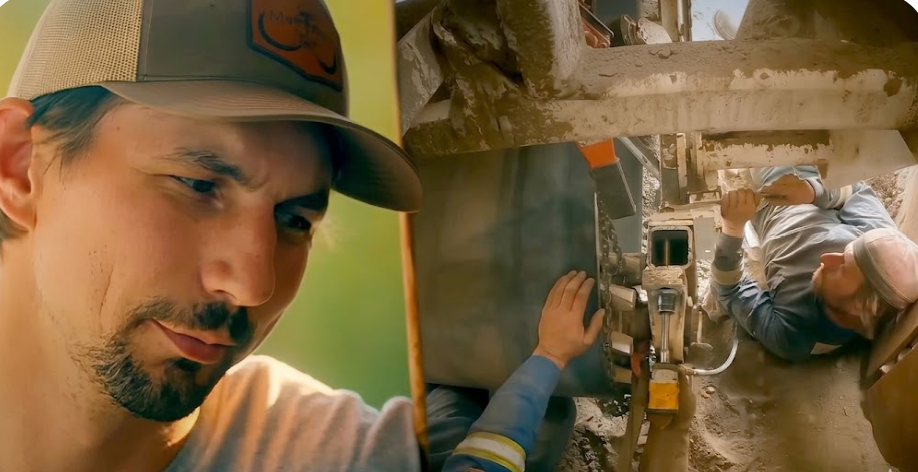
In the operational world of Gold Rush, production outcomes are often portrayed in terms of ounces recovered and total seasonal value. But behind every strong finish lies a far less visible determinant: mechanical continuity. A single frayed conveyor belt—seemingly minor in isolation—can place an entire $35 million gold season at risk if not addressed with urgency and precision.
From an analytical standpoint, this is not an exaggerated scenario. It is a structural vulnerability embedded in nearly every large-scale placer mining operation.
THE CONVEYOR BELT AS A CRITICAL SYSTEM COMPONENT
Conveyor belts are not auxiliary equipment; they are central to throughput architecture. They regulate the continuous flow of material from excavation points to wash plants, directly determining processing efficiency and gold recovery consistency.
When a belt begins to fray, it signals more than wear-and-tear. It indicates:
- Loss of structural integrity under load
- Increased friction and mechanical resistance
- Elevated probability of catastrophic separation
- Reduced consistency in material delivery
In systems operating near maximum seasonal capacity, even minor inefficiencies accumulate rapidly into measurable production loss.

WHY A $35M SEASON OPERATES ON A NARROW MARGIN OF ERROR
A season valued at approximately $35 million implies several operational conditions:
- High-volume continuous excavation
- Extended runtime for wash plants
- Limited downtime windows due to seasonal weather constraints
- Maximum utilization of heavy equipment fleets
In such an environment, redundancy is minimal. There is rarely spare capacity capable of absorbing a major disruption in material flow. This makes conveyor reliability a defining factor in total seasonal output.
A frayed belt does not reduce efficiency gradually—it introduces volatility into an otherwise tightly controlled system.
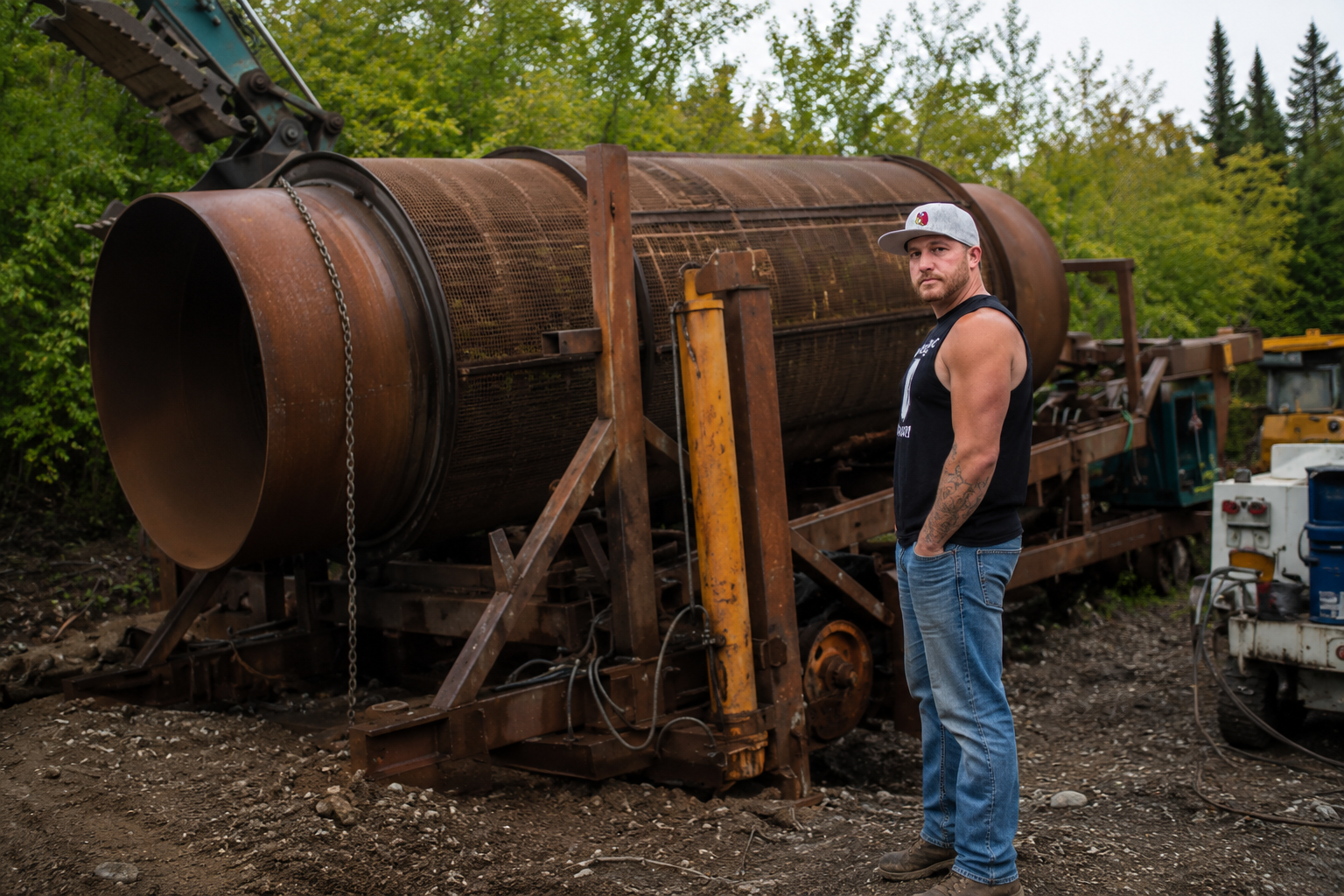
THE REAL IMPACT IS MEASURED IN LOST OUTPUT, NOT REPAIR COST
A common analytical mistake in mining operations is focusing on the replacement cost of components rather than the production cost of failure.
A conveyor belt replacement may represent a relatively modest expense compared to the scale of mining operations. However, the economic impact of downtime follows a different logic:
Production loss = (material throughput per hour) × (recovery rate) × (gold price)
Even a short interruption in operations can translate into significant lost revenue when scaled across continuous processing cycles.
In this context, the frayed belt is not an equipment issue—it is a production risk multiplier.
WARNING SIGNS THAT OFTEN GO UNADDRESSED
Field experience in mining environments shows that mechanical failures rarely occur without warning. A frayed belt typically presents early indicators such as:
- Irregular vibration patterns
- Edge wear and visible fiber separation
- Increased motor load readings
- Heat buildup in rollers and pulleys
- Minor slippage during peak load conditions
The critical challenge is not detection, but timing of response. Operational pressure often leads crews to defer shutdown decisions, especially during peak gold runs.
This delay significantly increases the probability of escalation from minor defect to full system failure.
PARALLELS WITH OPERATIONAL PATTERNS IN GOLD RUSH
Across multiple seasons of Gold Rush, equipment reliability has consistently played a decisive role in final production outcomes. While geological conditions and ground quality matter, operational continuity often determines whether a season is successful or underperforms.
Conveyor systems, in particular, have repeatedly acted as bottlenecks when not maintained proactively. A single weak point in material transport can compromise multiple downstream processes, including sluicing, recovery, and tailings management.
HOW A SINGLE FAILURE CAN SCALE INTO SEASONAL IMPACT
To understand the systemic risk, it is useful to model the dependency chain:
- Excavators extract pay dirt
- Conveyor systems transport material
- Wash plants process and separate gold
- Tailings are removed to sustain continuous operation
A failure at step 2 interrupts the entire chain. Unlike modular systems, most mining setups lack full redundancy in material transport infrastructure.
As a result, a conveyor belt failure does not simply slow production—it halts it.
RESPONSE OPTIONS AND STRATEGIC DECISION-MAKING
When a frayed belt is identified, operational teams typically face three strategic choices:
1. Immediate replacement shutdown
Short-term loss of production, long-term system stability. This option minimizes risk but requires acceptance of downtime.
2. Temporary reinforcement
Quick repairs or adjustments to extend operational life. This maintains flow but increases the risk of sudden failure.
3. Continued operation under monitoring
Maintains output but significantly elevates the probability of catastrophic breakdown.
Historically, the most costly outcomes occur when option three is extended too long under production pressure.
FORECAST: LIKELY OPERATIONAL OUTCOMES
Based on observed patterns in large-scale mining operations, several outcomes are likely if a frayed belt is confirmed in a high-output season:
- Scheduled or emergency shutdown for full replacement
- Redistribution of feed load across alternate systems
- Temporary reduction in throughput to reduce stress
- Adjusted production targets for the remainder of the season
However, if addressed early, the incident can also serve as a corrective moment that improves overall operational discipline and equipment reliability.
CONCLUSION: SMALL FAILURE, LARGE SYSTEM CONSEQUENCE
In the framework of Gold Rush, success is often attributed to ground quality, crew performance, or timing. But the underlying reality is more mechanical: sustained production depends on uninterrupted system flow.
A frayed conveyor belt represents one of the simplest yet most consequential vulnerabilities in that system. Left unresolved, it can compromise millions in potential recovery. Addressed properly, it becomes a routine maintenance event with no long-term impact.
The lesson is consistent across seasons: in mining operations at this scale, it is rarely the ground that limits success—it is the equipment that moves it.