Roman Coins Found on Oak Island: Could They Rewrite History? (S13)

For decades, Oak Island has captivated treasure hunters and history enthusiasts alike with its enigmatic Money Pit and elusive treasure. Now, season 13 of The Curse of Oak Island has added a startling new layer to the mystery: the discovery of a Roman coin dating back nearly 1,800 years.
On a bright morning at Oak Island, brothers Rick and Marty Lagina, along with their team, gathered in the laboratory to examine a coin unearthed from Lot 5—a location already known for yielding five Roman coins believed to be as old as 2,000 years. Katya Drayton, part of the archaeological team, recalled the excitement of the find: “Katya and I found something that we thought was really, really cool. It’s a coin, for sure. And we’re about to find out what exactly this is.”
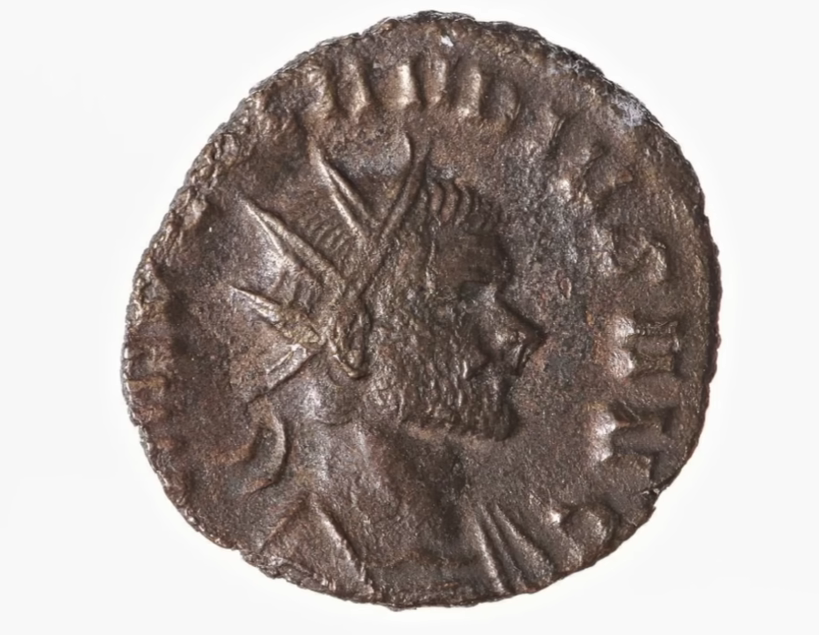
Using advanced CT scanning technology, the team analyzed the coin’s intricate design. Experts noted the lettering “officina N,” indicating the “ninth workshop,” and a bust featuring a distinctive crown, sharp nose, and pronounced chin. According to Emma, one of the coin analysts, these characteristics match the Roman emperor Claudius II, placing the coin’s origin between 250 and 270 AD.
“This is a Roman coin,” Emma confirmed. “Without a doubt.”
Claudius II, also known as Marcus Aurelius Claudius, ruled the Roman Empire from 268 to 270 AD. The presence of Roman-era coins on Oak Island is unprecedented; there is no recorded evidence of habitation on the island dating to this period. The discovery raises compelling questions: How did these coins arrive in Nova Scotia? Were they part of the treasure, or a remnant of trade and travel in the ancient world?
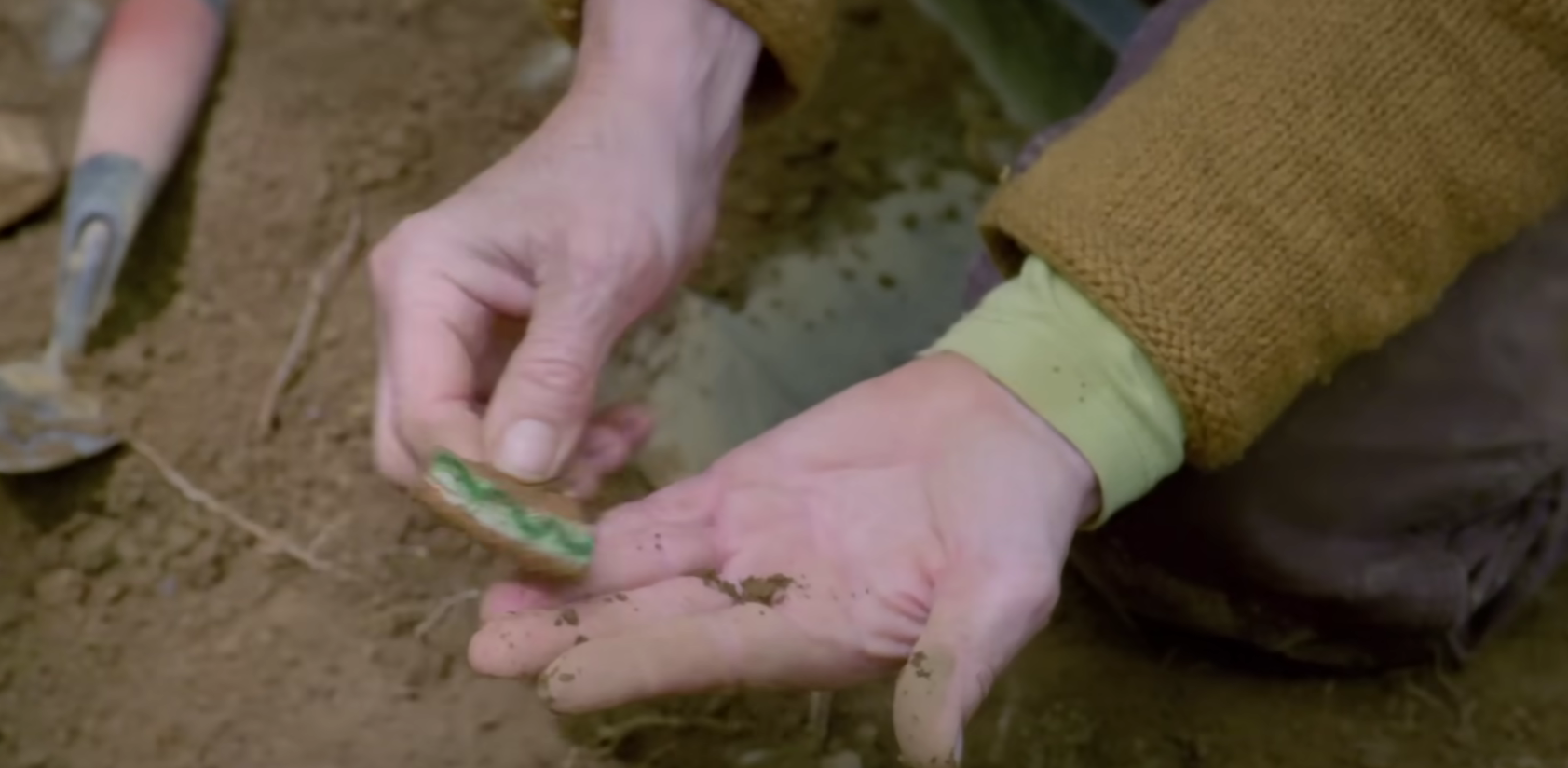
The Lagina team’s investigation continued on Lot 5, uncovering additional artifacts, including fragments of ornate earthenware bowls, possibly dating back to the 17th and 18th centuries. Archaeologist Fiona Steele described the finds as indicative of multi-occupational use of the lot. “The things that we’ve been finding on Lot 5 give us more of an indication of multi-occupational use of the lot itself,” she said. “Every piece adds to the puzzle and tells us more and more.”
Among the most compelling discoveries was a large utilitarian bowl, likely used for food preparation or storage. Its intricate design and size suggest it was more than a simple household item, potentially offering clues to the individuals who once inhabited or visited Oak Island.
The Roman coin discovery was sent to coin expert Sandy Campbell for further analysis. Campbell confirmed the coin’s Roman origins and remarked on its remarkable preservation. “This is clearly Roman Empire period. It’s in remarkable condition for a coin that’s been buried for quite a while,” he said.
Campbell speculated on how Roman coins might have reached Oak Island. While no other Roman coins are known in Nova Scotia, it is possible that coins traded across Europe over centuries could have made their way to the New World. “Roman coins were used as currency well into the 1500s,” he noted. “They could have been carried by explorers or settlers, and perhaps ended up on Oak Island during early European activity.”
Doug, one of the team members, offered a potential scenario linking the coins to the Money Pit: “The people who carried out the work to create the Money Pit may have had these coins in their pockets. They were in use throughout Europe during the 1300s and 1400s, and they had real monetary value.”
The connection to the Knights Templar and other secretive orders further deepens the mystery. Over the years, the team has uncovered Venetian trade beads, buttons, and other artifacts linked to medieval European orders, suggesting Oak Island may have hosted multiple groups with diverse purposes. The discovery of Roman coins raises the possibility that some treasure or valuables on the island may have originated far earlier than previously thought.
Rick Lagina expressed his fascination: “Lot 5 is an example of the extraordinary complexity of this island. Every discovery adds another layer, another story. We need to rededicate ourselves to continue intensive searches, not just here, but across the adjacent lots and the Money Pit itself.”
The implications of these finds are significant. If the coins were indeed deposited during earlier treasure-hunting activities or settlement attempts, they could provide evidence of historical connections between European explorers, secret societies, and the fabled Money Pit. Further analysis and excavation will be necessary to determine how these ancient artifacts fit into Oak Island’s complex history.
Marty Lagina emphasized the importance of keeping an open mind: “The wealth associated with the possible treasure in the Money Pit might have been gathered from all over the world. We have to analyze the data carefully and consider all possibilities.”
As Oak Island continues to yield artifacts spanning centuries—from Roman coins to 17th-century pottery—the legend of the Money Pit endures. Each discovery brings new questions: Who visited the island, when, and why? And most importantly, what remains hidden beneath its forested soil?
With season 13 underway, the Lagina team remains undeterred, combining modern technology, historical research, and sheer determination to uncover Oak Island’s secrets. As Sandy Campbell remarked, “It just deepens the mystery. It’s bizarre, fascinating, and every new find changes our understanding.”
For now, the Roman coins of Lot 5 serve as a reminder that Oak Island is not just a site of legend—it’s a historical puzzle that continues to challenge, intrigue, and surprise, promising more revelations in the seasons to come.