New Clues Suggest an Earlier Presence on Oak Island — But Who Was It?
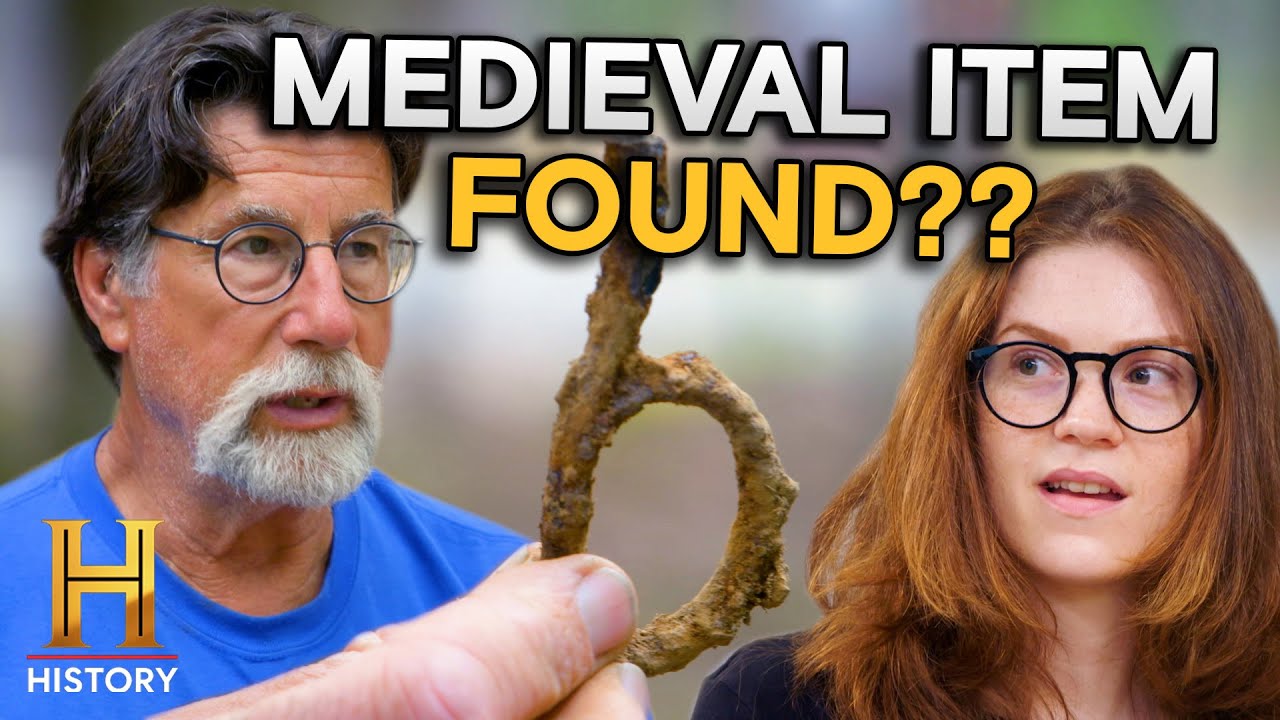
The investigation into Oak Island’s centuries-old mystery has taken yet another unexpected turn as the team uncovered a series of intriguing artifacts on Lot 5—an area increasingly believed to hold some of the island’s oldest and most significant clues. Led by Rick Lagina and metal-detecting expert Gary Drayton, the recent discoveries suggest that European activity on Oak Island may date back far earlier than previously documented.
The search began near the center of Lot 5, east of the location where six ancient Roman coins were previously uncovered. Those coins, estimated by experts to be between 1,500 and 2,000 years old, were believed to have remained in circulation across Europe until the 1400s. Their presence on a remote island in the North Atlantic has baffled historians, fueling new theories about trans-Atlantic contact long before the colonial era.
While sweeping the ground with his detector, Gary picked up a high-toned signal—one strong enough to make both him and Rick pause. Carefully digging, the two men unearthed a small, elongated piece of lead. The weight and shape immediately caught Gary’s attention. He suggested that it may correspond to earlier lead artifacts recovered nearby, including the now-famous medieval lead cross.
“Something like this, you never know,” Gary remarked. “It could match an older piece of lead we’ve already recovered.”
The team bagged the artifact and flagged the location for further study at the Oak Island interpretive lab.
But the day’s discoveries were far from finished.

A second signal soon revealed what appeared to be part of an old metal tool. Moments later, another fragment emerged—fitting perfectly with the first. At first glance, Gary believed the pieces came from a pair of ancient scissors or shears. The fracture pattern suggested the two halves once formed a complete object.
Seeking confirmation, Rick and Gary brought the pieces to blacksmith and artifact specialist Laird Niven, who initially considered the possibility that the object could be horse tack—possibly a bridle cheek piece. Given that Lot 5 has never been recorded as farmland or horse-grazing territory, such a find would raise new questions about the area’s early inhabitants.
However, a detailed laboratory analysis overturned that theory.
Cross-section scans revealed that although the fragments broke from the same object, their shapes did not match the structure of any known horse tack. Instead, the lab concluded that the metal was consistent with iron hand-forged shears—precursors to modern scissors—commonly used in the 1600s and possibly even earlier.
Chemical tests strengthened the conclusion. The metal contained minimal impurities, indicating it was produced before the blast furnace era, placing it firmly in the late 1600s or potentially the 1500s. Chlorine and sodium levels suggested prolonged exposure to saltwater, implying the tool might have been lost near the shoreline and later buried.
Historical reference books confirmed the lab’s findings: the artifact design closely matched mid-17th-century shears used across the United Kingdom.

The discovery, while not directly connected to the famed Money Pit, adds yet another piece to the puzzle on Lot 5—one of the most artifact-dense areas on the island. Previous finds on this same lot include Roman coins, medieval pottery, carved stones, and iron tools. Together, they suggest that Oak Island may have been visited, inhabited, or used as a staging ground long before 1795, when the Money Pit was first discovered.
Rick Lagina described Lot 5 as “one of the two most difficult places on the island to understand,” the other being the Money Pit itself. But he believes each new find—no matter how puzzling—brings the team closer to understanding the island’s true history.
“Every artifact tells a story,” Laird noted. “And sometimes it takes the next discovery to explain the one before.”
With metal-detecting work still incomplete in the area, the team has already planned further sweeps. As Gary put it, “We haven’t finished in that area. Not by a long shot.”
And with each new clue emerging from Lot 5, Oak Island’s mysterious past is inching closer toward the light.