A New Find in the Money Pit Raises Questions About Who Worked on Oak Island First

OAK ISLAND, NOVA SCOTIA —
After more than a decade of digging, scanning, drilling, and deciphering clues buried across a tiny island in the North Atlantic, the Lagina brothers have launched a new chapter in the world’s longest-running treasure investigation — and it begins with an unexpected discovery that could reshape everything we thought we knew about Oak Island’s past.
As Rick and Marty Lagina arrive with renewed energy, joined by partner Craig Tester and the rest of their dedicated team, one message defines the start of Season 13:
“Let’s solve it. Let’s find the answers.”
And within days, the island delivers something entirely new — evidence that the treasure may have traveled far deeper than anyone imagined.
A New Year, a New Mission — and a Familiar Mystery
Walking into the island museum, Rick Lagina notes the unmistakable sense of anticipation shared by every returning crew member. “There’s a certain energy in the room,” he says. “A sense of commitment.”
From the outset, the team refocuses on the central theory driving their latest efforts: that after centuries of flooding and collapse, Oak Island’s treasure may have slipped below the original Money Pit and now rests deep within a natural geological feature known as a solution channel — a cavern-like cavity carved into the island’s bedrock.
This idea gained momentum last year after groundwater analysis revealed elevated traces of precious metals more than 100 feet underground. But as the team drilled deeper, disaster struck.
Two massive steel shafts collapsed, confirming just how unstable the ground had become — and hinting that whatever lies beneath may now be more than 200 feet down.
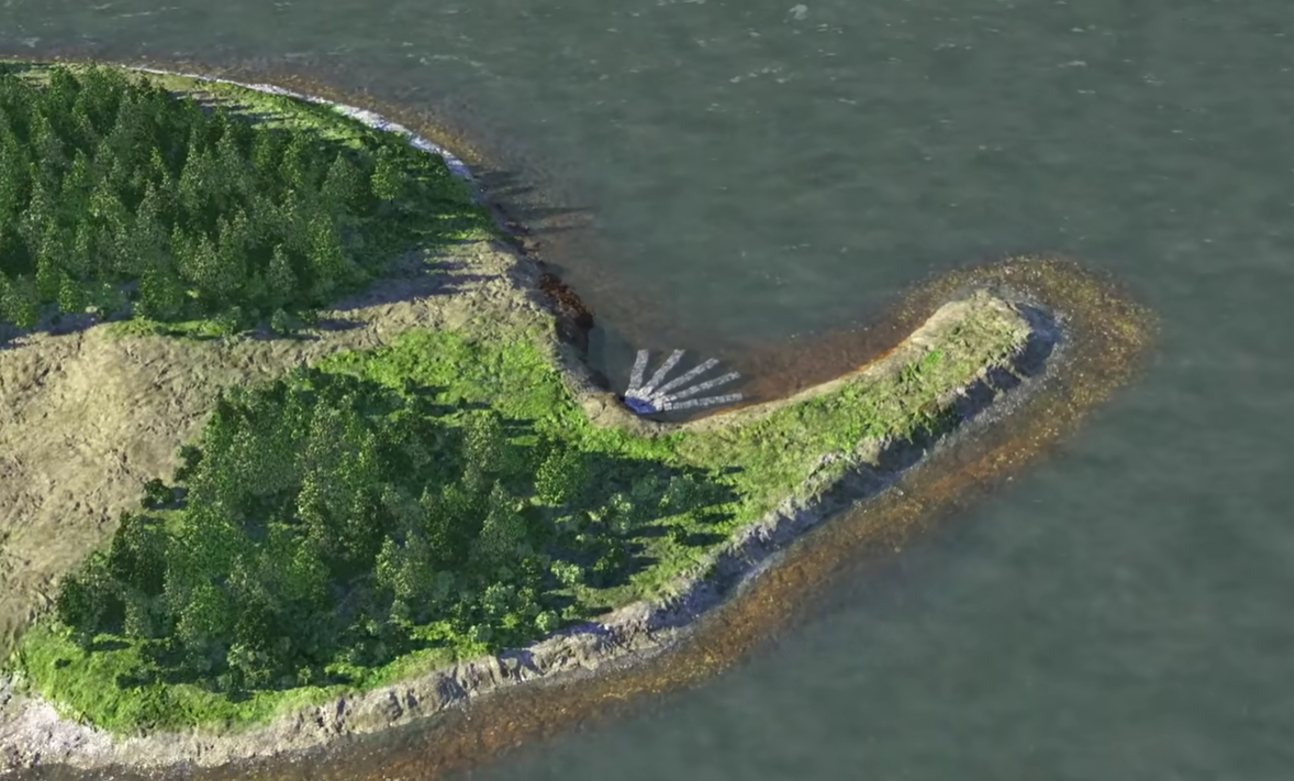
Searching the Spoils: Tools From the 1600s Reappear
While drillers continue probing the Money Pit, Marty Lagina, Craig Tester, Gary Drayton, and heavy-equipment specialist Billy Gerhardt shift their attention to a different area: the sprawling piles of soil excavated from last year’s deep-shaft operations, now resting near Smith’s Cove.
What they find almost immediately is astonishing.
From the first layer of dirt, Gary retrieves a large iron tool — heavy, pitted, unmistakably old. It follows a pattern that has emerged across multiple seasons: tools and artifacts buried far below the Money Pit that predate any known treasure-hunting expeditions.
“We’ve picked up right where we left off,” Gary remarks. “These tools could easily be from the 1600s — or older.”
The implications are serious. If these artifacts belonged to early European explorers, engineers, or unknown workers, then Oak Island’s buried structures — tunnels, platforms, shafts — might be far older than the 1795 discovery story suggests.
And this time, the find is not alone.
The Chisel That Changes the Timeline
When the team brings the chisel into the Oak Island laboratory, archaeometallurgist Emma Culligan performs an XRF scan to determine its elemental makeup.
Her conclusion is immediate — and significant.
The tool contains no modern alloys, no signs of industrial-era steel production, and minimal impurities.
Her verdict: “It fits comfortably within the 1700s — potentially earlier.”
For the team, this is more than another artifact. It is evidence of deliberate, skilled work undertaken well before any recorded treasure hunt. It also strengthens a growing theory: that the original builders created a complex system — tunnels, flood traps, platforms — long before the first searchers ever stepped foot on the island.
Rick’s reaction is confident but measured.
“This is not the one thing,” he says, “but we’re getting there.”
Clues From the Past: The Stone, the Flooding, and the Collapse
Oak Island enthusiasts know the story well, but Season 13 revisits it with new context.
In 1804, a stone with strange carved symbols was unearthed exactly 90 feet down in the Money Pit. When moved, the shaft instantly flooded — apparently triggered by a tunnel engineered to bring seawater in from Smith’s Cove. For more than 200 years, treasure hunters attempted to bypass or block this flooding system, usually ending in collapse.
How is this relevant now?
Because last year’s catastrophic collapses — TB-1 and TOT-1 — suggest the treasure may have slipped far deeper, pulled down by centuries of erosion, flooding, and shifting terrain.
If so, the solution channel could be hiding the very vault treasure hunters have sought since the 1700s.
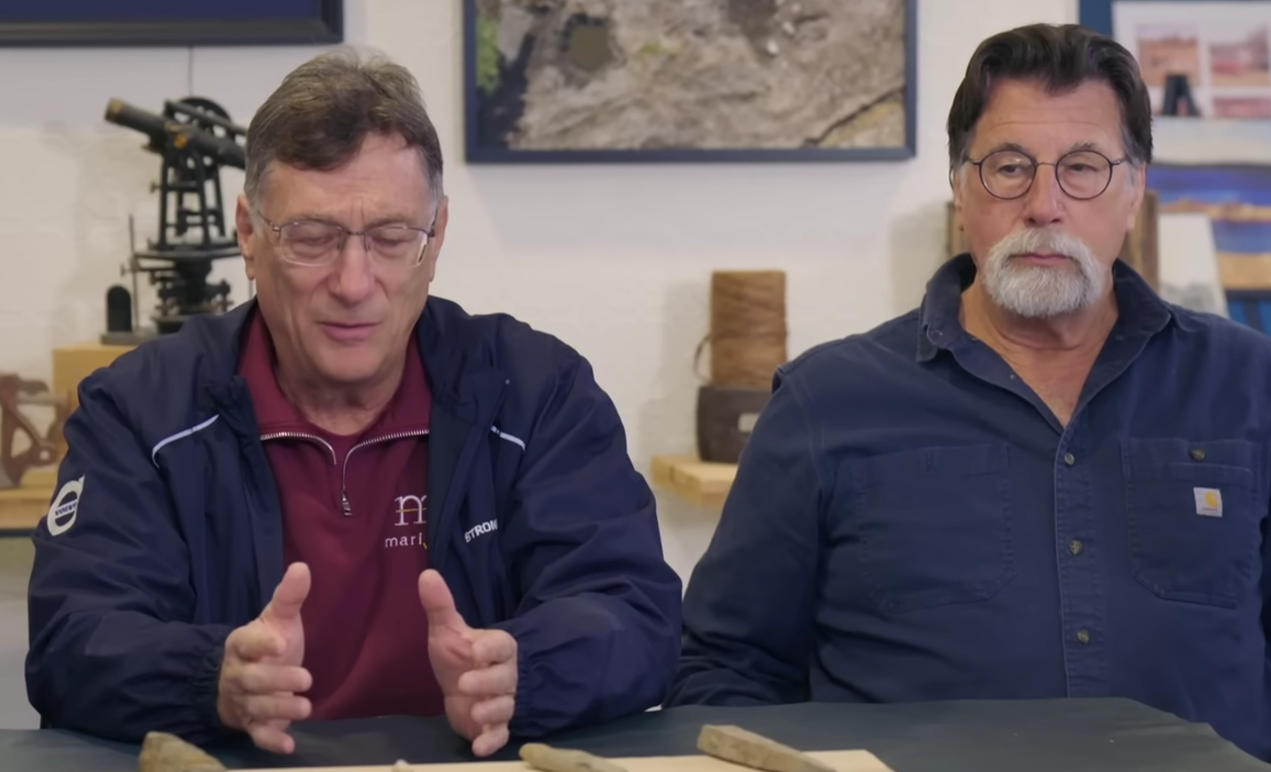
A Season That Begins With Momentum — and Rising Questions
As the team continues drilling deeper into the Money Pit and analyzing every artifact retrieved from the spoils, the mystery is taking a sharper shape.
Why were tools from the 1600s found more than 100 feet underground?
Were early European groups — perhaps explorers, engineers, or mariners — working on Oak Island long before the discovery of 1795?
And if the treasure has indeed fallen deeper into the bedrock, how do the Laginas reach it safely?
For now, the team is energized, confident, and more synchronized than ever.
As Marty puts it:
“We’re satisfied — and we’re just getting started.”
And with each tool, coin, or structural clue pulled from the earth, the path toward solving Oak Island’s enduring riddle grows clearer.
Season 13 is shaping up to be one of the most revealing chapters yet.