THE $100M VOID: Risks Garden Shaft Dig Reveals Mysterious Hollow Chamber
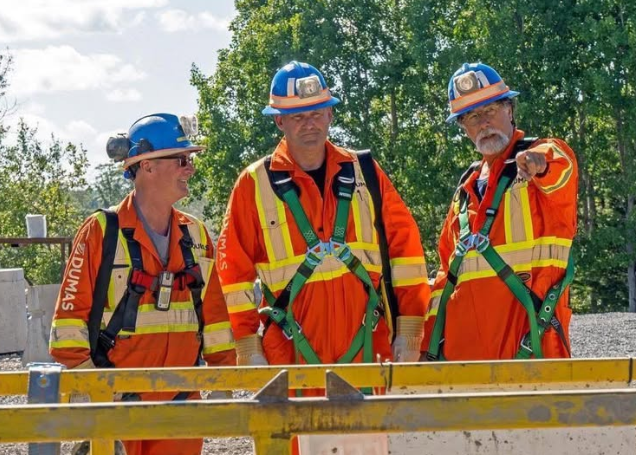
The 225-year-old mystery of Oak Island has reached a fever pitch as Rick and Marty Lagina’s team reports a potential “historical find of the century” nearly 100 feet beneath the island’s surface. In a high-risk, multi-million dollar operation at the Garden Shaft, recent scans and live camera probes have confirmed the existence of a mysterious hollow chamber that experts believe could be the long-sought treasure vault.
The discovery follows a grueling excavation that has cost upwards of $10 million in the last few years alone. The team is currently battling extreme ground pressure and the island’s notorious “flood tunnel” traps to reach a density anomaly that geologists say is undeniably man-made.
“Straight Lines and Hollow Spaces”
The breakthrough began when ground-penetrating radar and advanced drilling sensors detected a “dense zone” at a depth of 90 feet. Unlike the irregular patterns typical of natural geology, this structure features perfectly straight lines and a concentrated mass.
“Natural rock formations don’t behave this way,” one geologist noted. “This is a deliberate, engineered structure.”
As the team lowered a high-resolution camera probe into a narrow drill hole, the footage revealed a flat, rectangular surface that appeared to be the wall of a structure or the lid of a massive chest. Rick Lagina, visibly moved by the footage, suggested the find could finally validate the theories of a 17th-century European vault hidden beneath the soil.
A $50,000-a-Day Gamble
The operation is as dangerous as it is expensive. At nearly 100 feet down, the soil and water pressure are so immense that a single miscalculation could lead to a catastrophic shaft collapse. The team is currently spending between $40,000 and $50,000 per day on heavy steel casings, industrial pumps, and a specialized crew to keep the site from flooding.
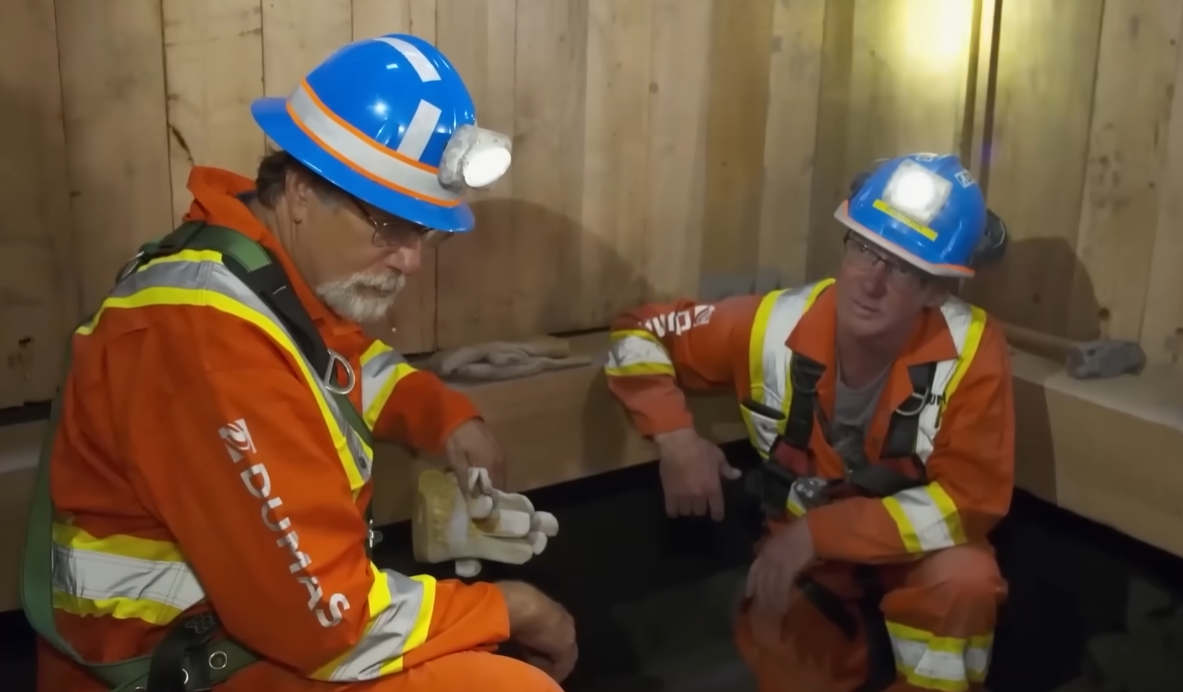
The threat of “flood tunnels”—the legendary booby traps designed to drown explorers as they approach the treasure—remains the team’s primary concern. “One wrong move could flood the entire shaft in minutes,” Rick Lagina warned during a tense briefing. “We are proceeding with extreme caution to protect both the men and the potential artifacts below.”
Evidence of Ancient Engineering
Adding to the excitement, the excavation has unearthed “perfectly cut” timber fragments and rusted metal hardware. Archaeologists who examined the beams noted that the edges were carved with precision tools, suggesting they were once part of a sophisticated support system or a sealed chamber dating back 300 years.
Historians argue that an engineering project of this scale—conducted centuries ago in such a remote location—would only have been undertaken to protect an object of immense value. Early estimates suggest that if the chamber contains the rumored gold, silver, or religious relics linked to the Knights Templar or Spanish explorers, its value could exceed $100 million.
The Moment of Truth
Despite the mounting costs and the physical dangers of mudslides and seepage, the Lagina brothers have opted to push forward. The team is now clearing the area around the 92-foot mark, hoping to breach the rectangular structure visible on the camera.
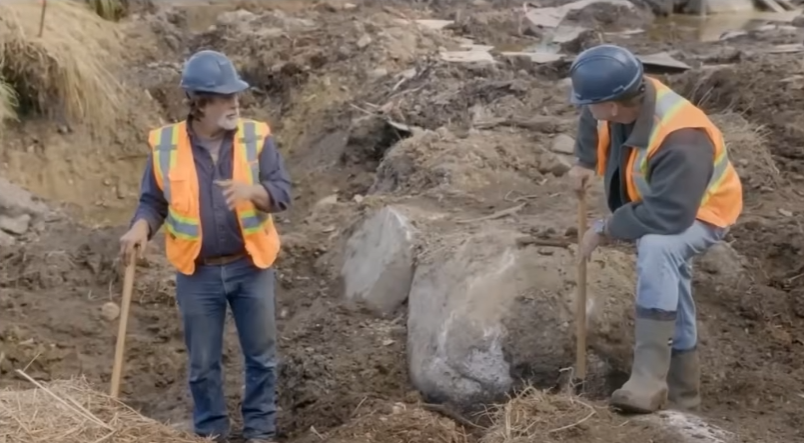
“Oak Island’s greatest strength has always been its mystery,” Rick Lagina said as the recovery claw descended. “But for the first time in 200 years, the clues are all telling the same story in the same place. We aren’t just looking for gold anymore; we’re looking at history itself.”
Whether this “hollow zone” is the legendary Money Pit vault or another of the island’s clever diversions remains to be seen. However, as the steel casing inches deeper into the Nova Scotian bedrock, the world is watching to see if the world’s most famous treasure hunt is finally about to end.