What Emma Found This Season Has the Team Asking New Questions
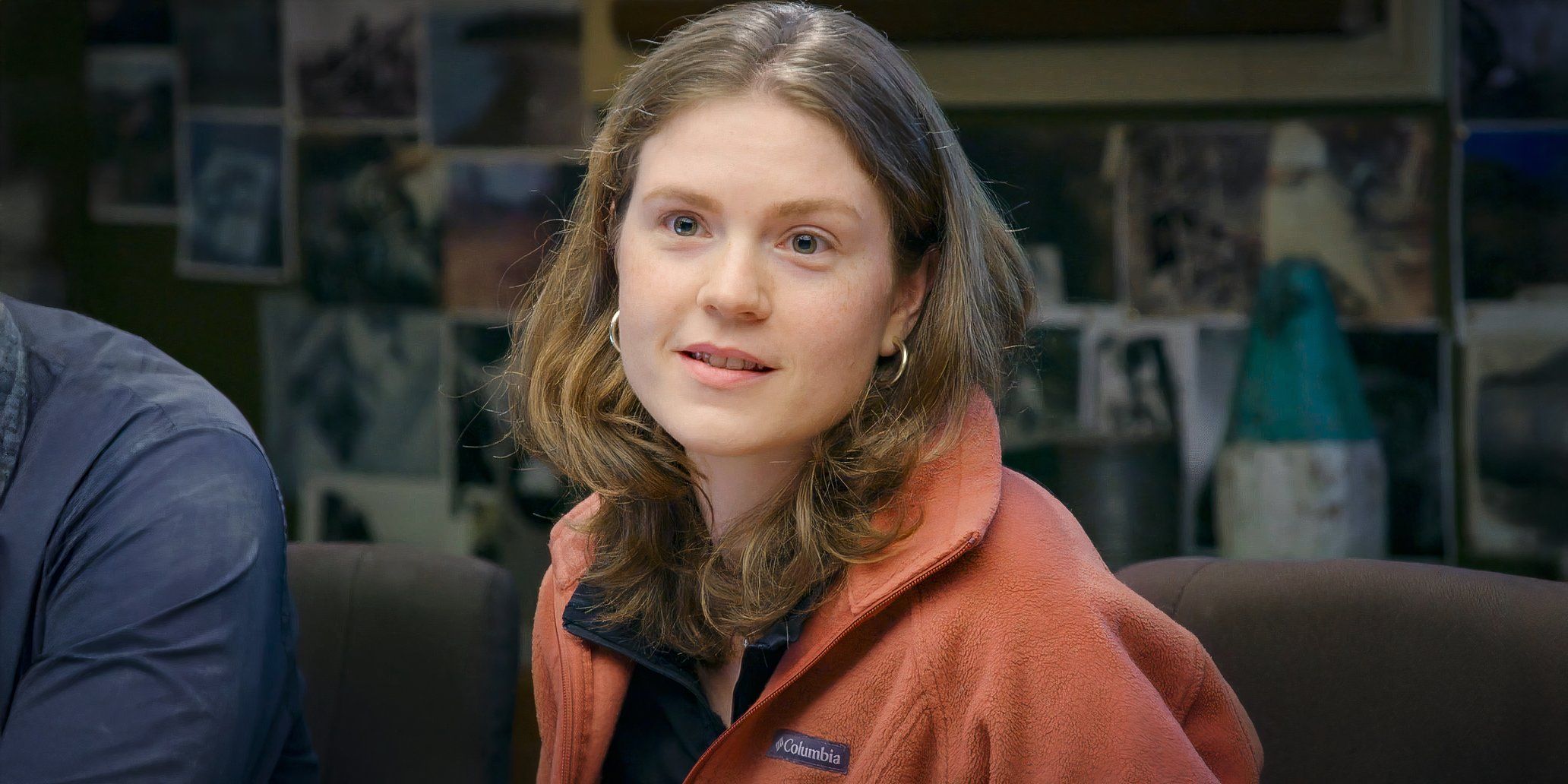
Emma Culligan Is Rewriting the Oak Island Story
For more than two centuries, Oak Island has attracted treasure hunters, engineers and dreamers, each hoping to solve one of history’s most enduring mysteries. But in recent seasons of The Curse of Oak Island, one name has quietly begun to change the way that story is told: Emma Culligan.
Far from being another on-screen commentator, Culligan brings something rare to the island—an elegant fusion of engineering, archaeology and metallurgy. With every artifact she examines, she is shifting the focus from speculation to science, and in the process, she may be reshaping the entire narrative of Oak Island’s past.
From Japan to Nova Scotia: An Unlikely Path
Culligan’s journey to Oak Island is as unconventional as the mystery she now helps investigate. She grew up in Japan, speaking Japanese as her first language. English only entered her life at 15—an age when most students are already long settled into their mother tongue. Instead of shying away from the challenge, she embraced it, eventually moving across the world to study in Canada.
Her university path began at Dalhousie University in Halifax, Nova Scotia, where she focused on engineering. That alone would have been a respectable and stable route. But Culligan had broader interests. She later transferred to Memorial University in Newfoundland and made a remarkable academic decision: combining civil engineering with archaeology.
On paper, it looked like an odd pairing. In reality, it was the foundation of a career that would allow her to read both structures and stories—bridges and buildings on one hand, artifacts and context on the other.
A professor, impressed by her ability in chemistry, invited her onto a research team. That invitation became her entry point into metallurgy, the study of metals and their properties. Years spent analysing iron under scanning electron microscopes laid the technical groundwork for what she does now on Oak Island.
From Lab to Legendary Island
Culligan did not arrive on The Curse of Oak Island via a flashy casting call. Someone connected to the production saw her résumé and initially considered her for a personal assistant role. Archaeologist Laird Niven, however, saw something more. Recognizing how rare her skill set was, he handed her a far more critical responsibility: operating the island’s X-ray fluorescence (XRF) system.
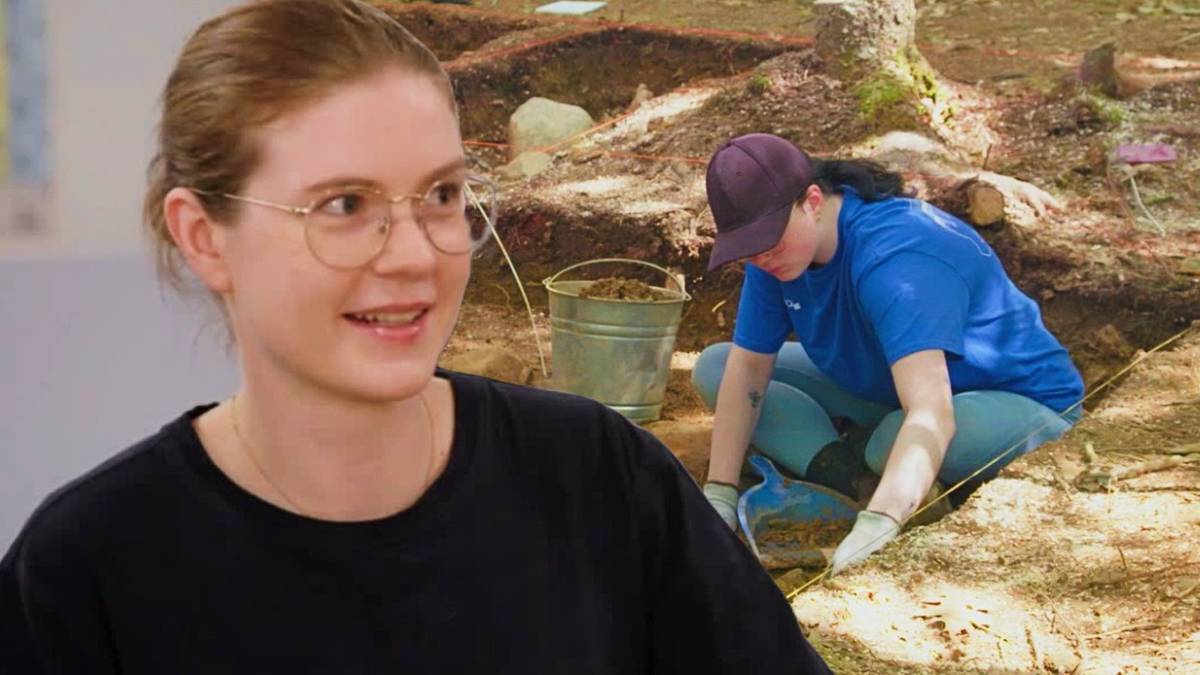
It was a perfect match.
XRF and X-ray diffraction (XRD) allow Culligan to determine the elemental makeup and mineral structure of artifacts without destroying them. With these tools, she can estimate age, trace possible origins and distinguish between natural formations and man-made materials. In a place where legends often outrun facts, that kind of precision is invaluable.
Game-Changing Discoveries
One of the first major artifacts to pass through her lab was a lead disc from Lot 5. XRF analysis revealed distinct layers and unusual metal signatures, suggesting the object might not be local and potentially linking it to distant regions such as Iran or Italy. In one stroke, a small object hinted at global connections far beyond Nova Scotia’s shores.
Then there was the now-famous coin from Lot 5. To the untrained eye, it looked like a worn, unremarkable fragment. Under Culligan’s analysis, it became something much more provocative. XRF results showed an alloy of roughly 70% copper and 16% lead—an unusual composition that did not match typical colonial coinage. The data suggested the coin might be significantly older, possibly even Roman, tentatively dating it to somewhere between the 2nd and 3rd centuries AD.
The idea that a Roman-era coin—or a coin derived from that tradition—could be found on a Canadian island electrified both the team and viewers, opening a new line of speculation about pre-Columbian contacts and forgotten voyages.

Culligan has also contributed to a deeper understanding of structures on the island. At Smith’s Cove, she analysed a concrete sample using XRD and identified Portlandite, pointing to modern Portland cement, likely produced in Quebec. Her dating placed the material between the 1920s and 1970s—not from the original builders of any supposed treasure system, but from later searchers, possibly the Restall family, who attempted to seal the legendary flood tunnels.
The finding didn’t kill the mystery; it sharpened it. It separated original engineering from later interventions and reminded the team that not every buried structure belongs to the same century—or the same story.
Another notable case involved a cast iron stove door found at Smith’s Cove. XRF testing dated it to the mid-1800s, aligning it with a period of intense early treasure hunting activity. Rather than pointing to pirates or medieval builders, the artifact suggested that people had once lived and worked on the island for long stretches, establishing semi-permanent camps as they chased Oak Island’s promise.
Science, Story and the Fans
What makes Culligan stand out is not just her résumé but the way she applies it. She doesn’t simply label objects; she builds bridges between data and history. Her engineering background helps her understand how something was built, while her archaeological training helps her understand why.
For the team, her work means smarter decisions: which leads are worth pursuing, which features are likely natural, and which demand further excavation. For viewers, she offers something equally important: credibility. Her presence reassures audiences that Oak Island’s more spectacular claims are being tested against real, peer-reviewable science.

It has not gone unnoticed. Fans have praised her as one of the most competent figures on the show, calling her “the real gem of the island.” Every time she steps into the lab with a new artifact, it feels less like television drama and more like watching a live investigation.
In a series long dominated by speculation, Emma Culligan represents a quiet revolution. She reminds everyone—from the Lagina brothers to the millions watching—that the key to Oak Island’s future may lie not just in digging deeper, but in thinking sharper.
And if the past few seasons are any indication, the story of Oak Island will now be written as much in spectra and element charts as in legends and lore.