Garden Shaft Dating Could Rewrite Oak Island History
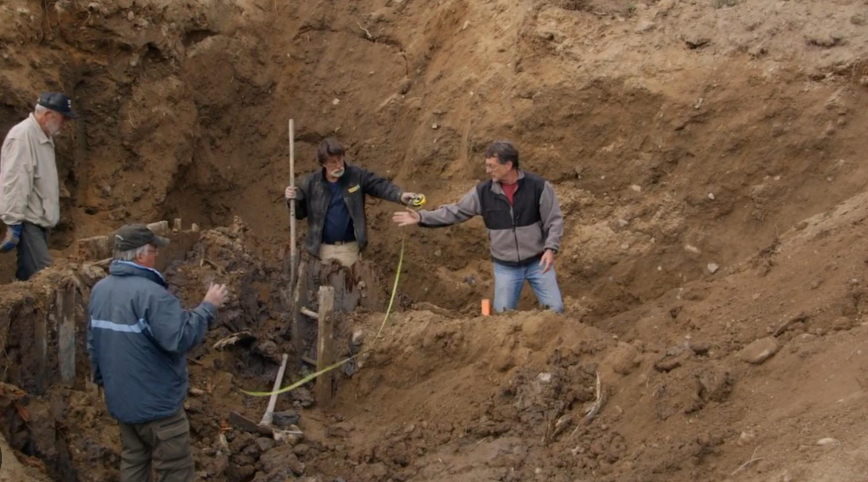
For more than two centuries, Oak Island has resisted every attempt to extract its most tightly guarded secrets. Flood tunnels, collapses, mysterious platforms, and layers of engineered structures have all combined to form a puzzle that has outlasted generations of treasure hunters. But in Season 13, one question rises above all others—one that could redefine everything the world believes about the Money Pit, the original builders, and the true nature of Oak Island’s underground architecture:
Are the timbers recovered from the Garden Shaft truly from the 1600s?
If dendrochronology confirms these timbers were cut before 1795, when the Money Pit was discovered, Oak Island history enters a new era. And if the wood dates to the 1600s, as early tests suggest, the implications could be seismic.
This season, fans are not just watching another excavation—they are waiting for a scientific verdict that could rewrite the entire Oak Island narrative.
A Shaft Unlike Any Other
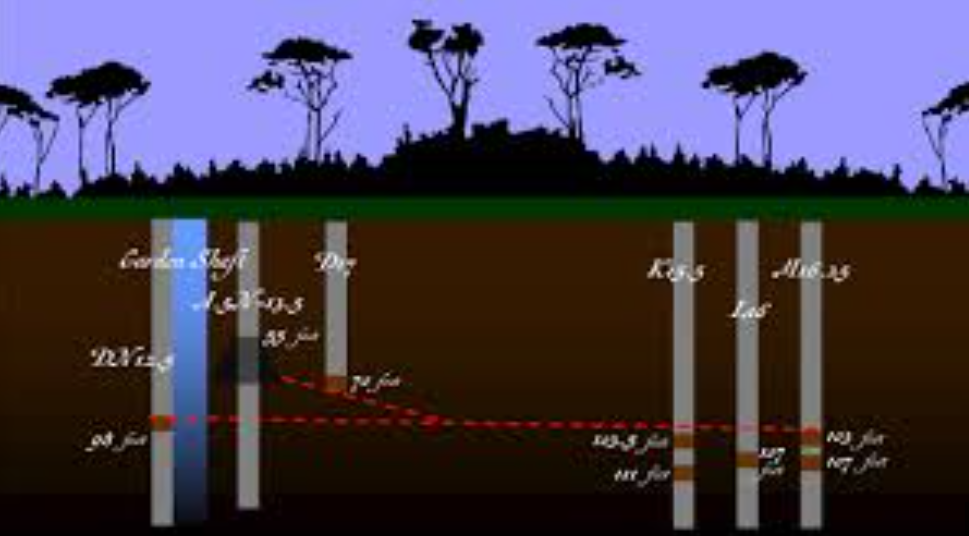
The Garden Shaft has become the epicenter of Oak Island’s search—not because it is the newest discovery, but because it may be the oldest. Extending nearly 100 feet into the earth, the shaft intersects voids, tunnels, worked timbers, and an array of structural features that defy easy explanation.
Last season’s probe drilling found:
-
A tunnel-like void running horizontally,
-
Large, hand-hewn beams,
-
Gold traces embedded in wood fibers,
-
Water containing elevated levels of precious metals,
-
And structurally consistent evidence of intentional engineering.
These were not random elements. Something—or someone—had built with purpose.
Now, the next step is the scientific “time stamp”: dendrochronology, the study of tree-ring patterns that determines exactly when the timber was cut.
If the rings match a felling date earlier than the late 1700s, the team may be staring at original works, not searcher interference.
Why 1600s Timber Matters
Most structures discovered near the Money Pit over the past century have been attributed to 19th or early 20th-century searchers. But the Garden Shaft has consistently resisted that explanation.
Early-growth patterns and preliminary findings hinted at a possible 17th-century origin, a period tied to:
-
Sir William Phips,
-
The Spanish silver salvage of 1687,
-
French colonial activity,
-
And pre-colonial European presence in the North Atlantic.
If the timbers date to the 1600s, a narrow range of historical possibilities emerges—and all are explosive.
Such a date would:
-
Eliminate 1800s searchers as builders,
-
Strengthen the Phips-Belcher treasure theory,
-
Support medieval or pre-colonial European involvement,
-
Suggest intentional underground construction—a vault or tunnel,
-
Link the Garden Shaft to the original Money Pit engineers.
For fans and researchers alike, this is not merely evidence. It is potential confirmation.
Science Versus Speculation: The Stakes Have Never Been Higher
Rick Lagina often speaks of wanting “data, not just stories,” and dendrochronology is the most definitive data Oak Island can produce. The test does not lie. It does not interpret. It simply dates the wood.
But the emotional weight of the test is immense.
If the results show:
➡️ Late 1800s – it’s searcher activity.
Disappointing, but valuable for mapping out historical disturbances.
➡️ Early 1700s – it validates colonial-era engineering.
This would suggest early settlers or French military involvement.
➡️ 1600s – the game changes entirely.
This would place construction before the Money Pit discovery, pointing directly to original builders.
➡️ 1500s or earlier – Oak Island enters global historical significance.
This aligns with:
-
Templar theories,
-
Portuguese navigators,
-
Basque whalers,
-
Norse maritime activity,
-
And early trans-Atlantic contact long before official history acknowledges it.
No matter where the results land, the implications ripple across every corner of the mystery.
What Season 13 Is Really Building Toward
The team’s priorities have shifted dramatically this year. There’s a reason most resources—financial, excavation, analytical—are now centered on the Garden Shaft.
The Lagina brothers understand something crucial:
If the wood dates to the 1600s, the Garden Shaft is not a harmless hole. It’s a doorway.
A doorway to:
-
A possible original tunnel system,
-
A concealed treasure chamber,
-
Or even the master flood tunnel that has defeated treasure hunters for centuries.
Even Marty, the skeptical engineer of the duo, has admitted that these tests represent the most promising evidence in years. Rick, the dreamer and historian, has made it clear: this is the moment he has been waiting for since childhood.
What Happens Next?
Once the dendro results arrive, the team will be forced to make a strategic decision.
If the wood predates 1795, expect:
-
A full-scale expansion of the shaft,
-
A push to enter the horizontal void,
-
New scanning and robotics inside the tunnel,
-
And a return to the idea of a vault beneath the Money Pit.
If the wood is modern, expect:
-
A pivot back to Lot 5,
-
Increased focus on Swamp stone structures,
-
And renewed mapping of the underground complex.
Either way, the season’s direction hinges on a microscopic tree ring.
Conclusion: The Moment of Truth Has Arrived
The Garden Shaft has delivered trace gold, ancient wood, strange engineering, and promising tunnel geometry. But fans know all of that is secondary to one thing:
The date.
It is the single piece of evidence that can confirm whether Oak Island’s greatest mystery is finally starting to reveal itself—or whether the island is preparing yet another twist.
Either way, Season 13 is shaping up to be defined by one scientific answer that could alter treasure-hunting history forever.