Metal Mysteries Beneath the Mud: Inside the Swamp Discoveries That Have Captivated Oak Island Fans
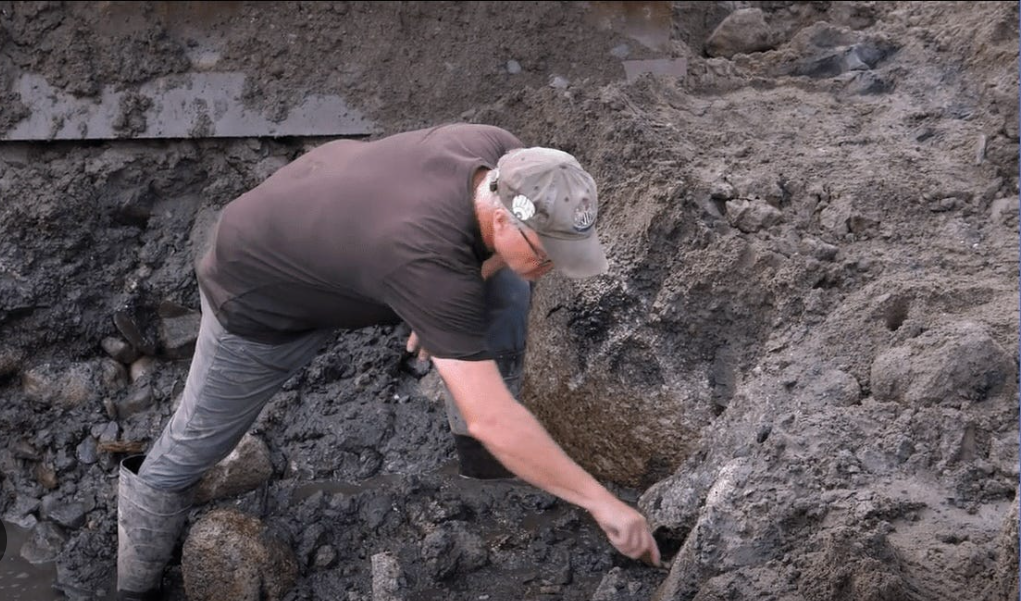
For more than a decade, The Curse of Oak Island has showcased countless theories, artifacts, and engineering feats, but few locations have stirred as much intrigue as the triangular swamp. Long believed to be a simple natural wetland, the swamp has transformed into one of the most compelling archaeological zones on the island — and nowhere is this more evident than in the surprising metal discoveries recovered over the past several seasons.
From pointed metal spikes and spear-like fragments to chain links, rings, pins, and corroded structural fittings, these metallic artifacts have ignited new debates about what lies beneath the murky water. Now, as Season 13 unfolds, fans are more fascinated than ever by the question: Are these objects evidence that the swamp is not natural at all, but a deliberately engineered structure?
This article examines the key finds, the scientific analysis behind them, and the growing belief that the swamp may be hiding a man-made feature of historical significance.
A Trail of Metal Objects Suggesting Hidden Infrastructure
Metal artifacts have been found across Oak Island since the earliest searchers began digging. But the swamp discoveries stand apart for one simple reason:
They appear in a location where metal should not naturally be present.
Among the most notable objects recovered are:
-
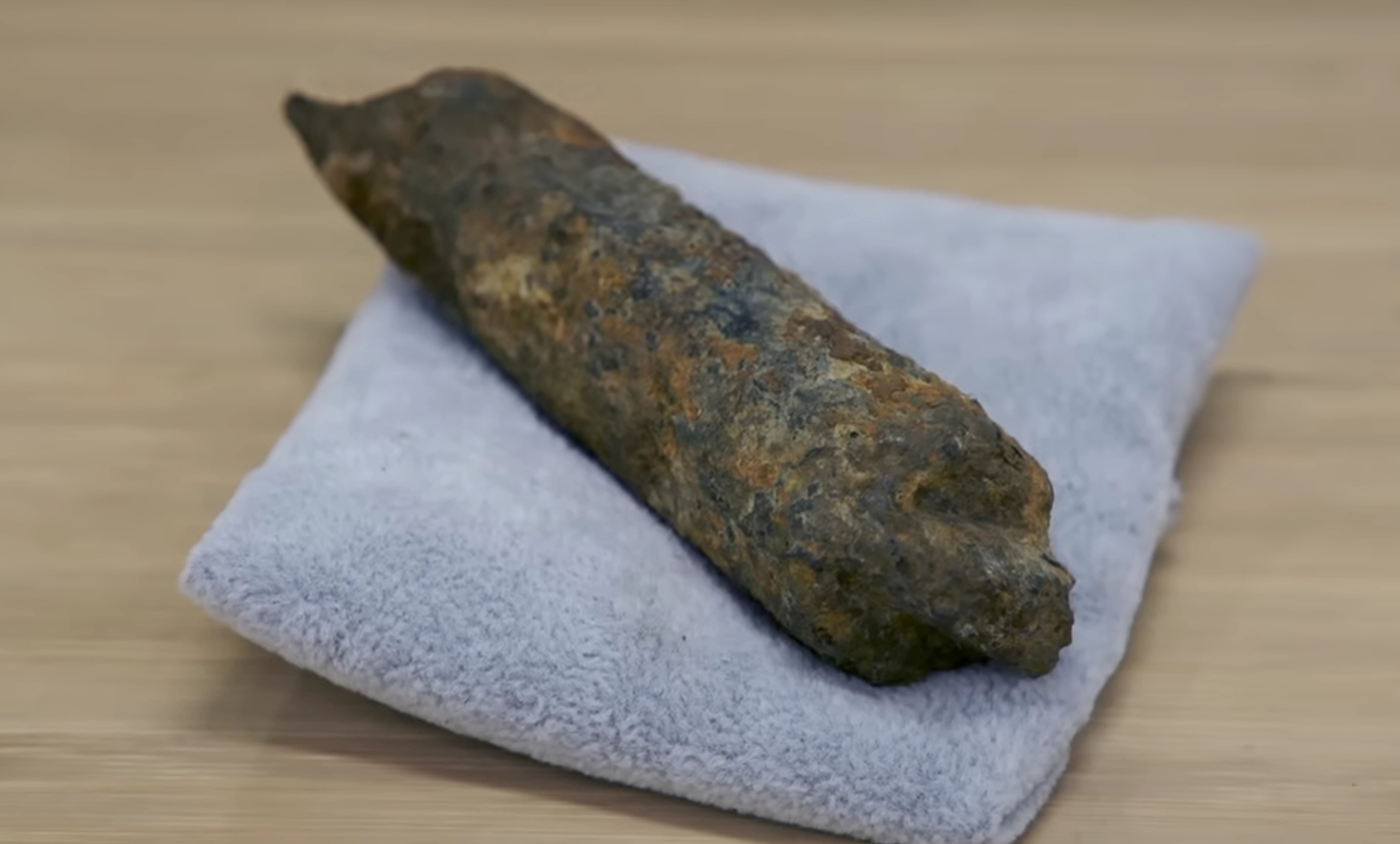
Spear-like metal points
These sharp, tapered fragments resemble spikes or tool tips. Their shape suggests intentional forging rather than accidental formation or debris. -
Chain links and rings
Some links appear hand-forged, bearing marks of early blacksmithing. The presence of rings or circular fittings hints at mechanical use — possibly to secure ropes, logs, or lifting equipment. -
Pins and structural fasteners
These pieces, irregular yet clearly crafted, may have been part of a wooden or stone framework submerged beneath the swamp.
For fans, each object taps into one of the oldest theories on Oak Island: that the swamp conceals a hidden system built centuries ago by an advanced group — possibly the same group that engineered the Money Pit, flood tunnels, or stone pathways.
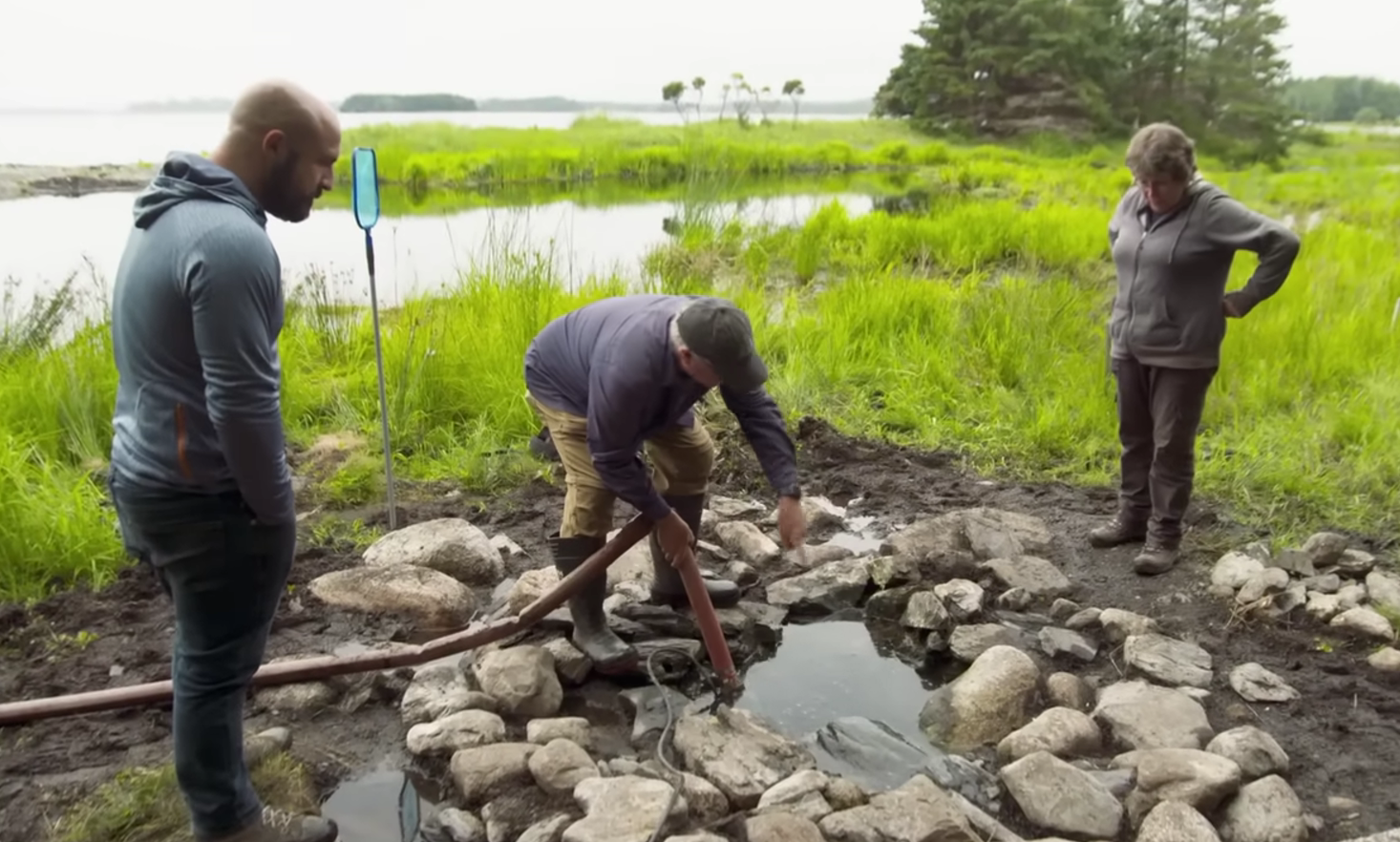
Why the Swamp Should Not Contain Old Metal — Unless Something Was Built There
A natural swamp typically contains:
-
Organic material
-
Sediment and silt
-
Waterlogged wood
-
Minimal mineral content
What it does not contain is forged metal, especially not pieces shaped by hand and appearing in patterns.
The presence of such items in a wetland environment raises immediate questions, because metal decays differently in waterlogged conditions. Items buried in peat often survive far longer than those exposed to open air, creating a time capsule effect.
Archaeologists have taken specific interest in:
1. The unusual placement of artifacts
Many items were discovered in linear paths — as though dropped along a constructed route such as a ramp, road, or platform.
2. The depth at which they were retrieved
Several objects were found beneath layers of organic buildup that take centuries to accumulate.
3. Their association with stone structures
In 2020, the team uncovered a paved stone road stretching from the swamp toward the island’s interior. Metal objects found near or on this road could be remnants of the workers who built it.
The combination of these factors has fueled a renewed push to determine whether the swamp once served as:
-
a docking area,
-
a landing zone for ships,
-
a construction platform,
-
or even a concealed entry point for transporting heavy cargo.
Could the Swamp Itself Be Man-Made?
This question has become central to the Oak Island investigation.
Several clues support the theory:
1. The swamp’s unusual triangular shape
Natural swamps rarely form perfect geometric patterns. This triangle mirrors navigational structures used in early seafaring cultures.
2. Evidence of a possible ship buried beneath the swamp
Wooden fragments, tar-like substances, and scanning anomalies have led some researchers to believe a vessel may lie trapped below.
3. The discovery of the stone road and paved areas
These features resemble medieval or early-modern construction typical of engineered loading zones.
4. Metal artifacts consistent with maritime or construction activities
Chain links and spike-like objects may have been used to anchor logs, secure planking, or guide the movement of cargo off a ship.
If the swamp was engineered, it could mean that centuries ago, someone intentionally flooded or disguised the area to hide their work — possibly a burial of treasure or sacred items.
Scientific Analysis Strengthens the Case
Over recent seasons, specialists including archaeologist Laird Niven and archaeometallurgist Emma Culligan have provided technical insight into the swamp metals. XRF analysis, corrosion mapping, and metallurgical identification have shown that:
-
Several items contain alloys typical of pre-1600 fabrication
-
Some metals are consistent with European forging techniques
-
The corrosion depth suggests a long-term presence underwater
-
The objects were likely not part of modern searcher equipment
These findings, while not definitive proof of medieval activity, strongly support the idea that something significant occurred in or around the swamp centuries before current records.
Why Fans Are So Captivated
The swamp metal discoveries combine three elements that Oak Island fans love:
Mystery
The objects appear deliberate, not accidental.
Historical possibility
Forged metal hints at organized work — not random debris.
Connection to bigger theories
If the swamp was engineered, then it may lead directly to a long-concealed vault, chamber, or tunnel system.
Many viewers believe the metal artifacts are early breadcrumbs pointing toward a hidden structure with far greater secrets.
The Investigation Continues
With each new find, the swamp becomes less like a natural wetland and more like a carefully designed environment waiting to be decoded. Whether the metal fragments belong to medieval builders, early explorers, or even groups predating recorded local history, the evidence is mounting.
And as fans know well, on Oak Island, even the smallest artifact can change the entire direction of the search.