A rare jade artifact deep underground could mark Oak Island’s most consequential discovery yet
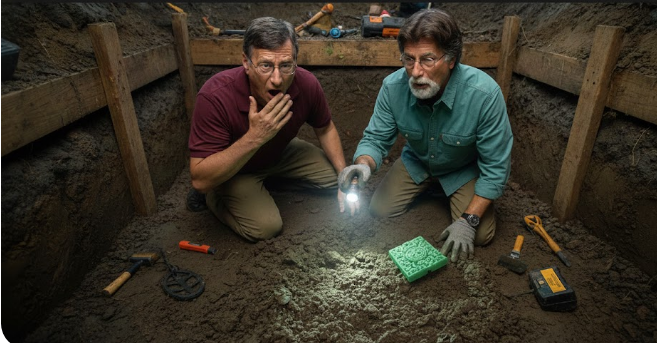
From the standpoint of an analyst who has followed The Curse of Oak Island since its earliest seasons, reports of a rare jade artifact discovered deep beneath the island represent a development of unusual significance. Not because of its estimated multi-million-dollar valuation alone, but because of what such an object implies about who was present on Oak Island, when, and why.
Unlike coins, iron tools, or wooden structures—finds that can often be tied to known colonial activity—a jade object immediately widens the historical frame. Jade is not a material casually transported or discarded. Across cultures, it has been associated with authority, ritual, and long-distance trade. If authenticated, this discovery could force the Oak Island investigation into an entirely new interpretive phase.
Why jade changes the conversation
Jade is rare in Atlantic North America, particularly in worked or ceremonial form. Its presence deep underground suggests intentional placement rather than accidental loss. For analysts, this distinction matters. Oak Island has increasingly appeared less like a chaotic dig site and more like a controlled system—engineered layers, defensive flooding, and deliberate concealment.
A jade artifact fits that pattern. Historically, jade objects were often buried as symbols of protection, status, or legacy. They were not everyday items. If this piece was placed deliberately at depth, it suggests the depositors were operating with long-term intent and significant resources.
The estimated value—potentially in the millions—derives not only from the material itself but from provenance. Jade artifacts tied to pre-modern trade networks or elite ritual contexts can exceed the value of precious metals because of their uniqueness and cultural weight.
Context within Oak Island’s evolving narrative
Recent seasons have steadily shifted the Oak Island narrative away from simple treasure hunting. The focus has moved toward systems: engineered shafts, lateral tunnels, and patterns that repeat across multiple lots. The discovery of jade deep underground strengthens the argument that Oak Island was designed, not improvised.
If the artifact was recovered from a zone already associated with structural anomalies—such as dense layers, voids, or controlled flooding—it would reinforce the idea that objects were placed in relation to architecture, not randomly buried. Analysts would immediately ask whether the jade aligns spatially with known features such as the Garden Shaft, Smith’s Cove works, or deep-density targets identified through scanning.
Implications for origin theories
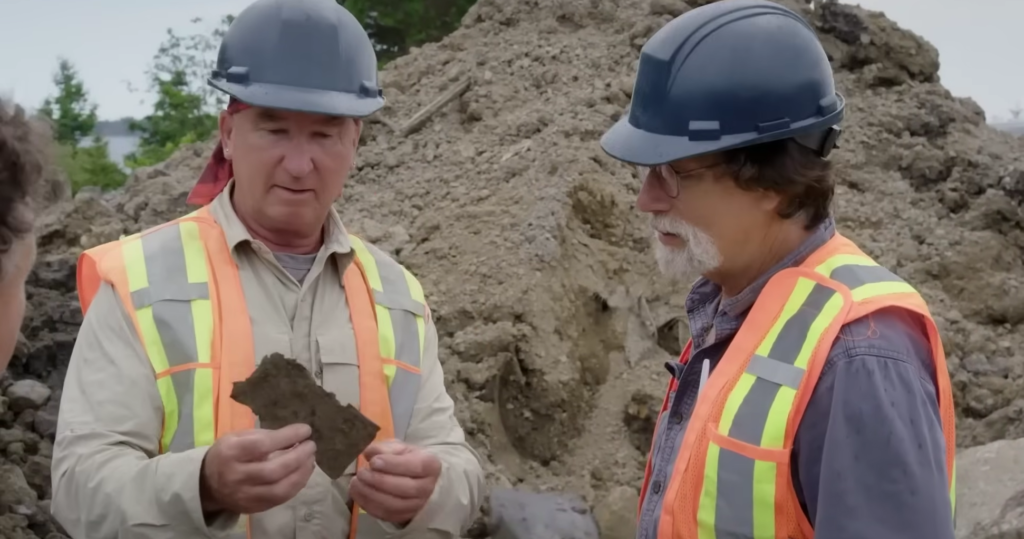
Jade raises uncomfortable but compelling questions. While commonly associated with East Asian and Mesoamerican cultures, jade also moved along ancient trade routes that extended far beyond their points of origin. A single artifact does not prove transoceanic contact, but it does demand explanation.
For Rick Lagina and Marty Lagina, the challenge will be interpretation without overreach. Expect immediate involvement from independent gemologists, mineralogists, and cultural historians. Authenticating the jade’s composition, carving techniques, and tool marks will be critical before broader conclusions are drawn.
If testing suggests the artifact predates known European settlement—or originates from a region not previously linked to Atlantic activity—the historical implications would be substantial.
Why this may slow, not accelerate, excavation
Paradoxically, a find of this magnitude often leads to caution rather than momentum. High-value, high-significance artifacts introduce legal, ethical, and preservation considerations. The team may temporarily reduce mechanical digging in favour of controlled archaeological methods.
From an analytical view, this is consistent with the Laginas’ long-term approach. When discoveries carry potential cultural importance, the priority shifts from extraction to context. Understanding where the jade was placed, how it was surrounded, and what lies nearby may be more important than immediate recovery of additional objects.
What could come next
Based on past patterns, several developments are likely:
-
Expanded expert involvement: Expect specialists in jade sourcing, isotopic analysis, and ancient trade networks to be consulted on camera.
-
Spatial reassessment: The team may re-map nearby anomalies to see whether the jade marks a node within a larger underground layout.
-
Reinterpretation of earlier finds: Artifacts previously considered out of place may gain new relevance when viewed alongside jade.
-
Heightened scrutiny: Regulatory oversight and documentation requirements may increase, slowing operations but adding credibility.
Value beyond money
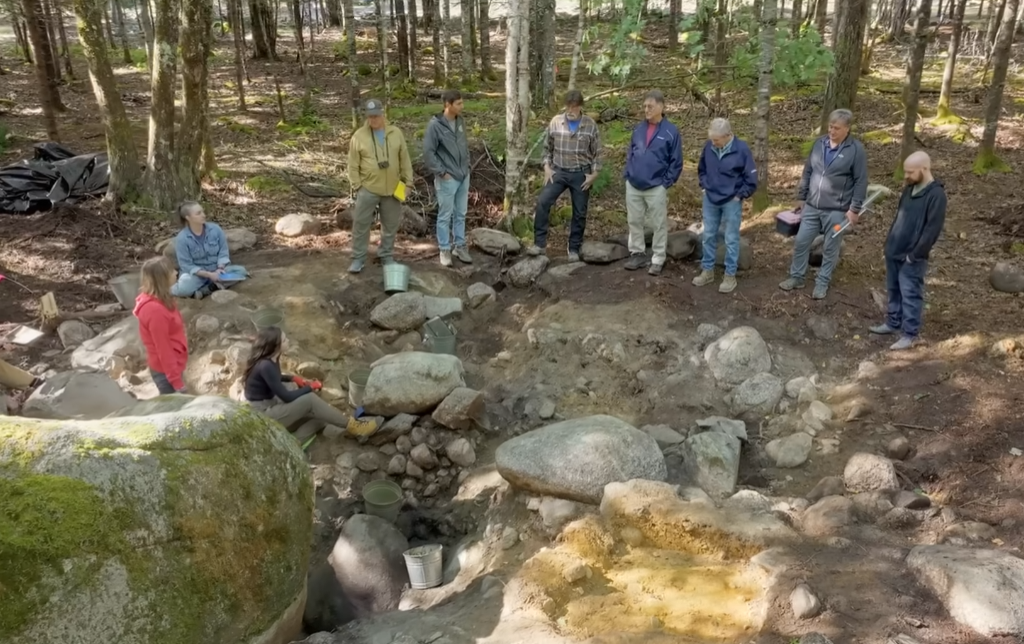
While headlines may focus on the artifact’s financial value, its true importance lies elsewhere. Oak Island’s most meaningful discoveries have always been those that reshape understanding rather than inflate totals. A jade artifact suggests intention, symbolism, and reach.
For analysts, the key question is not “how much is it worth?” but “why was it placed here?” Jade buried deep underground implies belief—belief in permanence, secrecy, or protection. It suggests the depositors expected interference and prepared accordingly.
Prediction: a pivot point, not a finale
This discovery is unlikely to conclude the Oak Island story. Instead, it may function as a pivot—redirecting attention from vertical depth to cultural context. If Oak Island was a repository, the jade may be less about wealth and more about meaning.
In analytical terms, that makes it one of the most consequential finds to date. Not because it ends the mystery, but because it reframes it. Oak Island may not be guarding a single cache, but a carefully curated legacy—one that blends engineering, symbolism, and history in ways we are only beginning to understand.