A carved stone slab on the coast of Oak Island — deciphering the slab will surprise everyone.
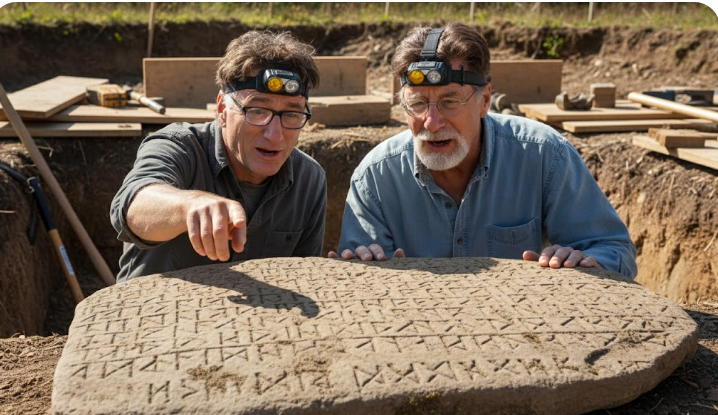
As an analyst who has followed The Curse of Oak Island from its earliest seasons, few developments carry as much long-term significance as the reported discovery of a carved stone bearing ancient symbols along Oak Island’s shoreline. On the surface, it may appear to be just another intriguing artifact. In context, however, it has the potential to reshape the entire narrative of the search — not by promising instant answers, but by reframing how the island was meant to be understood.
For decades, Oak Island has been approached primarily as a vertical puzzle: dig deeper, reach the Money Pit, defeat the flood tunnels. Shoreline discoveries have often been treated as supporting evidence rather than central clues. A carved stone found near the waterline challenges that hierarchy. It suggests intent, placement, and visibility — and possibly communication rather than concealment.
Why location matters more than the stone itself
The shoreline is not incidental on Oak Island. Smith’s Cove, the swamp, and the surrounding beaches have repeatedly produced some of the most revealing finds: wooden structures, engineered stone features, and evidence of deliberate water control. A carved stone in this zone immediately raises a critical question: was this meant to be found before anyone ever dug?
If the symbols were placed where tidal movement, erosion, and foot traffic intersect, then this was not a marker hidden for preservation. It may have been positioned to endure exposure, signaling that its message mattered more than the object itself. That distinction is crucial. Treasure markers are typically buried. Instructional markers are not.
From an analytical standpoint, this leans away from romantic treasure myths and toward engineered systems of guidance and restriction — a theme that has quietly emerged across recent seasons.
The symbols: message, warning, or alignment tool?
Early descriptions suggest the symbols do not match a single known alphabet cleanly. That ambiguity is familiar to Oak Island researchers. Similar issues have arisen with the so-called 90-foot stone, whose inscriptions were lost before modern analysis could be applied. This time, the team has tools that earlier searchers never did.
If the symbols are not linguistic in a traditional sense, they may be functional. In past episodes, researchers have explored the possibility that Oak Island uses alignment markers — stones and features placed to indicate direction, distance, or depth relative to other points on the island. A shoreline stone could act as a fixed reference, especially if aligned with inland anomalies already identified through ground scans.
The most likely next step will be multi-layered analysis: epigraphy, pattern comparison with known European and Mediterranean symbol systems, and digital reconstruction to account for erosion. If the symbols repeat elsewhere on the island — or match marks on previously recovered stones — that would immediately elevate this find from curiosity to cornerstone.
How this could redirect the dig strategy
One of the most consistent criticisms of past efforts on Oak Island is that digging often followed technology rather than theory. New machines created new holes, but not always clearer understanding. A carved stone changes that dynamic.
If the stone is interpreted as directional or instructional, the team may be compelled to pause heavy operations and reassess existing data. As an analyst, I would expect renewed focus on triangulation: plotting the stone’s position against known features such as the Garden Shaft, the swamp roadway, and deep-density anomalies already detected underground.
This could also explain why so many past efforts failed at similar depths. If searchers were meant to approach the system laterally — beginning at the shoreline and moving inward — then vertical digging would repeatedly trigger defensive responses like flooding and collapse. The stone may not point to treasure directly, but to the correct approach.
Rick and Marty Lagina’s likely response
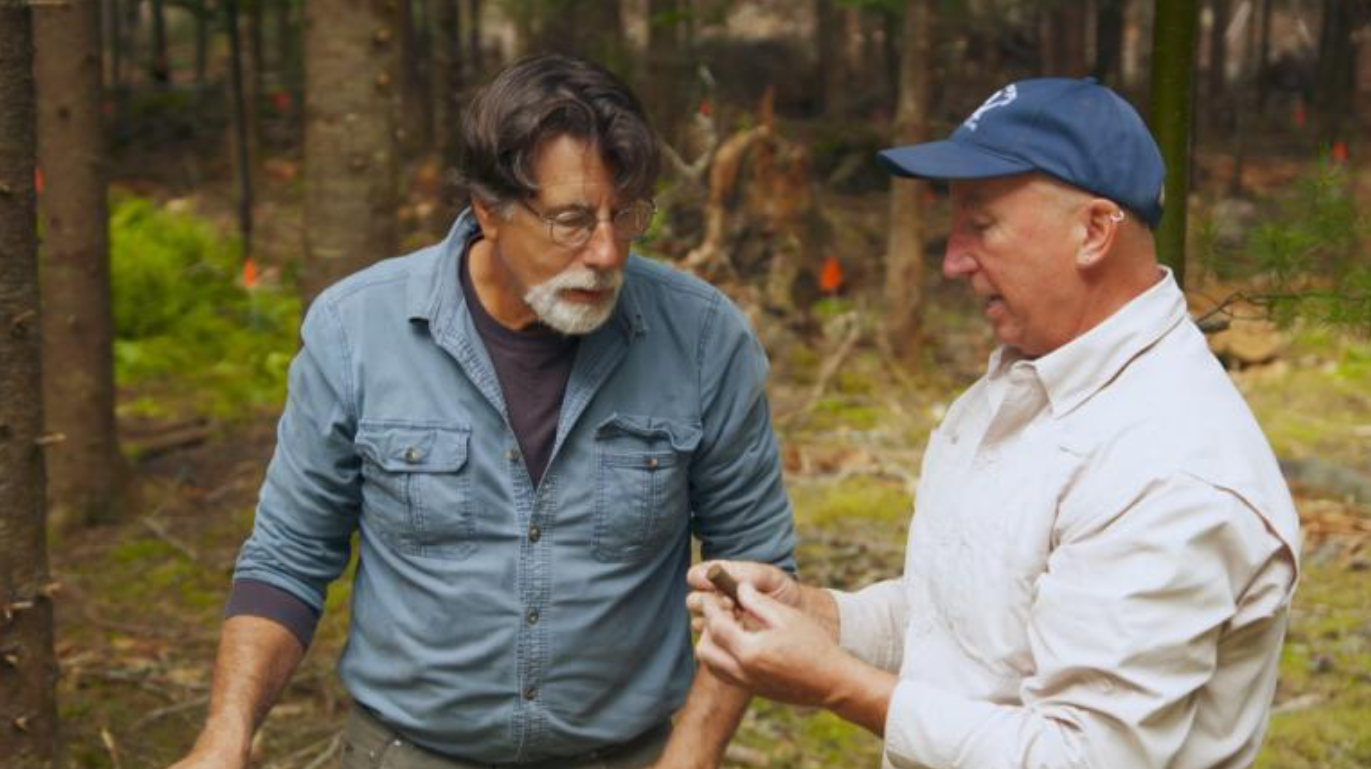
For Rick Lagina, a find like this aligns with his long-held belief that Oak Island is a designed environment rather than a random cache. Rick has consistently emphasized meaning, symbolism, and patience. A carved stone validates that philosophy.
Marty Lagina, by contrast, will likely focus on verification and risk. Expect careful testing, external experts, and restraint before any major operational shift. Marty’s influence suggests the team will treat the stone not as a breakthrough to be exploited, but as a hypothesis to be stress-tested.
This balance between emotional investment and analytical discipline has defined the show’s most productive moments — and it will be critical here.
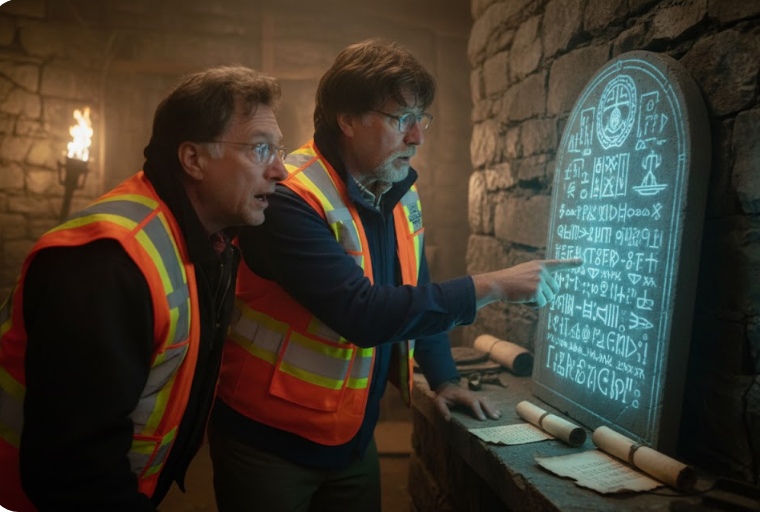
What this means for the “final key” narrative
Calling any single object the “final key” is tempting but misleading. Oak Island has never yielded answers in isolation. However, certain discoveries have acted as pivots — moments when the search changed direction rather than intensified.
If this stone connects shoreline engineering with inland structures, it could serve as that pivot. Not the end of the story, but the point where the mystery stops expanding and starts narrowing.
In predictive terms, I would expect the following developments:
-
A temporary slowdown in deep excavation
-
Expanded shoreline and near-surface surveys
-
Cross-comparison with historic maps and European symbol systems
-
A reframed theory presented in the war room, shifting emphasis from “what is buried” to “how the system functions”
Conclusion: not treasure, but understanding
The greatest value of the carved stone may not lie in gold, artifacts, or monetary estimates. Its importance lies in intent. Someone placed it there to be seen, interpreted, and acted upon.
Oak Island has always resisted force. It has rewarded patience, systems thinking, and humility. If this stone truly belongs to the original design of the island, then it may represent the closest thing yet to a conversation across centuries — one that asks not how deep to dig, but whether we are finally listening the right way.