A Tunnel, a Spike, and a Timeline That Changes Everything on Oak Island

Deep beneath the Money Pit area on Oak Island, a discovery made during the excavation of caisson AC-1 has introduced one of the most consequential questions the fellowship has faced in recent years: who was working underground here long before the island’s famous discovery in 1795, and why?
After the collapse of the team’s first caisson target, TB-1, attention shifted to AC-1. At approximately 96 feet below the surface—far shallower than the depth where man-made structures were expected—members of the team, including Rick Lagina and Gary Drayton, began recovering substantial pieces of old timber from the spoils. The wood was immediately notable: large, hand-hewn beams with no visible iron fasteners, suggesting a construction method older than many known searcher tunnels.
The team quickly recognized the implications. If these timbers were not part of a modern recovery effort, they could represent a previously unknown tunnel—one potentially connected to deeper structures in the Money Pit area. As Gary Drayton observed, the wood showed characteristics consistent with early construction, reinforcing the possibility that the tunnel predates known 19th-century digging.
The situation escalated further when a hand-forged iron spike emerged from the same spoil material. Heavy, chunky, and unmistakably old, the spike immediately drew attention. Its rose-shaped head and square cross-section suggested pre-industrial forging techniques. While the wood from the tunnel itself contained no metal fasteners, the spike’s presence raised the possibility that it came from a different structure—perhaps a container or chest associated with the tunnel.
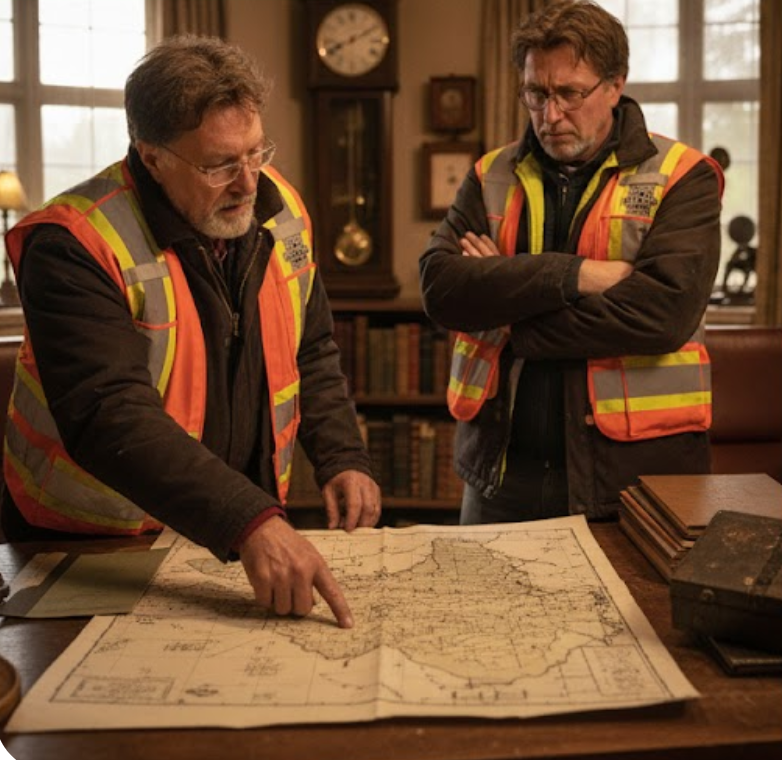
To establish clarity, the artifact was submitted for scientific analysis. In the war room, Emma Culligan presented the results of X-ray microscopy and CT scans. The findings were striking. The spike was confirmed to be wrought iron, forged in a charcoal-fueled furnace rather than a coal-based one, with sulfur and phosphorus levels consistent with English metallurgy. The manufacturing characteristics—angled hammer strikes and a rosehead design—pointed decisively to a mid-18th century date, with the possibility of an even earlier origin.
Gary Drayton, drawing on decades of experience in Europe, offered a complementary perspective. According to him, spikes of this type were common in the 1600s and frequently used in cabinets, doors, and chests rather than structural tunnel supports. That observation introduced a critical distinction: the spike may not belong to the tunnel itself, but to something placed within or near it.
This distinction matters because it suggests layered activity beneath the Money Pit. Marty Lagina emphasized that the most important takeaway was not any single historical theory, but the undeniable fact that someone was working deep underground well before the official discovery of the Money Pit. That alone challenges long-standing assumptions about Oak Island’s timeline.
Attention soon turned to one historical figure whose movements align closely with the spike’s likely age: Sir William Phips. In the late 17th century, Phips famously recovered vast quantities of Spanish treasure from the wreck of the Concepción. While records indicate that only a fraction of the remaining treasure was officially recovered during a second expedition, questions have persisted for centuries about what happened to the rest.
Research presented to the team suggests that Phips and his associate, Andrew Belcher, were present in Mahone Bay during the period when the missing treasure would have needed to be secured. If true, Oak Island—already known for its engineered underground structures—would have been an ideal location. The spike recovered from AC-1, dated to the appropriate era, may represent physical evidence supporting that possibility.
The theory extends further. Some researchers propose that Phips may have reused or adapted an existing subterranean vault, potentially one constructed centuries earlier. This would explain why the team continues to find evidence of multiple construction phases at varying depths, including older wood beneath newer layers and artifacts that span different historical periods.
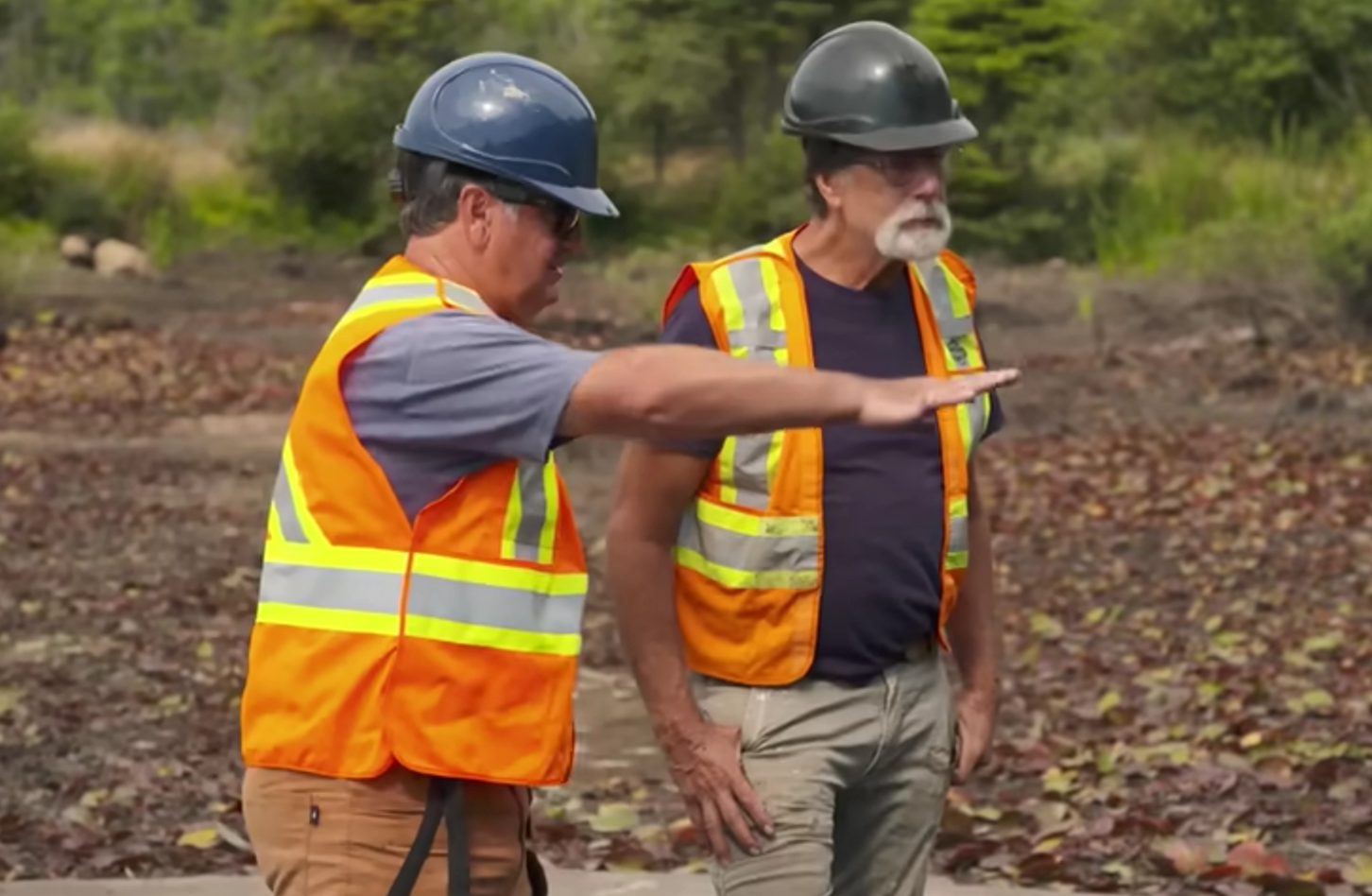
Rick Lagina framed the moment as a threshold. The team now has credible evidence of early underground activity, a scientifically dated artifact, and a tunnel that may lead toward deeper structures such as the so-called Aladdin’s Cave. As Dr. Ian Spooner has often noted, treasure does not exist in undisturbed soil—it requires space, structure, and intent. The discoveries in AC-1 increasingly point toward all three.
While definitive answers remain elusive, the significance of this moment is difficult to overstate. The combination of hand-hewn timbers, an early iron spike, and a tunnel at unexpected depth suggests that Oak Island’s story is far older and more complex than once believed. Whether the spike ultimately proves to be linked to a chest, a recovery effort, or an original deposit, it confirms that the Money Pit area was actively used long before history says it should have been.
As Rick Lagina put it, the team now stands at the edge of something consequential. The door to Aladdin’s Cave may not yet be open—but for the first time, the key appears to be firmly in hand.