Important announcement: The release date for the first issue of Clarkson Farm season 5 has been set.
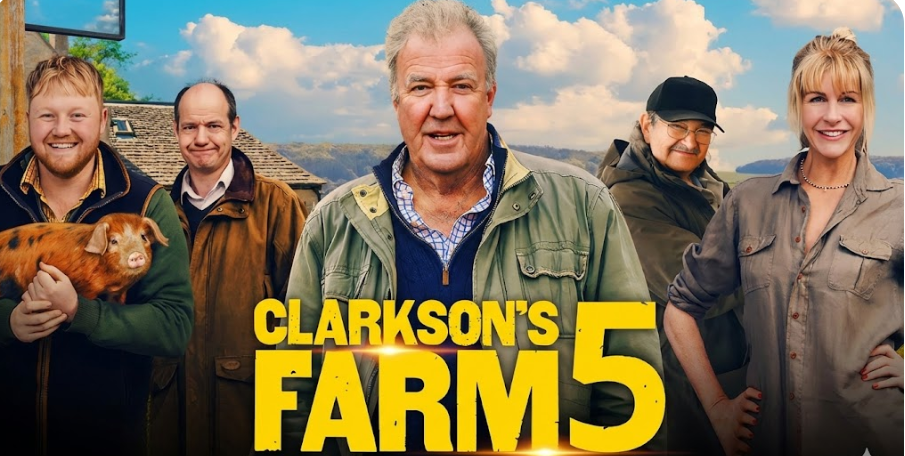
From an analyst’s perspective, the decision to set a release date for the first episode of Clarkson’s Farm Series 5 is not a routine scheduling announcement. It is a strategic signal—one that reveals how the programme has evolved from an experimental celebrity project into a cornerstone of factual entertainment with real influence on public discussion about farming, food systems, and rural life.
Since its debut, the series has followed Jeremy Clarkson as he navigates the realities of running Diddly Squat Farm. What began as curiosity-driven viewing has matured into appointment television. By confirming a clear launch window for Series 5, the producers and Prime Video are signalling confidence—not only in the content already filmed, but in the show’s ability to anchor a broader seasonal conversation.
Why the timing is significant
Setting the premiere date early suggests that post-production is largely complete and that the editorial arc of the new series is locked. In previous years, release timing has been used to align episodes with real-world farming cycles: planting, harvest, livestock management, and winter preparation. A fixed date allows the series to mirror the agricultural calendar more closely, reinforcing the sense that viewers are following events as they unfold, rather than watching a retrospective.
For Series 5, this matters because the scope of the programme has expanded. Diddly Squat is no longer just a farm; it is a complex operation involving retail, hospitality, local supply chains, and regulatory oversight. A confirmed premiere date implies that these threads have been woven into a coherent narrative that can sustain weekly discussion rather than isolated highlights.
What Series 5 is likely to focus on
Based on the trajectory of earlier series, Series 5 is expected to deepen three key strands.
First, diversification. Previous episodes showed how reliance on traditional farming alone leaves operations exposed to weather, pricing pressure, and policy constraints. Series 5 is likely to examine how Diddly Squat continues to balance farming with on-site ventures—without losing sight of its core agricultural identity. This is a tension many real farms face, and it resonates strongly with viewers beyond entertainment value.
Second, responsibility. Clarkson’s approach has matured over time. Early mistakes were often played for humour; later series placed greater emphasis on learning, adaptation, and accountability. With a firm release date set, it is reasonable to expect Series 5 to continue this progression, portraying Clarkson less as an outsider and more as a participant who understands the consequences of decisions on land, animals, and people.
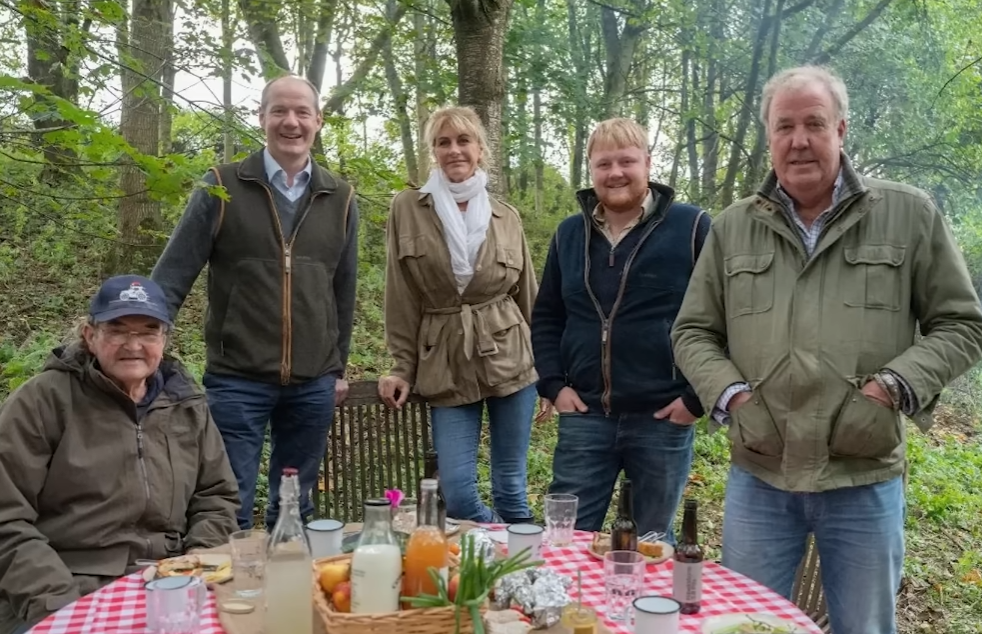
Third, community. The programme’s strength increasingly lies in its supporting cast—figures such as Kaleb Cooper, Lisa Hogan, Charlie Ireland, and Gerald Cooper. Their roles have evolved from commentary to leadership. Series 5 is likely to push this further, showing how collective decision-making shapes outcomes on the farm and how local relationships influence what is possible.
Editorial confidence and audience expectation
Announcing the first-episode release date also reflects confidence in audience demand. Clarkson’s Farm now attracts viewers who are not traditionally drawn to farming programmes. That broad appeal places pressure on Series 5 to deliver substance as well as familiarity. Analysts will be watching closely to see how the series avoids repetition while staying accessible to new viewers.
A fixed launch date helps manage that expectation. It allows promotional messaging to focus on themes rather than surprises, positioning the series as a continuation of an ongoing story rather than a reinvention. This is important for maintaining trust with an audience that has become invested in the farm’s long-term outcomes.
What this could mean for the wider format
From a format-analysis standpoint, Series 5 may act as a benchmark for how celebrity-led factual programmes age. Many such series struggle to maintain relevance beyond initial novelty. Clarkson’s Farm has avoided that pitfall by leaning into complexity rather than simplifying it. A clearly scheduled premiere suggests that the producers believe this approach still has momentum.
There is also a broader industry implication. The show has influenced how farming is discussed in mainstream media, often prompting debate about policy, sustainability, and food security. By fixing the release date, Prime Video effectively sets the timetable for that discussion to resume—something few entertainment programmes can claim.
Looking ahead
While specific episode content remains under wraps, the act of setting a release date tells us enough to make informed predictions. Series 5 is unlikely to rely on spectacle alone. Instead, it will probably continue its emphasis on process, consequence, and adaptation—showing that progress on a farm is measured in seasons, not moments.
For viewers, the confirmed premiere offers reassurance that the story of Diddly Squat is entering its next phase with intent and direction. For analysts, it marks a moment where Clarkson’s Farm moves further from novelty and closer to institution. And for the wider conversation about rural life, it signals that the programme is ready once again to place farming at the centre of public attention—on a date now firmly set in the calendar.