Alison Hammond Visits Diddly Squat and Helps Out on Clarkson’s Farm!
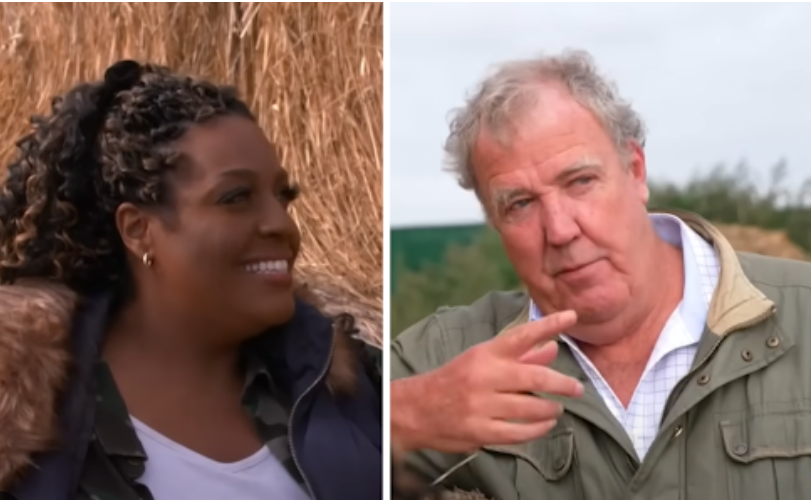
By any conventional measure, the journey from roaring stadiums to muddy fields should feel like an awkward leap. Yet Clarkson’s Farm has turned that leap into one of British television’s most reliable success stories. With the team at Diddly Squat Farm confirming another series, the programme continues to do what few shows manage: entertain a mass audience while quietly changing how people think about farming.
At its centre is Jeremy Clarkson, an unlikely standard-bearer for the countryside. Once best known for supercars and sharp one-liners, Clarkson now spends his days wrestling with paperwork, weather windows and livestock logistics. The appeal lies not in a polished reinvention, but in the visible strain of learning on the job. Farming, as the series repeatedly shows, is not a lifestyle accessory; it is an all-consuming business that demands constant attention.
That reality is reinforced by the people around him. Kaleb Cooper, Clarkson’s forthright farm manager, has become an unexpected star in his own right. His blunt assessments of Clarkson’s decisions cut through any lingering romance. Clarkson, Cooper often points out, has “just enough knowledge to be dangerous” — a line that neatly captures the tension at the heart of the show. It is not scripted rivalry; it is the friction of experience meeting enthusiasm.
Alongside them is Lisa Hogan, who oversees the retail side of the operation. The Diddly Squat Farm Shop has grown from a modest sideline into a destination, drawing queues that sometimes stretch towards the main road. What began as a simple idea — selling produce from the farm — has turned into a lesson in rural enterprise. The shop’s success brings income, but also brings planning challenges, traffic concerns and the delicate balance between popularity and practicality.
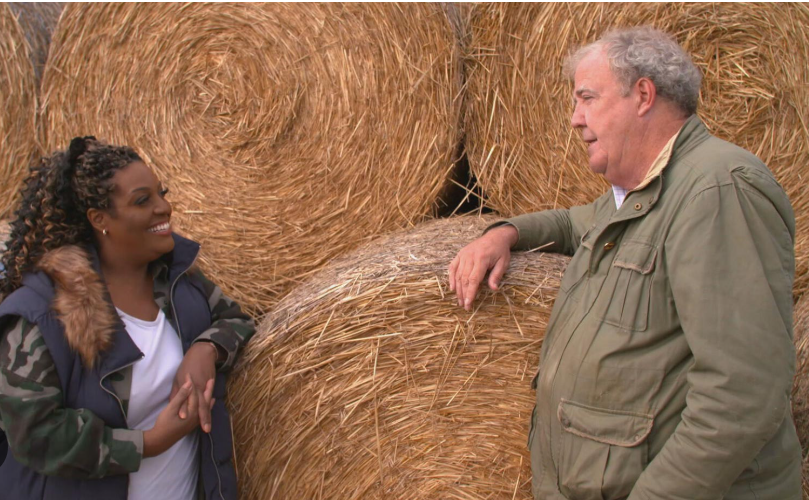
The show’s strength is that it never pretends these problems are abstract. Viewers see the forms, the inspections and the endless compliance checks that sit behind every harvest. Clarkson’s frustration with agricultural paperwork is familiar to farmers across the country, and his on-screen confusion often mirrors public misunderstanding about how food is produced. The series works because it makes those invisible pressures visible.
There is also a broader narrative at play. Clarkson’s Farm arrives at a time when British agriculture faces rising costs, unpredictable weather and shifting policy frameworks. Rather than offering lectures, the programme embeds those realities in everyday moments: a delayed harvest, an equipment failure, or a conversation about whether an idea is financially viable. When Clarkson talks about needing to think through “30, 40, 50 things a day,” it resonates far beyond television.
Crucially, the show avoids presenting Clarkson as a solitary figure. The farm’s progress depends on collaboration. Cooper’s practical instincts, Hogan’s commercial planning and a wider team of contractors and advisers all shape decisions. That collective effort undercuts the idea of the heroic individual farmer and replaces it with something closer to reality: a network of people, each carrying responsibility.
The retail side of Diddly Squat has also become part of the story. From honey to beer brewed with the farm’s own barley, diversification is shown not as a buzzword but as a necessity. Sitting in a barn filled with grain, Clarkson speaks about the satisfaction of seeing raw produce turned into something tangible. It is a simple moment, but it explains why the programme connects with viewers who have never set foot on a farm.
Another reason for the show’s popularity is tone. The humour is self-aware rather than mocking, and the mishaps are treated as learning moments rather than punchlines. When Clarkson misjudges a task, Cooper’s response is direct, not cruel. The result is a dynamic that feels authentic, rooted in shared goals rather than manufactured conflict.
That authenticity extends to the shop’s success. Hogan openly admits she underestimated demand. The queues, the traffic management and the pressure to keep shelves stocked all become part of the narrative. It is a reminder that rural success brings its own complications, especially when a quiet village becomes a national attraction.
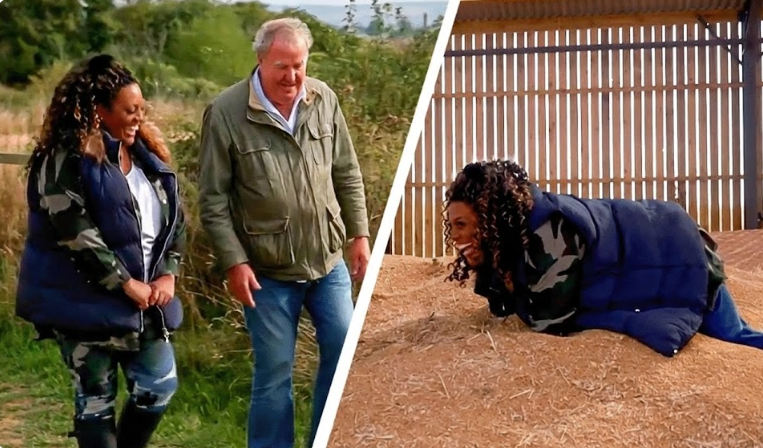
As the new series approaches, the formula remains unchanged — and that may be the point. There are no grand reinventions promised, just another year of trying to make a working farm pay its way. Clarkson continues to take risks, albeit with protective headgear firmly in place, while acknowledging that effort matters more than bravado. “Work hard,” he says, “and you get back what you put in.”
For Clarkson’s Farm, that philosophy has paid off. By blending humour with hard realities, the programme has given mainstream audiences a clearer view of modern farming than many documentaries manage. It entertains, but it also informs — not through speeches, but through muddy boots, busy barns and the quiet satisfaction of a job done properly.
As the next series launches on Amazon Prime Video, the appeal remains straightforward. Viewers are not tuning in to watch a celebrity play farmer. They are watching a farm try to survive, adapt and, occasionally, succeed — with all the uncertainty that comes with it.