Jeremy Clarkson ‘BLASTS’ Steve Barclay — ‘Green Scheme’ Killing British Farming
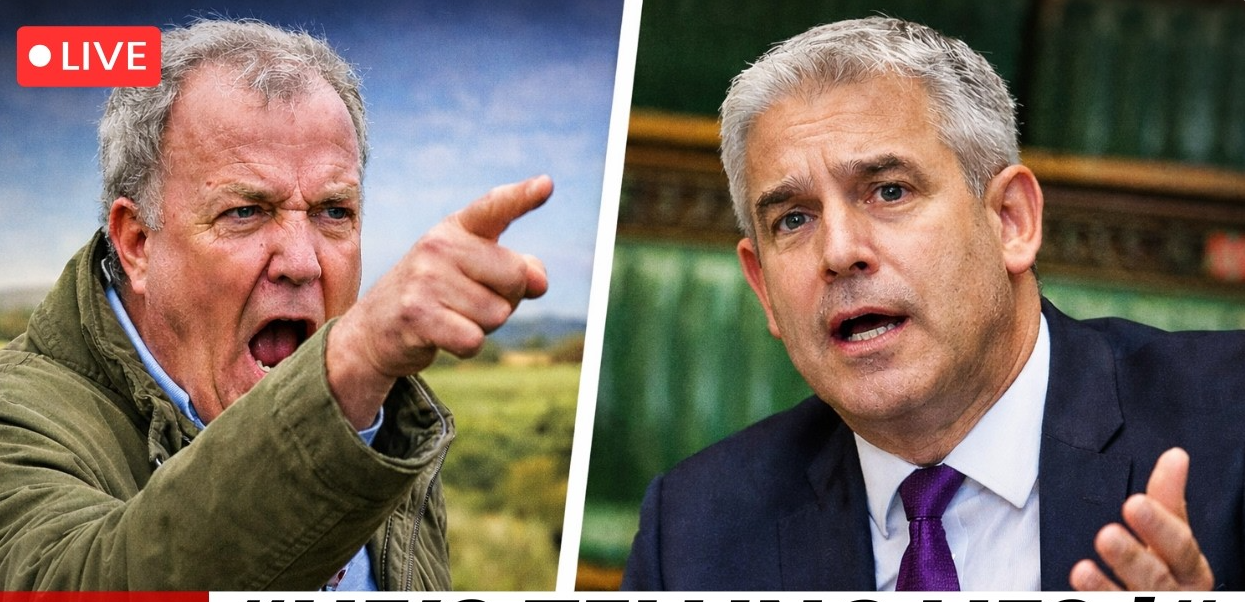
When Jeremy Clarkson took his seat in a Westminster committee room this week, officials appeared confident the discussion would follow a familiar script. The topic was rewilding — the government’s flagship land-use policy designed to restore nature by paying farmers to take land out of food production. What followed instead was a direct and uncomfortable challenge to the foundations of that policy, delivered in Clarkson’s trademark plain language.
Across the table sat Steve Barclay, supported by advisers and briefing documents. Barclay outlined the programme with assurance: farmers could earn up to £700 per hectare to convert productive land into woodlands, wetlands, or wildflower meadows. He described environmental gains — biodiversity, flood prevention, carbon capture — and highlighted early uptake, with more than 50,000 hectares already committed.
Clarkson listened without interruption. Then he asked a question that shifted the room.
“If farmers stop producing food,” he said, “what exactly do you expect people to eat?”
The question cut through the language of sustainability and into an issue that, Clarkson argued, was being carefully avoided: food supply. Britain already imports roughly 45% of what it consumes. Under full implementation of rewilding targets, official projections suggest domestic production could fall by a further 15–20%. Clarkson described that trajectory not as balance, but as dependency.
Barclay responded with familiar reassurances — efficiency, diversification, global trade — but Clarkson pressed further. Taking land out of production while tightening limits on fertiliser use, water access, and crop protection, he said, created an impossible equation. Less land. Fewer tools. More regulation. Yet farmers were still expected to produce more.
“It only sounds reasonable until you say it out loud,” Clarkson told the committee.
The discussion then turned to money. Barclay repeatedly cited the £700-per-hectare incentive as evidence of generous support. Clarkson countered with figures from farming organisations showing that productive agricultural land typically generates £2,000–£3,000 per hectare in economic value. Rewilding payments, he argued, were not a reward but compensation for surrender.
According to estimates from the National Farmers’ Union, widespread rewilding could result in the loss of up to 40,000 agricultural jobs. Clarkson described those figures not as abstract modelling, but as real communities facing contraction. When farms lose income, he said, villages lose customers, services shrink, and younger generations leave.
“You’re not just changing land use,” he told the committee. “You’re dismantling rural Britain.”
The argument widened further when Clarkson addressed imports. Reduced domestic production does not eliminate demand; it simply shifts supply elsewhere. British beef replaced by South American beef. British grain replaced by shipments from Eastern Europe or South America. In many of those regions, farming standards are lower, chemical use higher, and deforestation more prevalent.
“Environmental damage doesn’t disappear because it happens abroad,” Clarkson said. “You’re not solving the problem — you’re exporting it.”
When Barclay replied that the policy focused on domestic environmental targets, Clarkson challenged the logic. Carbon released overseas still affects the same planet, he argued, and habitat loss elsewhere still damages global biodiversity. National accounting, he said, was not the same as global responsibility.
The most sobering moment came when Clarkson turned to food security. Britain currently produces around 60% of the food it consumes. Under aggressive rewilding scenarios, that figure could fall closer to 40%. Clarkson asked what happens when global markets fail — during conflict, supply disruptions, or international shortages.
“When exporting countries decide their own populations come first,” he said, “what happens to us?”
Food security, he argued, should be treated as strategic infrastructure, not an optional economic sector. Other European nations actively protect domestic agriculture. Britain, he suggested, was moving in the opposite direction — paying producers to exit while assuming global stability would always hold.

By the end of the session, the atmosphere had changed entirely. What began as a routine policy discussion had become a confrontation over national priorities. MPs spoke over one another. Advisers whispered urgently. Barclay, once composed, appeared cautious and defensive.
Clarkson’s closing point was simple. If environmental improvement is the goal, he said, farmers should be supported to farm better — improving soil health, integrating habitats, adopting smarter technology — not encouraged to stop producing food altogether.
“Farming isn’t something you can shrink on paper without consequences,” he concluded. “Once that knowledge, that structure, that resilience is gone, you don’t rebuild it easily.”
The committee adjourned without resolution. But one question lingered long after the room emptied: if a country steadily sidelines its own farmers, what exactly is its long-term plan for feeding itself?