The Templar Secret Exposed: How a $100 Million Treasure Was Found Beneath Oak Island’s Swamp
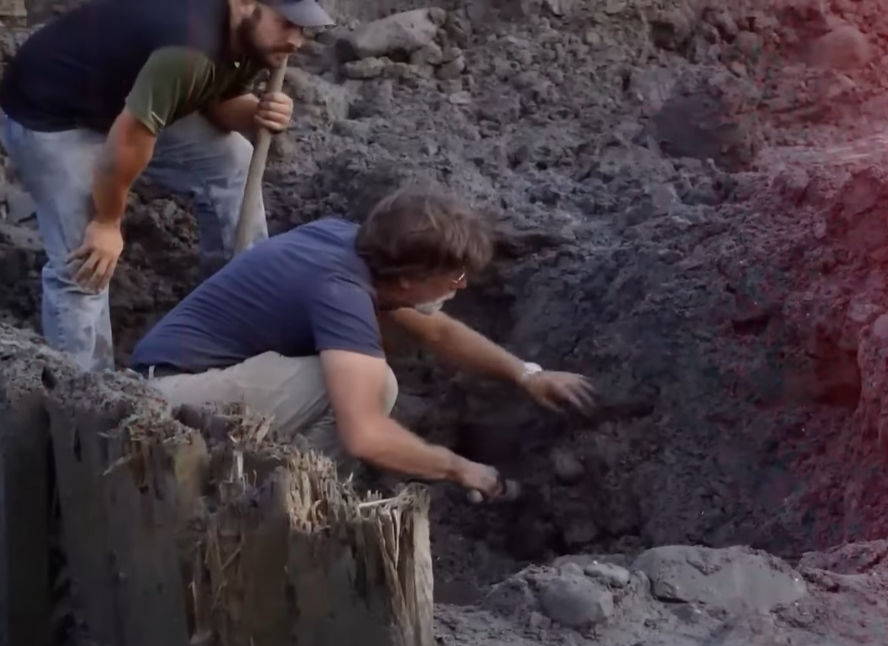
In a stunning revelation that could rewrite the history of the North American continent, Rick Lagina and his team have officially uncovered a sealed Templar vault located 180 feet beneath the Oak Island swamp. This momentous discovery, valued at an astounding $98 million in precious metals and historical artifacts, is a significant step forward in the investigation of the island’s long-standing mystery. What’s even more extraordinary is that this find may not just be another chapter in the Oak Island treasure hunt—it may be the confirmation of a centuries-old theory that Oak Island was never simply a treasure trove but rather a carefully concealed sanctuary for the exiled Knights Templar.
The Breach at 180 Feet: A Monumental Breakthrough
The discovery was the result of a groundbreaking sonar mapping project, which identified an anomaly deep beneath the island’s bedrock, positioned directly in alignment with the famed Money Pit. Unlike previous excavations, which focused on wooden shafts and tunnels, this chamber was carved directly into the stone and sealed with marine clay—a method that suggests the builders were not only skilled in construction but also well-versed in preventing saltwater corrosion.
Upon breaching the chamber’s outer seal, the team was greeted with an astonishing find—a weathered limestone slab adorned with a cross pattée, a symbol unmistakably linked to the Knights Templar. Carbon dating placed the stone’s creation in the early 14th century, predating the voyage of Christopher Columbus by nearly two centuries. This discovery not only challenges long-held theories about Oak Island’s purpose but also ties the island to one of the most secretive and powerful medieval orders in history.
The Guardian Mechanism: A Sophisticated Defense System
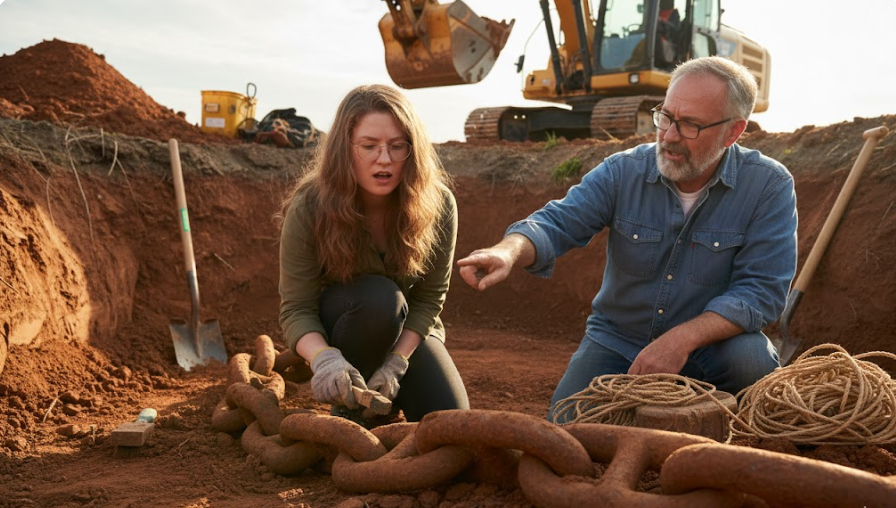
As if the discovery of the Templar cross wasn’t enough, the team was astounded to uncover what has been described as a “Guardian Mechanism” protecting the vault. This complex system, resembling 14th-century naval architecture, consisted of interwoven brass pulleys and wooden valves embedded in the bedrock. Experts believe these mechanisms were designed as a self-destructing defense system, likely conceived by seafaring Templars who utilized their ship-rigging expertise to create an ingenious protection mechanism.
Had the team used conventional drilling methods, the entire chamber would have been flooded, or the walls would have collapsed under the weight of the “booby traps.” It’s a testament to the brilliance and foresight of the Templars that their creation not only withstood centuries of natural forces but also foiled every attempt to locate it, even up until this very moment.
A Ceremonial Chalice: The Crown Jewel of the Discovery
Perhaps the most intriguing and valuable artifact uncovered in this vault is a ceremonial chalice, found centrally located in the chamber. The chalice’s design is adorned with a blooming rose—a symbol famously adopted by the Rosicrucians, whose roots trace back to medieval Templar rituals. But the chalice’s significance goes beyond its aesthetic beauty.
Laboratory testing conducted on-site revealed that the chalice is made from a unique metallurgical blend of Byzantine gold and Frankish silver. This “metallurgical bridge” suggests a fusion of Eastern and Western craftsmanship that was unprecedented since the Crusades. Additionally, an inscription on the chalice’s interior rim, Veritas sub rosa (“Truth beneath the rose”), references the Templar oath of absolute secrecy. This connection to the Templars’ clandestine nature adds yet another layer of mystery and importance to the artifact, making it not only a historical treasure but a spiritual symbol tied to one of the world’s most secretive organizations.
A Global Diplomatic Incident: The Vatican’s Involvement
The ramifications of this discovery have transcended television entertainment and entered the realm of international diplomacy. Representatives from the Vatican’s Sacred Antiquities Department have already arrived in Nova Scotia, citing papal records from 1312 that reference a “missing sacred container” that aligns perfectly with the chalice’s dimensions.
As the Vatican, along with Canadian and French officials, work to establish conservation protocols, Oak Island has now been transformed into a high-security archaeological facility. Access to the site is highly restricted while experts determine the legal status of the items recovered. The possibility that these artifacts are consecrated religious objects raises significant questions about ownership, preservation, and what they could mean for both religious history and global politics.
The Greater Repository: A Global Search for Hidden Relics
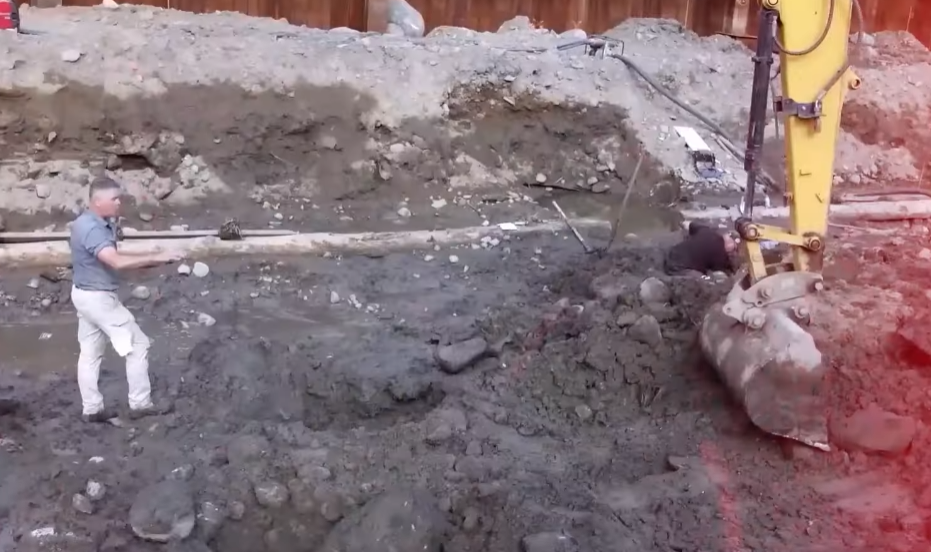
While the treasure discovered so far is astounding, experts believe this may only be the tip of the iceberg. Emma Culligan, the researcher responsible for uncovering this hidden vault, used infrared imaging on the limestone “entryway stone” to find hidden coordinates indicating a remote landmass over 1,200 kilometers away in the North Atlantic. The Latin inscription accompanying the coordinates, Hic est aramino, arma ultra est (“This is the lesser repository, the greater exists beyond”), suggests that the treasure found on Oak Island is merely a directional guide to a much larger cache of artifacts.
This revelation means that Oak Island, once believed to hold a singular treasure, could be the first stop in a global search for an even more significant hoard. If Emma’s calculations are correct, the Knights Templar didn’t just hide their treasure on Oak Island—they might have left a network of clues leading to their true legacy scattered across the globe. The prospect of finding a hidden Templar fleet and further sacred relics that could reshape the story of North America is now more likely than ever.
A Legacy and Future Unfolding
Rick Lagina and his team are now facing the most profound moment of their decades-long search for Oak Island’s secrets. The discovery of the Templar vault beneath the swamp is not just a singular breakthrough; it’s the beginning of a global quest that could unearth a vast network of Templar treasure and historical relics. The vault’s discovery may finally answer questions that have lingered for centuries, while opening new doors to mysteries that were never meant to be uncovered.
The implications for history are vast, and the world is watching. For Oak Island’s team, the journey may have just begun. With so many secrets yet to be uncovered, Oak Island may yet prove to be the site of the greatest discovery in modern archaeological history.