THE PEARL IN THE VOID: FELLOWSHIP UNCOVERS “UNQUESTIONABLE” HUMAN STRUCTURE ON LOT 8
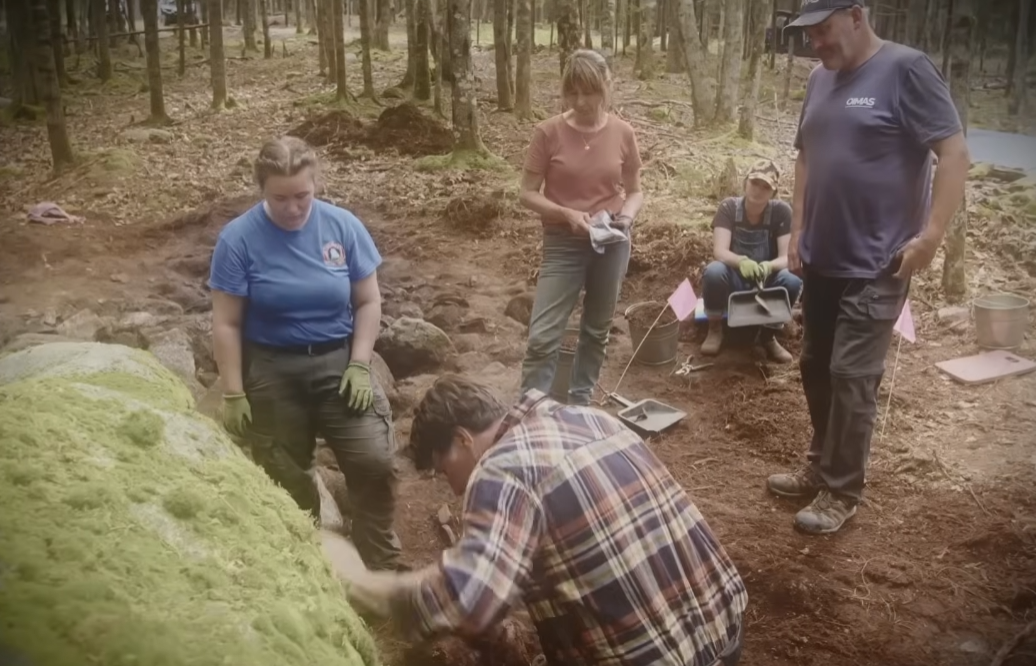
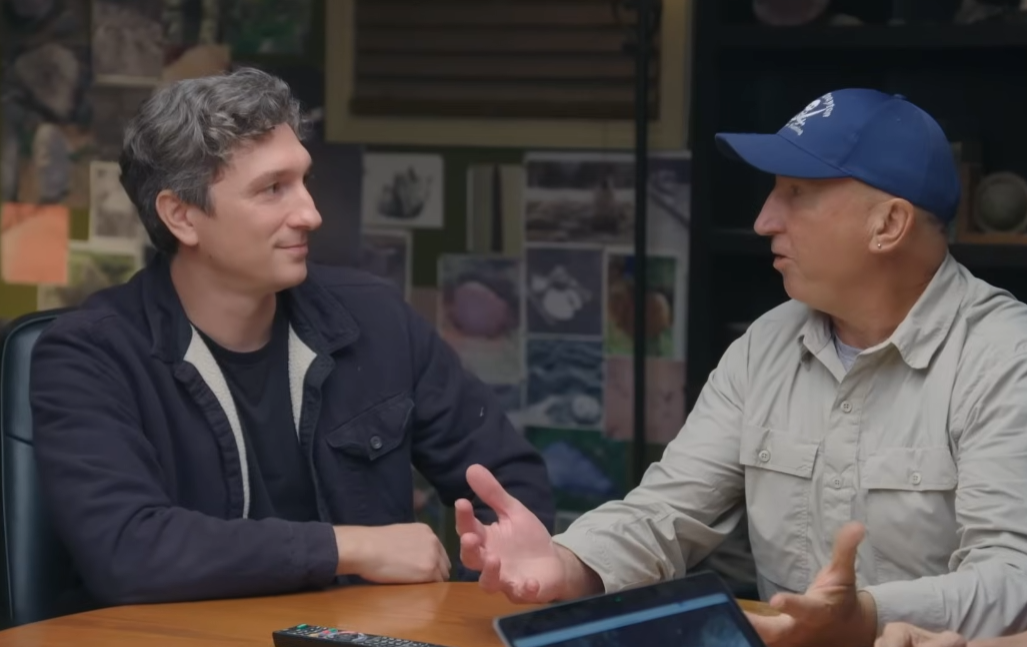
The Oak Island War Room was the scene of intense debate this week as Rick Lagina and his team of investigators confronted a discovery that many are calling the most “perplexing” archaeological feature found on the island to date. On Lot 8, a massive boulder—held in place by a series of deliberately spaced stones—has revealed a hidden subterranean void that could hold the key to the island’s legendary treasure.
A Masterpiece of Misdirection?
The discovery began when team member Leah Nan identified a massive boulder surrounded by partially buried rocks. Upon excavation, the team realized the boulder was not a natural deposit. Instead, it appears to be “pinned” in place by a series of smaller stones, creating a deliberate, open void beneath its massive weight.
“It is an understatement to say we are interested in what this represents,” Rick Lagina stated during a briefing. “There is a huge human interface factor here. It’s unquestionable. This was built by the hand of man.”
The feature, now known as the “Lot 8 Boulder,” suggests a high degree of engineering. According to lead archaeologist Fiona Steel, the soil beneath the rock has been disturbed, following a path that leads directly into the “underbelly” of the feature. The team’s working theory is that someone in the distant past excavated this area specifically to place an object beneath the boulder before sealing it with a pathway of stones.
The “Pearl” Beneath the Bedrock
The investigation reached a fever pitch when a snake camera was inserted into the narrow void beneath the rock. As the team watched the grainy monitor, the camera bypassed standard geological debris and focused on a “perfectly circular” object that defied the surrounding natural formations.
“It looks like there’s a pearl,” one team member exclaimed as the camera captured a luminescent, spherical shape deep within the cavity. While Gary Drayton cautioned that they lacked a sense of scale, the team noted the object’s “too perfect” geometry and almost glowing surface.
“Your mind goes immediately to pirates and pearls,” Rick Lagina admitted, though he remained characteristically cautious. “It’s hard to believe that it’s a stone. It’s perfect.”
Strategy: The Great Debate
The discovery has created a rift in the team’s tactical approach. Marty Lagina, fueled by the visual of the “pearl,” argued for immediate action. “I want to lift this rock tomorrow,” Marty said. “I look at it and say, ‘This rock is very important, we need to see what’s under it.'”
Rick, however, took a more conservative stance, fearing that moving the boulder could destroy the archaeological integrity of the site. “We don’t want an ‘if only we hadn’t done that’ moment,” Rick cautioned.
The team eventually reached a compromise. To avoid the risks of heavy lifting, they will deploy a high-powered vacuum (or “shop-vac”) to carefully remove the settled soil from the void. This will allow for two things: the collection of any micro-artifacts (such as jewelry or coins) and the clearance of a path for Gary Drayton to insert a handheld pinpointer metal detector.
[Image: The Lot 8 boulder, showing the “pinned” support stones and the narrow opening of the hidden void.]
The Silence of the Stone
As the team prepares for the vacuum operation, the question remains: why would someone go to such lengths to secure a single boulder on Lot 8? For Rick Lagina, the answer is simple: intent.
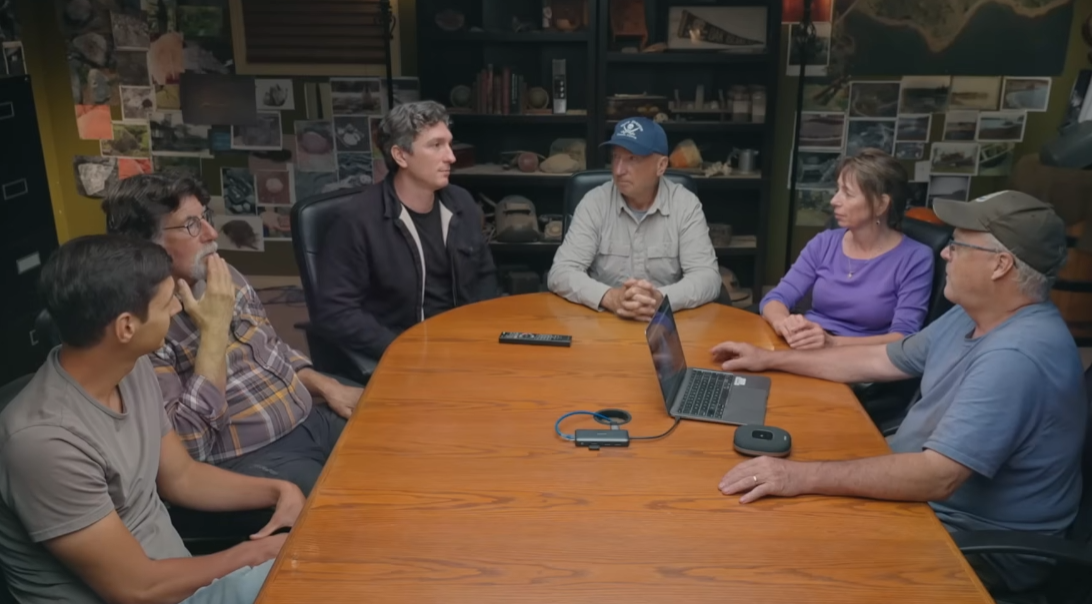
“There is a reason here that people went to some effort to create this,” Rick concluded. “The only reason I can think of is that human beings wanted to put something under this stone.”
Whether the “pearl” is a priceless gem, a symbolic marker, or a geological fluke, the Lot 8 site has officially become the new frontline in the search for the Oak Island treasure.