A Medieval Secret Beneath the Shore: The Oak Island Theory That Changes Everything
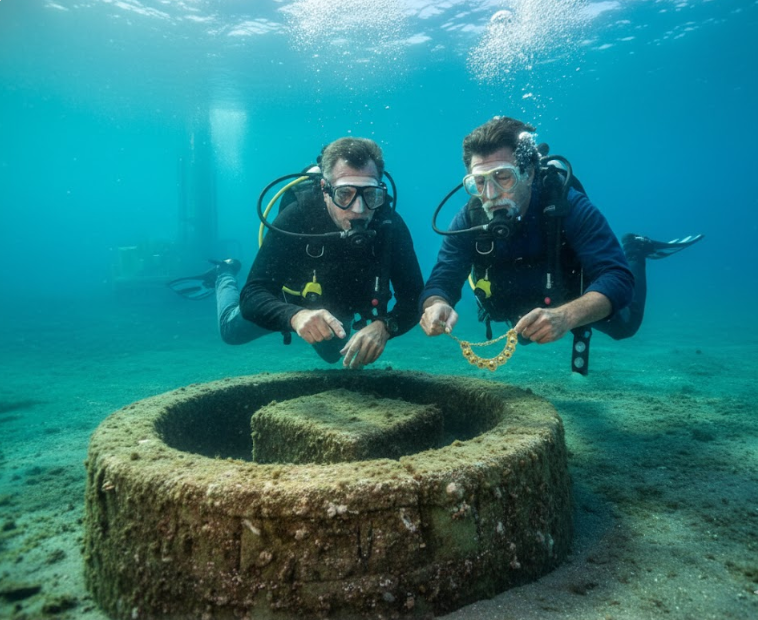
From an analytical standpoint, few moments in The Curse of Oak Island have been as structurally important as the recent revelation of a medieval chamber hidden beneath the island’s shoreline. For more than two centuries, nearly every expedition has been magnetically drawn to the Money Pit. That fixation, it now appears, may have been precisely the intention of the original builders.
What we are witnessing is not simply a new discovery, but the exposure of a long-running misdirection—one that functioned flawlessly for roughly 600 years.
The Money Pit Was the Decoy, Not the Destination
As an analyst, the most compelling takeaway is not the age of the shoreline chamber, but its position. The structure does not sit beneath the traditional vertical search zone. Instead, it lies laterally, tucked beneath the shoreline, sealed, dry, and isolated from the island’s infamous water intrusion system.
This alone reframes the entire Oak Island narrative.
The Money Pit now reads less like a failed vault and more like a functional mechanism—an attractor designed to absorb attention, effort, and water pressure. The repeated encounters with flooding, collapsible strata, and layered platforms may not represent defensive desperation, but intentional engineering. The goal was never to stop digging entirely; it was to keep searchers digging in the wrong place.
For six centuries, that strategy worked.
Medieval Engineering Where It Should Not Exist
Carbon dating placing the shoreline chamber between 1350 and 1400 AD carries consequences far beyond Oak Island. This timeframe predates officially recognized European activity in the region by more than a century. Yet the structure shows planning, tool marks, and material choices consistent with organized medieval construction.
This was not improvised work.
The chamber’s dryness is particularly telling. While inland shafts suffer constant water infiltration, this structure remained protected, likely by a hydraulic redirection system. Analysts increasingly believe the flood tunnels functioned less as crude deterrents and more as controlled drainage channels—guiding Atlantic water away from the shoreline vault while sacrificing the Money Pit to pressure and saturation.
Such precision implies advanced knowledge of geology, tides, and long-term environmental behavior.
Who Builds Sideways?
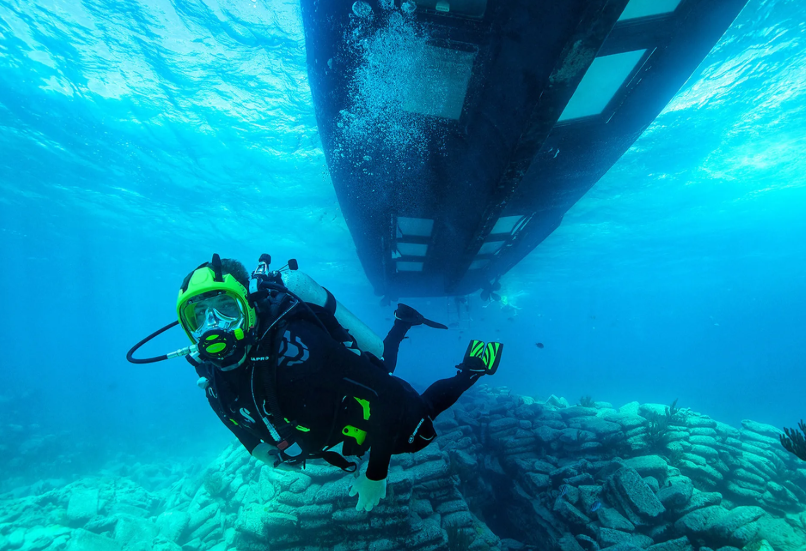
The horizontal orientation of the chamber is arguably the most revealing detail. Vertical digging invites detection. Horizontal concealment beneath a shoreline integrates naturally into the landscape and benefits from tidal masking.
This is not the thinking of casual treasure concealment. It is the mindset of preservation.
Orders such as the Knights Templar are often cited not because of romance, but because of capability. Medieval monastic-military organizations possessed three relevant traits:
-
Long-distance maritime reach
-
Expertise in stone and water management
-
A tradition of safeguarding objects of ideological value
Whether the builders were Templar-associated or not, the design philosophy aligns with institutions concerned with custody, not retrieval under pressure.
Why the Timing Matters Now
From a program-analysis perspective, the reveal arrives at a critical moment. For seasons, the Fellowship has slowly shifted from aggressive excavation toward data-driven restraint. The shoreline chamber validates that evolution.
Importantly, it also explains past failures without diminishing them. Earlier teams were not careless; they were outmaneuvered by a system designed to reward persistence in the wrong direction.
This discovery also contextualizes why smaller artifacts—tools, wood, metal traces—have appeared across the island in seemingly inconsistent patterns. They may represent maintenance, access points, or secondary features tied to a larger integrated system.
The Risk Has Changed, Not Disappeared
The near-collapse events associated with continued Money Pit work serve as a cautionary counterpoint. The island’s subsurface is increasingly unstable after decades of disturbance. From an analytical lens, the risk profile has shifted.
Digging deeper is no longer the primary hazard. Digging blindly is.
If the shoreline chamber is part of a broader engineered network, then unintended breaches could compromise the very structure that has survived intact for centuries. This explains the noticeable caution in recent episodes from Rick Lagina and Marty Lagina—less enthusiasm, more calculation.
The discovery carries responsibility as much as opportunity.
What Was Meant to Be Preserved?
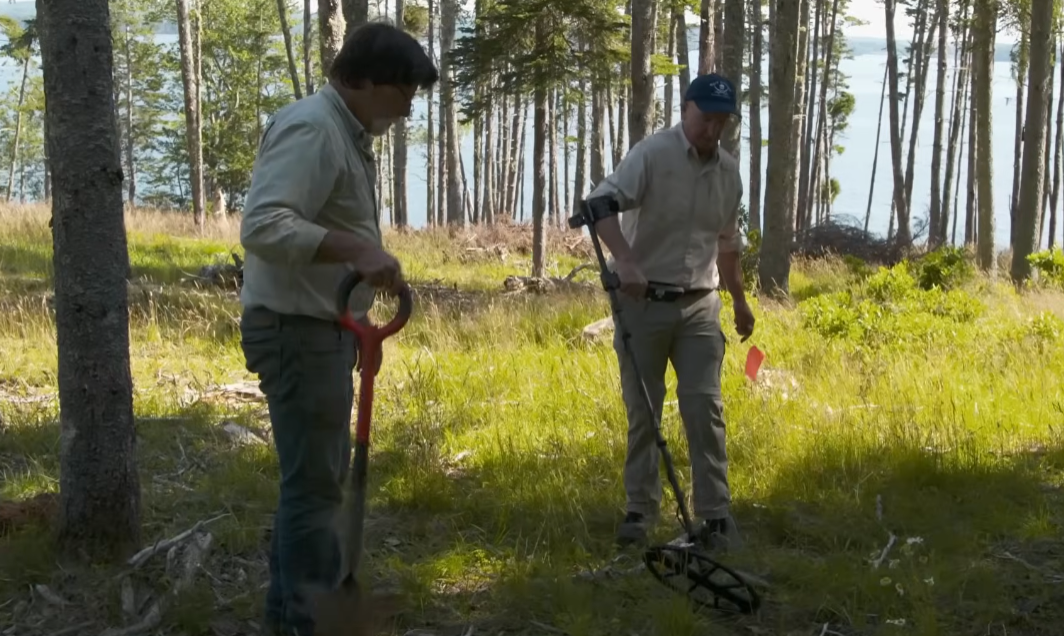
A key analytical mistake would be assuming the chamber exists to protect wealth alone. Medieval builders reserved extreme measures for items that carried symbolic, political, or theological significance.
Possibilities include:
-
Documents that challenge accepted historical timelines
-
Religious relics whose legitimacy conferred authority
-
Artifacts tied to disputed succession or doctrine
Such items would justify a transatlantic journey and permanent concealment. They would also explain why retrieval was never urgent. Preservation, not recovery, appears to have been the priority.
Prediction: The Next Phase Will Be Slower—and More Important
Looking ahead, I expect three major developments:
-
Non-invasive mapping intensifies
Muon tomography, high-resolution seismic work, and fluid modeling will take precedence over drilling. -
The Money Pit recedes in importance
It will remain part of the story, but no longer the focal point. -
The narrative shifts from “treasure” to “intent”
The core question will become why this was built, not merely what is inside.
If this trajectory holds, The Curse of Oak Island may be transitioning from a treasure hunt into a legitimate archaeological investigation with global implications.
Final Thought
Six hundred years ago, someone designed a system that relied on human curiosity to defeat itself. The shoreline chamber suggests that Oak Island never resisted discovery—it redirected it.
For the first time, the misdirection is visible. Whether the Fellowship chooses to follow that realization carefully or rush past it will determine whether this story finally reaches its true conclusion.