A Royal Artifact Beneath Oak Island: Why the Discovery Tied to King Louis I Changes Everything

As a long-time analyst of The Curse of Oak Island, I have learned to treat every extraordinary claim with disciplined caution. Oak Island has a way of producing finds that appear definitive at first glance, only to demand months—or seasons—of verification. The latest claim, that a crown attributed to Louis I has been discovered beneath the island, is therefore not just a headline. It is a hypothesis that, if substantiated, would force a reassessment of nearly every dominant theory surrounding the island’s past.
From a production standpoint, the idea of a royal crown immediately raises questions of provenance. Oak Island discoveries typically move through a familiar arc: initial detection, careful recovery, preliminary expert opinion, and extended scientific testing. If a crown has indeed been recovered, viewers should expect the show to pivot toward metallurgy, iconography, and documentary alignment rather than rapid conclusions. Gold composition, alloy ratios, and manufacturing techniques would need to align with what is known of medieval European regalia. Any deviation—modern solder, incorrect purity, or anachronistic tooling—would immediately undermine the claim.
Historically, the association with Louis I is particularly complex. Several European rulers carried that name, each tied to distinct regions and political contexts. An analyst’s first task is to ask which Louis I is being referenced and whether that ruler had any plausible connection—direct or indirect—to transatlantic movements, religious orders, or treasure transport networks linked to Oak Island. Without that connective tissue, a crown risks becoming a symbolic object rather than a historically anchored one.
If the artifact’s design incorporates heraldic motifs, Latin inscriptions, or religious iconography consistent with a specific court, the investigation would intensify. Oak Island has long been linked, at least theoretically, to medieval orders, ecclesiastical wealth, and state-sponsored secrecy. A crown would sit at the very top of that hierarchy. It would imply not merely hidden wealth, but intentional concealment of sovereign property—something far more serious than pirate loot or private treasure.
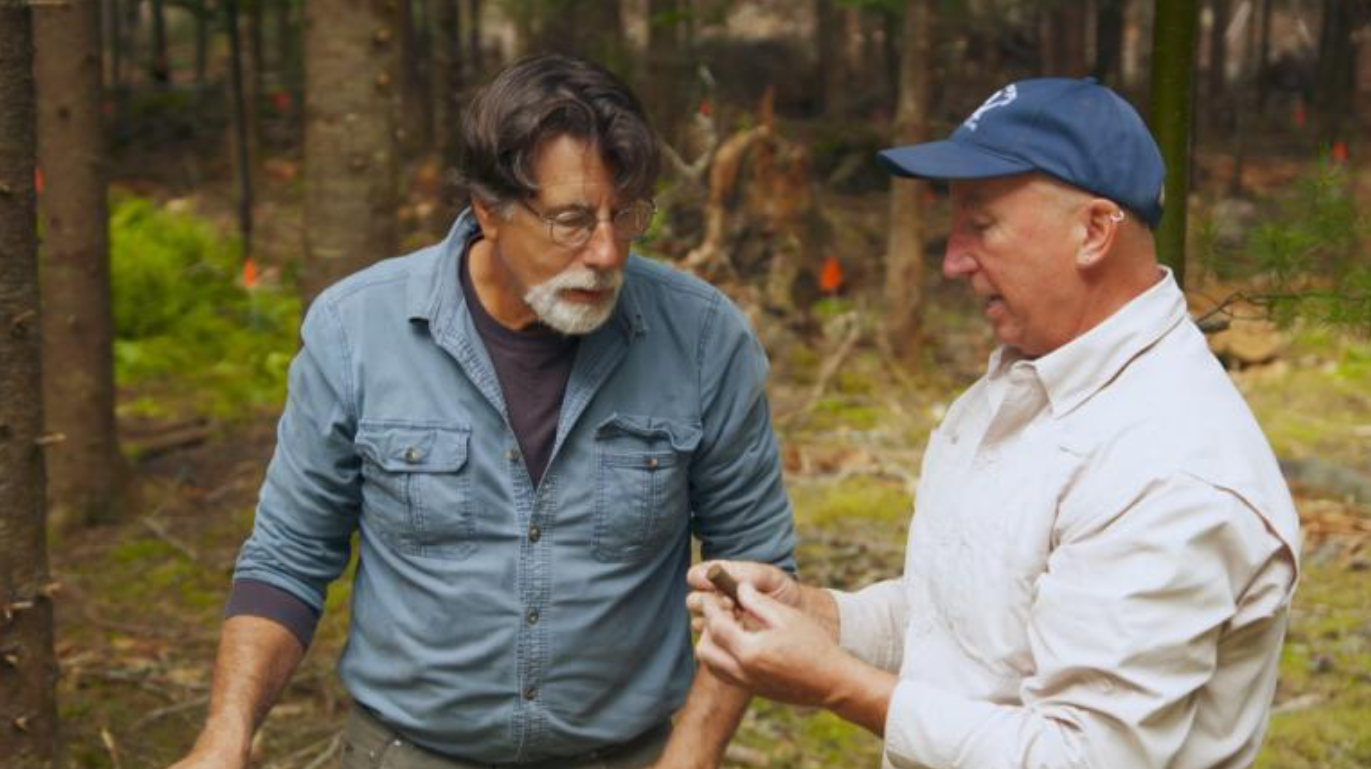
From a narrative perspective, the Lagina team would likely proceed conservatively. Rick Lagina and Marty Lagina have consistently emphasised verification over speculation, particularly after past lessons where promising leads failed under scrutiny. Expect consultation with European historians, museum conservators, and independent laboratories. Radiographic imaging, residue analysis, and corrosion pattern studies would be central to determining whether the crown spent centuries underground—or arrived far more recently.
The location of the find would also matter enormously. If the crown emerged from a context associated with engineered structures—such as stone-lined shafts, platforms, or tunnels—it would reinforce arguments that Oak Island was used for deliberate storage rather than accidental loss. Conversely, if it came from disturbed soil or a secondary deposit, the show would need to address how it arrived there and whether it was moved over time.
Looking ahead, this claim could shift the show’s investigative focus. Rather than broad searches across multiple lots, the team might concentrate on tracing a single historical pathway: how and why royal regalia could have been transported across the Atlantic and concealed. That would bring renewed attention to theories involving state secrecy, religious conflict, and the safeguarding of symbols of legitimacy during periods of upheaval in Europe.
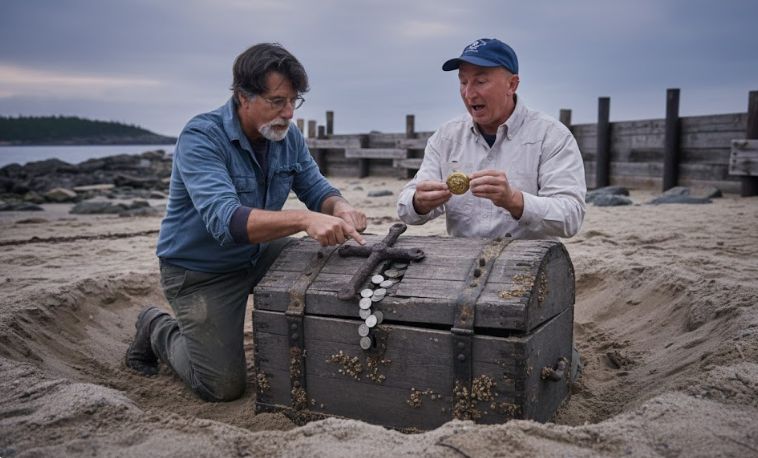
There is also a production reality to consider. The Curse of Oak Island thrives on incremental validation. Even if the crown is authentic, the show is unlikely to declare final conclusions quickly. Instead, viewers should expect a staged reveal: initial expert reactions, conflicting interpretations, and gradual convergence toward—or away from—the claim. This approach not only maintains credibility but reflects the genuine complexity of historical archaeology.
My prediction is that the coming episodes would frame the crown not as definitive proof, but as a catalyst. It would reopen old questions about Oak Island’s purpose and elevate the investigation from treasure hunting to geopolitical history. Whether the artifact ultimately proves to be royal regalia or a sophisticated decoy, its impact on the narrative would be substantial.
In analytical terms, the most important outcome may not be confirmation or refutation, but refinement. Oak Island has always been about narrowing possibilities. A crown attributed to King Louis I would narrow them dramatically—forcing every competing theory to account for royal involvement, or step aside. Until the evidence is complete, however, the claim remains what Oak Island has always delivered best: a compelling question that demands patience, precision, and proof.