Oak Island Season 13 Finale Unveils 200-Foot Stone Chamber, Shifting Mystery Toward Medieval Origins
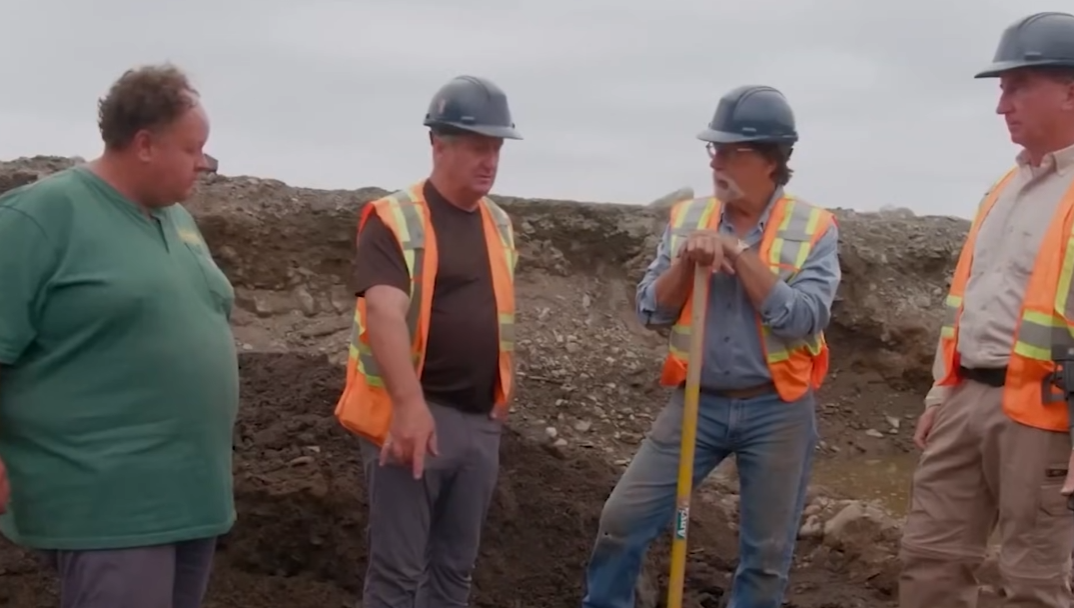
After more than two centuries of speculation, failed excavations and competing treasure theories, Oak Island’s narrative has taken a dramatic turn. In the Season 13 finale of The Curse of Oak Island, the Fellowship of the Dig announced the discovery of what they describe as an intact, man-made stone chamber more than 200 feet below ground — the deepest confirmed structure in the island’s recorded history.
The breakthrough, achieved using the massive steel caisson known as “Cerberus,” has redirected the focus of the long-running investigation. What began decades ago as a search for pirate gold now appears to be evolving into a far more complex inquiry into medieval transatlantic activity.
The “Cerberus” Milestone
The season’s central engineering effort revolved around Cerberus, the largest and most reinforced shaft ever installed at the Money Pit site. Designed to withstand floodwater intrusion and unstable soil conditions, the caisson enabled the team to push deeper than any previous searchers.
The effort was not without setbacks. Early drilling attempts triggered severe flooding, reinforcing long-standing theories about engineered flood tunnels beneath the island. Despite the challenges, the team advanced beyond the 200-foot mark — a threshold that has eluded searchers for generations.
At that depth, geologists identified what they termed a “geometric anomaly” in the bedrock. Subsequent deployment of a pressure-resistant fiber-optic camera allowed investigators to bypass debris and murky sediment, revealing what appears to be a constructed void.
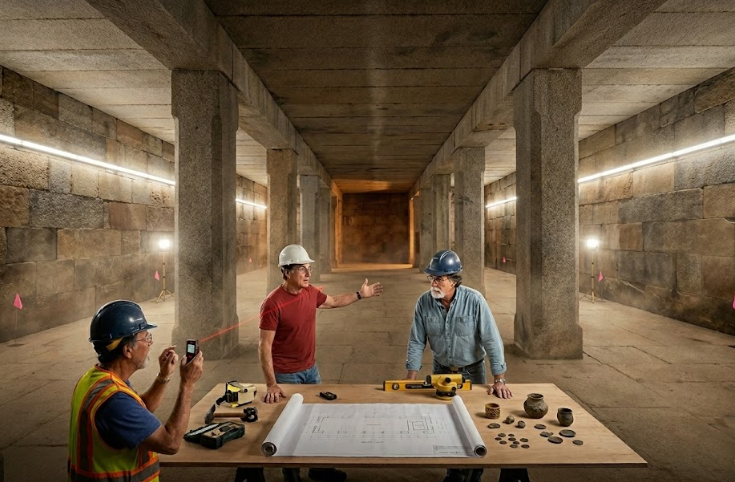
In the war room, monitors displayed smooth, dark stone walls — later identified as basalt — along with a large circular metal plate mounted against the chamber interior. The reaction among the team was one of stunned silence.
A Material Not Native to Nova Scotia
Basalt, a volcanic rock, is not native to the geology of Nova Scotia. Its presence at such depth raises immediate logistical questions. If the chamber is authentic and constructed of imported stone, it suggests deliberate engineering rather than natural formation.
Specialists consulted during the episode noted the precision of the stonework. The walls appeared polished and geometrically aligned, indicating purposeful design. Unlike earlier seasons, which focused largely on wood fragments and searcher-era debris, this chamber suggests a preserved structure of considerable antiquity.
The circular metal plate, etched with swirling patterns and unfamiliar symbols, became the focal point of expert analysis.
A “Signpost,” Not a Treasure Vault
Dr. Aaron Taylor and Cambridge-based symbology expert Dr. Alistair Finch were brought in to examine still images captured from the fiber-optic footage. Rather than identifying the chamber as a conventional treasure vault, Dr. Finch proposed a different interpretation.
“This is not a vault; it is a marker,” he stated during the finale’s briefing. According to Finch, the carvings resemble celestial positions and astronomical alignments. The circular plate — potentially composed of a historic alloy such as electrum or tumbaga — may function less as currency and more as an instrument or coded device.
Finch connected certain cross-like symbols to 14th-century Scottish and Portuguese archives, specifically referencing a lesser-known faction associated with the Knights Templar, sometimes referred to in historical documents as the Order of the Sacred Covenant.
If accurate, this interpretation would reposition Oak Island’s mystery away from pirate narratives and toward a disciplined medieval order with maritime capability.
Implications for Early Transatlantic Contact
The possibility that a European order reached Nova Scotia as early as 1307 carries significant historical implications. Such a timeline predates Christopher Columbus’s voyage by nearly two centuries.
While no mainstream archaeological consensus supports this conclusion at present, the precision of the 200-foot engineering has raised questions. The construction suggests advanced knowledge of hydraulics and structural reinforcement — elements not typically associated with 18th-century treasure burials.
Rick Lagina, visibly moved during the finale, reflected on the broader meaning of the find. He suggested that the original Money Pit may have functioned as a decoy — a “doorway” designed to misdirect attention from a deeper and more deliberate structure.
“For years, the island gave us fragments,” he said. “Now, it has given us the centerpiece.”
From Gold Hunt to Historical Inquiry
For much of its television run, The Curse of Oak Island has centered on the pursuit of gold, coins and rumored pirate hoards. The discovery of a basalt-lined chamber at unprecedented depth has shifted that framework.
Rather than chests of treasure, the team may be confronting a repository of encoded knowledge or symbolic artifacts. The celestial designs on the circular plate, coupled with the chamber’s construction material and depth, suggest an intention to preserve rather than simply conceal.
If the chamber functioned as a time capsule or navigational signpost, it could represent an attempt by medieval builders to communicate across centuries.
The Road to Season 14
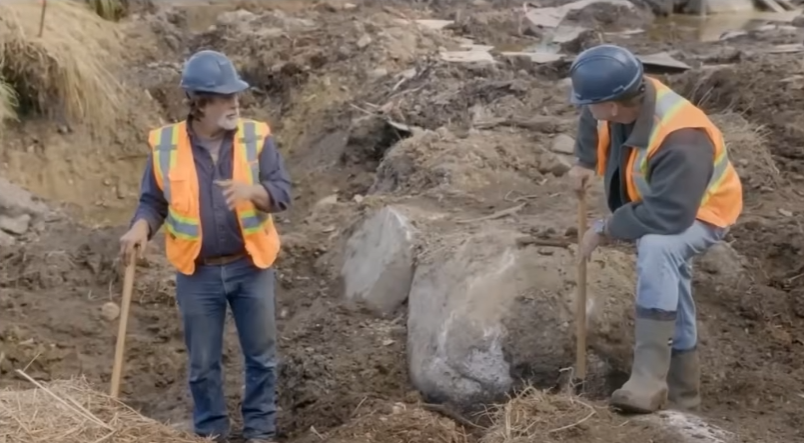
As Season 13 concluded, the team stood at a crossroads. Accessing the chamber fully will require additional engineering solutions, particularly given the persistent flood risk. Experts in medieval metallurgy, epigraphy and astronomical mapping are now reportedly being consulted.
Season 14 is expected to focus heavily on forensic analysis — from alloy composition testing to comparative studies of Templar-era architecture in Europe.
The so-called “Billion Dollar Secret” of Oak Island may not be measured solely in gold. If the chamber proves to be part of a coordinated medieval network, it could reshape interpretations of early Atlantic exploration.
For now, the discovery has reignited global attention. After more than 200 years, Oak Island’s mystery appears to have entered its most consequential chapter yet — not as a tale of buried pirate treasure, but as a potential window into a forgotten transatlantic past.