Rick Lagina said the tests have confirmed the discovery of artifacts worth over $78 million!

For more than 200 years, Oak Island has occupied a peculiar space between legend and archaeology. Stories of buried treasure, secret tunnels and lost relics have drawn generations of searchers to the small island off Nova Scotia’s coast. Now, according to the latest findings from the current excavation team, laboratory analysis has confirmed that recently recovered artifacts are both authentic and centuries old — with an estimated combined value exceeding $78 million.
The confirmation marks one of the most significant developments in the island’s long and often frustrating history of exploration.
From Routine Dig to Unusual Discovery
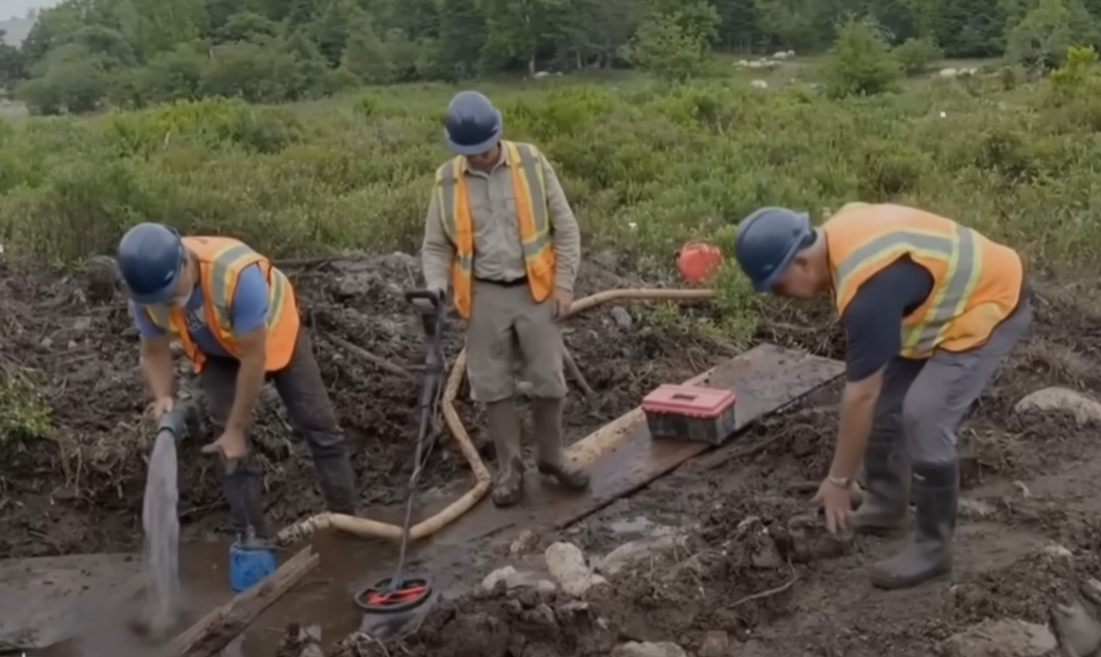
The breakthrough did not begin with fanfare. During ongoing work near the Money Pit area, the team encountered structural features that diverged from natural geology. Carefully braced timber supports, straight passageways and carved stone surfaces suggested engineered construction rather than random collapse.
As excavation proceeded, a sealed chamber was identified beneath layers of clay and gravel. Within it, the team recovered a collection of objects that immediately stood out: fragments of hammered gold, metal plates coated in resin, coins bearing worn insignia, jewelry elements wrapped in fibrous material, and a carved stone figure positioned above part of the cache.
Initial handheld scans suggested unusually high gold purity levels. However, the team halted speculation and transferred the artifacts under controlled conditions to a materials analysis laboratory in Halifax.
Scientific Testing and Authentication
Over nearly four weeks, specialists conducted isotopic analysis, radiometric dating, spectrographic testing and microstructural examinations. The results, according to the team, were striking.
Gold samples showed purity levels between 83 and 92 percent, consistent with pre-industrial refining techniques. Radiometric indicators and comparative metallurgy placed several pieces within a broad timeframe between the mid-15th and mid-17th centuries. Resin compounds found coating certain plates were chemically linked to Mediterranean botanical sources, suggesting transatlantic transport.
Stone analysis of the carved figure indicated quarry characteristics not native to Nova Scotia. While precise origin remains under review, early reports suggest it may have been shaped from European material.
The combined estimated valuation of the artifacts, based on weight, material composition and historical significance, exceeds $78 million. Experts caution that cultural and archaeological importance may ultimately outweigh monetary assessment.

A Broader Historical Puzzle
The confirmation has prompted renewed scrutiny from academic institutions and maritime historians. Researchers are examining whether the objects align with undocumented voyages, private trade expeditions or displaced European relics from periods of political upheaval.
Some analysts note that while the artifacts clearly traveled from overseas, this does not automatically validate long-standing theories linking Oak Island to specific medieval orders or secret societies. Instead, they argue, the findings demonstrate that the island was part of a complex and still poorly understood network of early Atlantic movement.
Among the most intriguing elements are geometric markings etched into metal plates recovered from the chamber. Under magnification, certain patterns resemble navigational arcs or stylized mapping lines. Digital overlays comparing these shapes to historical star-path navigation systems are ongoing, though no definitive conclusion has yet been reached.
Engineering Beneath the Surface
Equally compelling is the architecture surrounding the artifacts. Timber supports dated within the same historical window reinforce the theory that the chamber was deliberately constructed and sealed. The tunnels leading to it showed evidence of intentional design, including water-diversion channels and clay-packed barriers that may have functioned as protective measures.
Excavation logs recorded sudden groundwater surges and voids consistent with engineered flood systems long speculated about on the island. However, researchers emphasize that while the construction appears deliberate, further mapping is required to understand its full scope.
Ground-penetrating radar has identified additional anomalies approximately six meters below the initial discovery point. Conductive signatures suggest dense material clustered within another cavity. Whether this represents structural reinforcement or additional stored artifacts remains unknown.
Reaction and Responsibility
The confirmation has transformed Oak Island from a niche curiosity into a focal point for global academic and media attention. Visitor inquiries have surged, and international scholars have requested access to laboratory data.
Rick Lagina, who has led the modern search effort for years, described the moment of receiving official lab confirmation as “validation, but also responsibility.” He and his team have stressed that preservation, not spectacle, will guide next steps.
Local authorities are reportedly reviewing the site’s status to determine whether enhanced protective measures or formal heritage designation are warranted.
What Comes Next
Despite the magnitude of the discovery, major questions remain unanswered. Who transported these items across the Atlantic? Why were they sealed in engineered chambers? And what, if anything, lies beneath the newly detected deeper cavity?
Archaeologists caution against rushing to dramatic conclusions. The presence of authentic artifacts proves human activity and deliberate concealment — but motive and identity require evidence, not inference.
Excavation beneath the chamber is expected to resume following structural reinforcement and additional environmental assessments. Any further descent will proceed slowly to avoid destabilizing the existing tunnel network.
For the first time in generations, Oak Island’s mystery is supported not only by lore but by laboratory-confirmed relics. Whether the deeper layers hold further treasures or simply more chapters of an unfolding story, one conclusion is now clear: the island’s history is more tangible than ever before.
And beneath the clay, the next layer of that history may already be waiting.