Oak Island Season 13 Big Discovery: Rick Lagina Confirms Winning the $175 Million Treasure Jackpot!
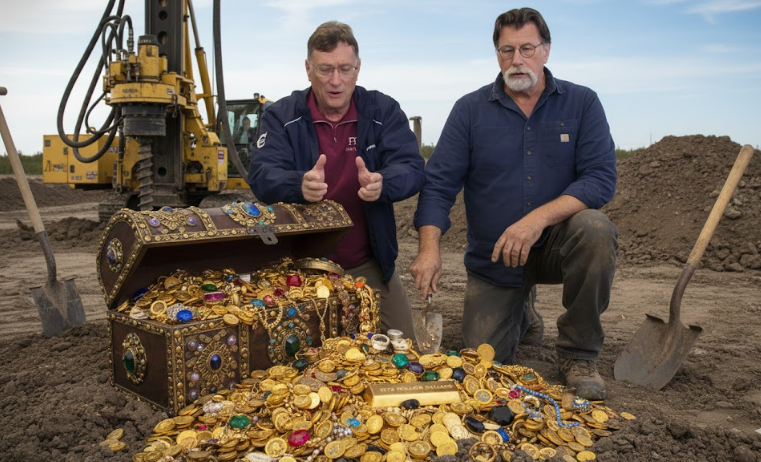
After more than two centuries of speculation, false starts and failed excavations, Oak Island may once again be at the centre of a discovery that could redefine its legend. In the latest developments from Season 13 of The Curse of Oak Island, Rick and Marty Lagina and their team have uncovered a series of findings that suggest a substantial underground structure beneath the historic Money Pit — one that could potentially contain artifacts of extraordinary historical and financial value.
For Rick Lagina, the moment carries emotional weight. “Ten years ago, we never would have anticipated this,” he reflected, as he and his brother prepared to descend together into the Money Pit area. What was once a childhood fascination sparked by a magazine article has evolved into a multi-million-dollar pursuit that has consumed more than a decade of his life.
Timber, Gold Traces and a Massive Void
The turning point came during late-night drilling operations under floodlights. As the drill bit advanced deeper into the Money Pit zone, it struck what appeared to be heavy timber. Initial analysis suggests the wood could be centuries old — possibly part of an engineered structure rather than natural debris.
Soil samples brought to the surface revealed something even more striking: tiny flecks of gold embedded within wood fragments. Laboratory testing has indicated high-purity gold traces, raising questions about whether valuable materials were once stored in proximity to the beams.
Seismic imaging soon followed. Advanced scans identified a significant underground void approximately 180 feet below the surface. Early estimates describe the chamber as being roughly the size of a small chapel, a scale that exceeds many previously identified cavities in the area.
The combination of timber bracing, metallic signatures and structural voids has intensified speculation that the team may be close to accessing a long-rumoured vault.
Engineering That Defies Time
Yet, as in so many previous seasons, progress was quickly met with resistance.
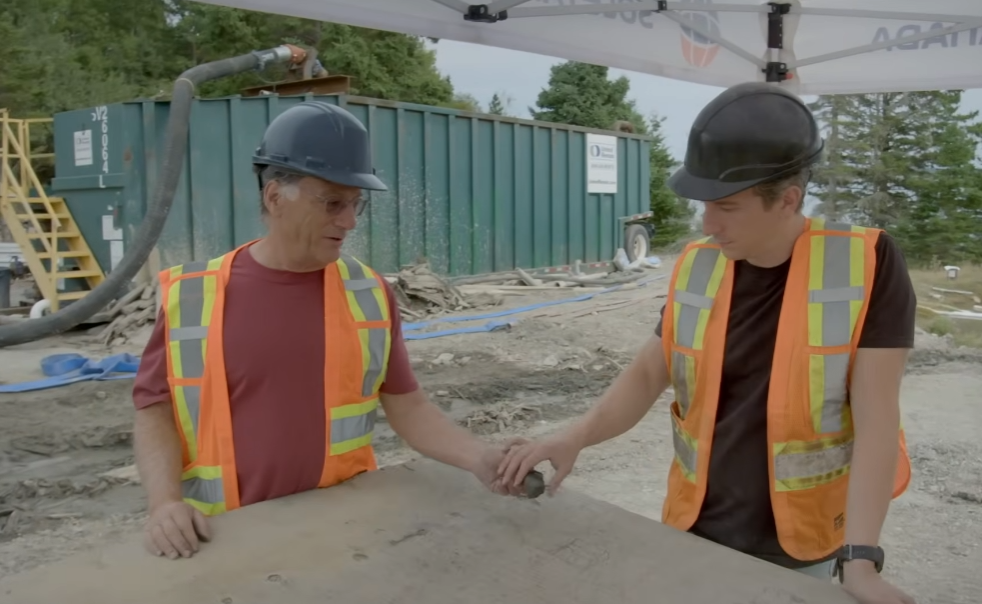
When drilling extended toward the identified cavity, a sudden surge of seawater flooded the shaft — reinforcing the longstanding theory of engineered flood tunnels. For decades, these tunnels were dismissed by some as exaggerated folklore. However, repeated water incursions have suggested a complex hydraulic system designed to protect whatever lies below.
Engineers on site responded rapidly, deploying heavy-duty pumps to counter the inflow. Observers noted the remarkable precision with which water channels appear to direct ocean pressure into vulnerable excavation points.
If deliberately constructed, such a system would have required advanced planning, significant manpower and substantial funding. The question remains: who possessed both the knowledge and the motive to build such a structure in secrecy?
Historical Clues Deepen the Mystery
Additional discoveries have added layers to the unfolding narrative.
Fragments of parchment bearing a fleur-de-lis symbol — historically associated with French royalty — were recovered from debris. While experts caution against definitive conclusions, the symbol has prompted speculation about possible European connections.
Metallurgical analysis of gold traces has suggested characteristics consistent with coinage minted between the 14th and 16th centuries. Meanwhile, dendrochronology studies on timber samples indicate wood that may have originated in regions of Spain or France during similar periods.
Researchers have also revisited stone markers and carved slabs scattered across the island. When plotted geographically, some appear to align with astronomical patterns, including formations resembling Orion’s Belt. Whether these alignments are intentional or coincidental remains a subject of debate.
What is clear is that multiple strands of evidence — structural, metallurgical and symbolic — are converging in a way not previously seen on the island.
A Personal Quest Nearing a Crossroads
For Rick Lagina, the search has always transcended financial reward. By his own admission, he has invested millions of dollars and countless years into the project. The pursuit has required sacrifices both personal and professional.
Standing near the excavation site as pumps roared against incoming seawater, he described the effort as “no longer just a dig.” It has become, in his words, a confrontation with history itself.
His brother Marty, often cast as the pragmatic counterpart, has acknowledged the emotional drive behind Rick’s persistence. While projections of a vault’s potential value — some estimates exceed $175 million — capture headlines, the brothers consistently emphasise that validation of the legend matters more than wealth.
Global Attention Intensifies
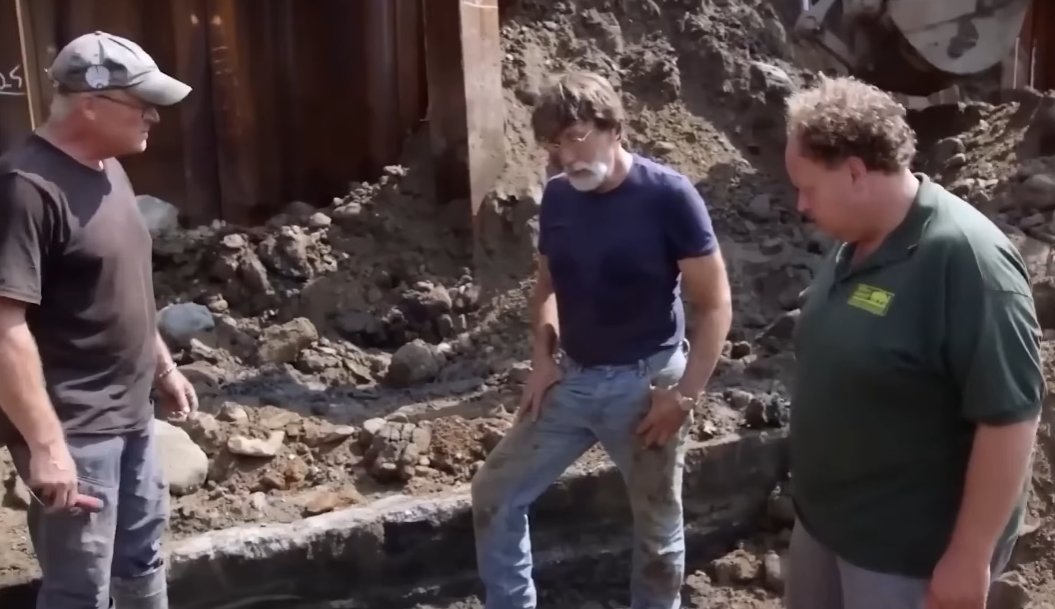
As news of the recent findings spread, interest surged beyond the show’s dedicated audience. Archaeologists, historians and treasure researchers worldwide have begun examining released data and imagery.
Ground-penetrating radar has revealed what appears to be a rectangular chamber beneath the target zone. Metallic density scans indicate concentrated reflective material within the void. Though such readings cannot confirm the presence of treasure, they strengthen the case for further exploration.
International media outlets have taken notice, and online discussion forums are abuzz with renewed theories linking the site to European royalty, maritime secrecy or even pre-Columbian exploration.
Proof, But Not Yet Access
In one particularly dramatic moment, cameras captured what appeared to be a gold cross set with green stones emerging from debris near the excavation zone. Experts on site described it as finely crafted and historically significant, though full authentication remains pending.
Despite these promising signs, the primary chamber remains partially inaccessible due to flooding and structural instability. The team has secured recovered artifacts and paused deeper intrusion while reassessing engineering strategies.
Through swirling water and shifting ground, faint metallic shapes have been glimpsed below — reflections that suggest stacked objects or bars. However, without safe access, their true nature cannot yet be confirmed.
For now, Oak Island appears to have yielded tantalising proof of something substantial beneath the Money Pit. Whether that substance is a vault of extraordinary wealth or a complex historical archive remains uncertain.
What is certain is this: after more than 200 years, the mystery has entered one of its most consequential chapters yet.