HOLLOW ECHOES AND ANCIENT WOOD: The Laginas Strike ‘Original Work’ in the Garden Shaft
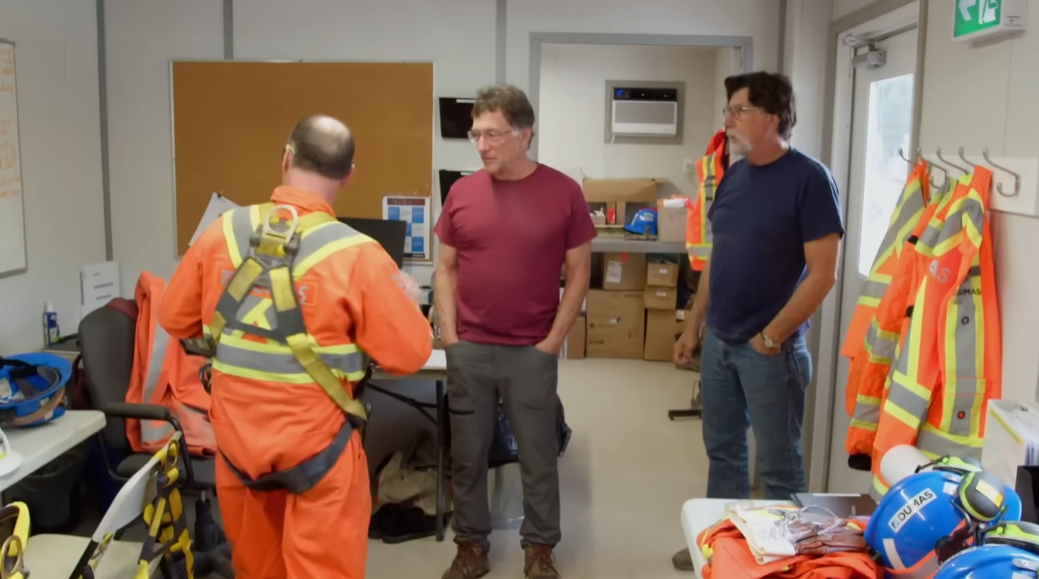
The decade-long search for the Oak Island mystery has reached a fever pitch as Rick and Marty Lagina swapped their boardroom attire for mining gear, descending into the refurbished Garden Shaft to personally unearth what experts believe is a 17th-century tunnel. In a season defined by “boots and eyes” verification, the team has pushed past the 95-foot mark, encountering evidence that points away from modern searchers and toward the island’s original depositors.
The Battle of the Atlantic (Underground)
The expedition nearly stalled before it could begin. As Dumas Contracting Ltd. pushed the shaft deeper, they encountered the island’s oldest defense: water infiltration. At the 82-foot level, significant leaks threatened to undermine the structural integrity of the dig.
In a maneuver Marty Lagina likened to “Ghostbusters,” the crew utilized a specialized, fast-setting urethane grout. By punching holes into the shaft lining and injecting the expanding foam under high pressure, they successfully sealed off the intrusion, allowing the team to target a depth of nearly 100 feet.
Heritage and Hard Labor: ‘The Destroyer’
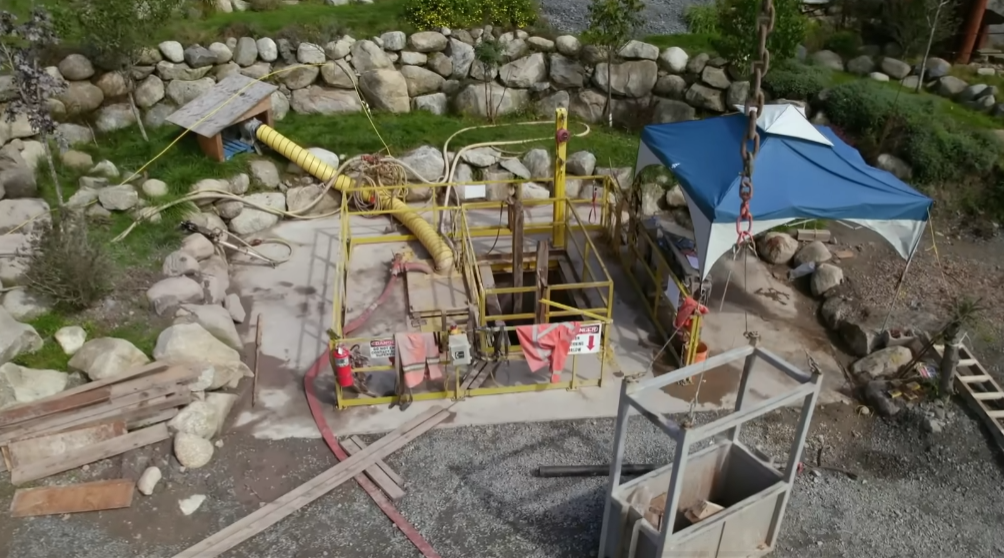
For the Lagina brothers, the descent was more than a technical inspection—it was a tribute to their grandfather, who immigrated to work the mines of Michigan. Armed with pneumatic jackhammers affectionately dubbed “The Destroyer” and “Big Betsy,” the brothers spent hours chipping away at compacted, iron-hard clay that has remained undisturbed for centuries.
“This is no job for old men,” Marty joked, though the effort yielded immediate results. “We are looking at dirt nobody else has ever seen. Ever.”
The Breakthrough: Round Timbers Found
At approximately 95 feet, the team reached their primary target: a 7-foot-high tunnel carbon-dated to as early as the 1600s. The most significant discovery was the presence of round timbers.
In Oak Island lore, square-cut beams typically denote modern “searcher” activity from the 19th and 20th centuries. However, the original Reader’s Digest account of the 1795 Money Pit discovery famously described round logs placed at ten-foot intervals.
-
Location: 95 feet below surface.
-
Trajectory: East-to-West toward the “Baby Blob.”
-
Composition: Hollow-sounding, ancient round logs.
-
Chemical Signature: High concentrations of gold and silver detected in nearby groundwater.
“Round timber is associated with the original construct of the Money Pit,” Rick Lagina noted. “I don’t have to believe we’re making progress in solving the mystery; I know we are.”
Beyond the Shaft: Aladdin’s Cave
While the Laginas worked the Garden Shaft, a parallel investigation 60 feet to the southwest targeted Borehole KL14.5. Using an Inuktun Spectrum high-definition camera, the team penetrated Aladdin’s Cave, a massive 10-foot-high void sitting 150 feet underground.
The footage was tantalizing but murky. Amidst the shifting silt and currents, the camera captured what appeared to be a square-headed bolt—a definitive man-made artifact. Geologists Terry Matheson and Scott Barlow confirmed the cavity is wide open, prompting an immediate call for sonar mapping to determine if the cave is a natural formation or a purposefully excavated treasure vault.
The Road Ahead
The team is currently preparing for horizontal probe drilling. This will allow them to search 40 feet in every direction from the bottom of the Garden Shaft without further excavation. If the “hollow” sounds reported by Rick Lagina indicate a virgin chamber, the “Baby Blob” may finally reveal why the groundwater there is saturated with precious metals.
The 2024 season has effectively moved the needle from “if” to “where.” As Marty Lagina summarized: “After 15 years, we may be just a few feet above original work. It could be the thing.”