An Iron Chain on Lot 8: Why This Find Could Reshape the Oak Island Investigation

In The Curse of Oak Island, discoveries are rarely judged by spectacle alone. More often, it is the quiet, unassuming artefacts—recovered slowly and analysed carefully—that carry the greatest interpretive weight. The recent recovery of an iron chain on Lot 8 may prove to be one such moment, offering a tangible link between physical labour, human intent, and one of the island’s most puzzling features.
The discovery began not with certainty, but with methodical persistence. As metal-detecting expert Gary Drayton and archaeologist Scott Barlow worked an area already known for its concentration of artefacts, expectations remained deliberately restrained. Shotgun shells, lead splashes, and scrap metal are familiar outcomes on Oak Island—reminders that not every signal leads to revelation. Yet the team continued, guided by a heat-map system designed to correlate finds by potential age and proximity.
That disciplined approach paid off when a strong signal revealed several oval iron links buried just west of the now-infamous boulder feature on Lot 8. Even in the field, the chain stood out. Its weight, shape, and wear patterns suggested age and heavy use rather than modern discard. From an analytical standpoint, context matters as much as composition, and here the context was compelling: large ox shoes previously found in alignment, evidence of a massive boulder seemingly placed rather than naturally deposited, and now a chain positioned within hauling distance.
Laboratory analysis would become the decisive factor. At the research facility, archaeometallurgist Emma Culligan provided the data that elevated the find beyond speculation. CT scans confirmed hand-forged construction, with no modern welding seams or butt-ends. Chemical analysis revealed iron purity averaging around 99 percent, a composition strongly associated with pre-industrial production. Trace phosphorous further supported a date range firmly before the 19th century.
Culligan’s conclusion—that the chain comfortably dates to the 1600s, with the possibility of the 1500s—anchors the object within a historically significant window. This is not a vague medieval estimate but a range that aligns with documented European activity in the North Atlantic. From a programme analysis perspective, this matters because Oak Island’s greatest challenge has always been chronology. Artefacts without dates generate theories; artefacts with dates generate timelines.
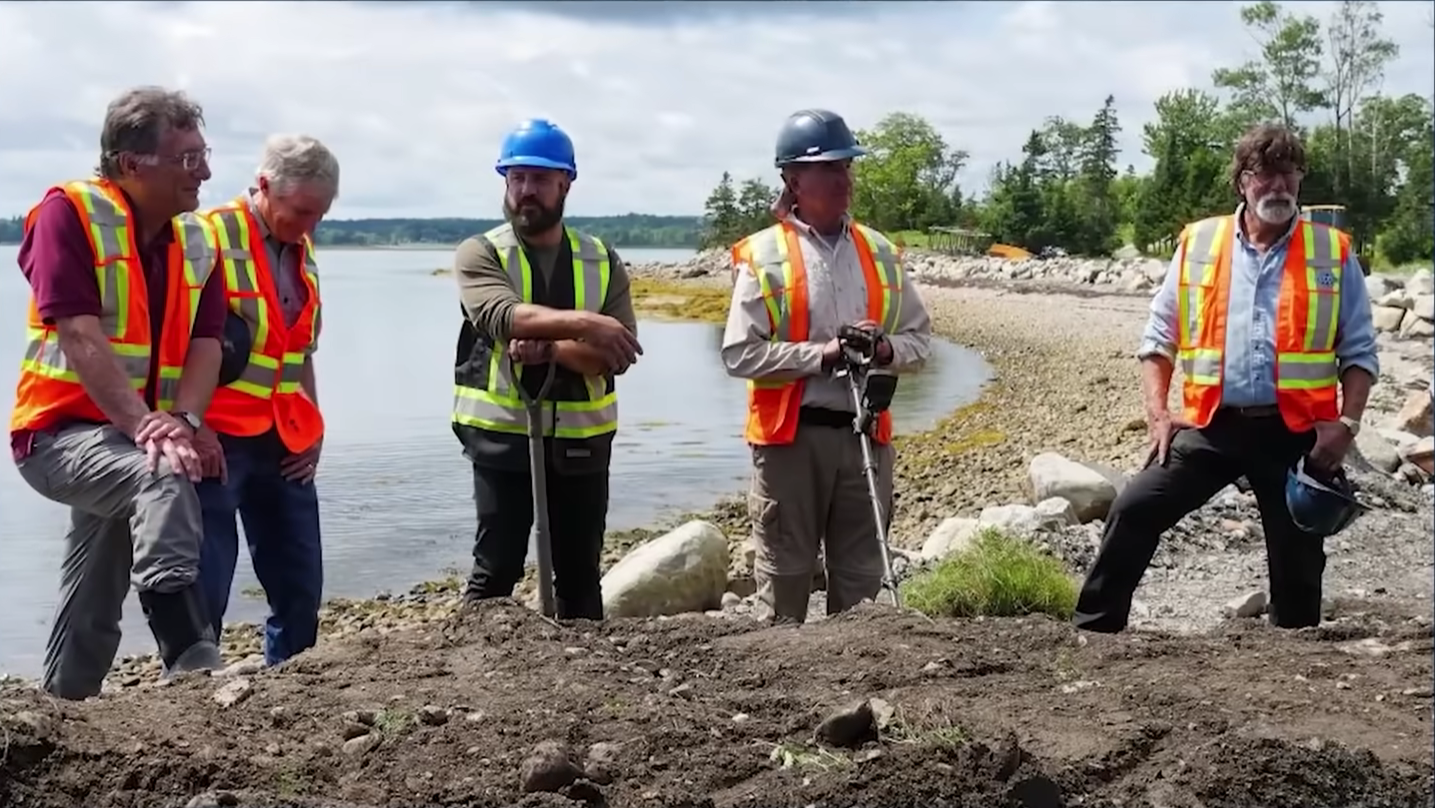
The wear patterns on the chain deepen its significance. Compression along the curves of the links suggests sustained, heavy loads—exactly what one would expect if the chain were used to haul or stabilise something substantial. Scott Barlow’s observation that the chain could have been involved in moving the massive boulder is not merely imaginative; it is mechanically plausible. Moving a stone weighing tens of thousands of pounds would require organised labour, draught animals, and durable equipment. Chains, oxen, and planning imply intention, not accident.
This is where the find intersects with the broader Oak Island narrative. Rick Lagina has consistently emphasised the need to identify purposeful human activity rather than isolated artefacts. The chain does exactly that. It suggests not only presence, but action—hauling, lifting, placing. The boulder, long suspected of being deliberately positioned above a ring of smaller stones, now has a functional explanation rather than a purely speculative one.
The discussion naturally turns toward historical actors. Rick Lagina’s reference to the Knights of Malta and Isaac de Razilly is grounded in documented history. De Razilly’s presence in Nova Scotia during the early 17th century, combined with the Knights’ known logistical capabilities, places them within the chain’s dating range. While such associations must be treated cautiously, the timeline alignment is no longer abstract.
Importantly, the chain also integrates with other Lot 8 finds. The musket flintlock fragment, bale seals, ox shoes, and now the chain form a cluster rather than a scatter. Analysts of the series will recognise this as a critical threshold: when multiple artefacts of similar age and function converge in one area, the probability of meaningful activity increases significantly.
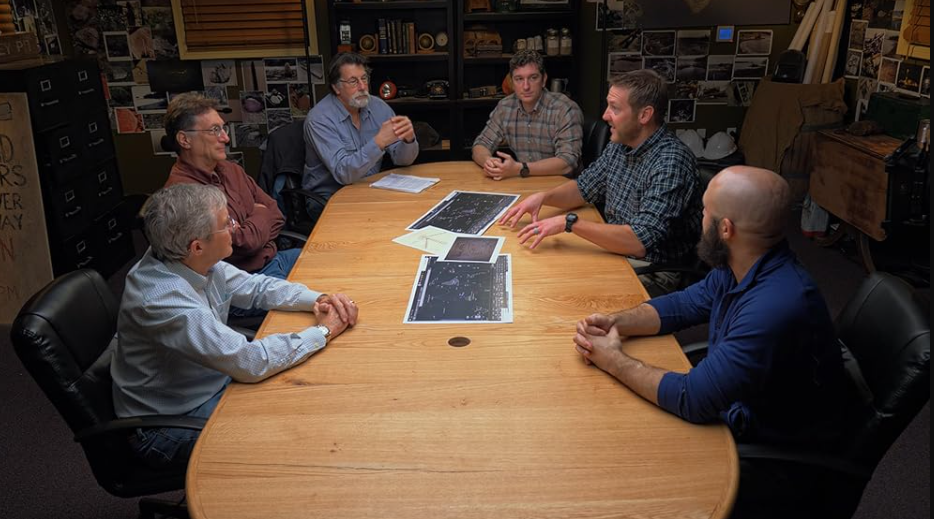
Speculation about what lies beneath the boulder remains just that—speculation. However, the idea that the stone could be sealing a shaft, chamber, or cache is no longer unsupported conjecture. Chains are tools of control and movement. They are used to lower, raise, secure, and restrain. Whether the objective was treasure, materials, or something symbolic, the chain suggests a task that required planning and effort.
From a programme perspective, this discovery may influence the next phase of investigation. Expect increased focus on Lot 8, careful excavation strategies, and further metallurgical comparisons with known European chains of the same era. The team’s measured response—seeking more data rather than immediate conclusions—indicates a shift toward archaeological resolution rather than episodic excitement.
In the end, the iron chain may not answer Oak Island’s ultimate mystery. But it strengthens a critical argument: that someone, centuries ago, worked this land with purpose. And on Oak Island, purpose is the rarest and most valuable clue of all.