Sovereignty vs Survival: What Brexit Has Really Meant for Britain’s Farming Sector
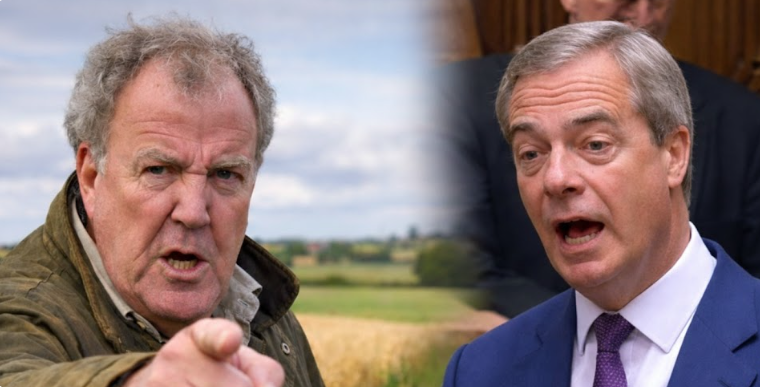
When the United Kingdom voted to leave the European Union, one of the most frequently repeated assurances was that British farmers would be “set free.” Freed from Brussels bureaucracy, freed to design domestic agricultural policy, freed to compete globally on their own terms.
Campaigners, including prominent Brexit advocate Nigel Farage, argued that sovereignty would allow the UK to replace the EU’s Common Agricultural Policy — worth roughly £3–3.5 billion annually to British farmers — with something better suited to national priorities.
Several years on, many in the farming sector say the lived experience has been more complex.
Exports and Administration
Before Brexit, selling produce into the European Union was a routine process for many UK farms. The EU represented the country’s largest and closest export market for food and drink.
Since the transition period ended, exporters have faced new requirements: health certificates, customs declarations, veterinary approvals and additional border checks. Industry groups report that certification costs can add £150–£200 per shipment, with administrative expenses rising by an estimated 20–50% in some cases.
Official trade data shows UK food and drink exports to the EU fell by around 17% compared with pre-Brexit levels. In certain livestock sectors, temporary drops of 30–40% were recorded during early adjustment periods as supply chains adapted to new border processes.
While export volumes have partially recovered in some areas, industry representatives argue that friction has increased costs and complexity, particularly for smaller producers with limited administrative capacity.

Subsidy Transition
Under the EU’s Common Agricultural Policy (CAP), direct payments formed a significant component of many farm incomes. Post-Brexit, the UK government began phasing out CAP-style subsidies and replacing them with the Environmental Land Management (ELM) scheme.
The shift aims to reward environmental stewardship rather than acreage alone. However, the transition has not been seamless. Farm groups estimate that some holdings face reductions of 30–50% in direct support compared with previous levels.
The Department for Environment, Food and Rural Affairs (DEFRA) maintains that the new scheme will ultimately be fairer and more sustainable. Yet critics point to delays, evolving criteria and uncertainty during rollout as contributing to financial strain.
For farms operating on tight margins, even temporary income gaps can affect investment decisions, staffing and long-term planning.
Labour Shortages
Another widely reported issue has been seasonal labour. British horticulture relies heavily on temporary workers for fruit and vegetable harvesting. Industry bodies estimate that 70,000–80,000 seasonal workers are required each year.
Following Brexit and changes to migration rules, shortfalls of 10,000–20,000 workers were reported during peak seasons. While the government has expanded seasonal worker visa schemes, producers say recruitment challenges persist.
The National Farmers’ Union has warned that labour shortages have led to unharvested crops in some regions. Estimates suggest that in difficult years, 15–25% of certain crops were left in fields due to insufficient labour.
Government officials argue that visa allocations have increased to address demand, though farm groups continue to call for long-term workforce planning.
Trade Deals and Competition
Brexit has enabled the UK to negotiate independent trade agreements, including deals with Australia and New Zealand.
These agreements gradually reduce tariffs on agricultural imports such as beef and lamb. Supporters say they create new global opportunities for British exporters and offer consumers competitive prices.
Some domestic producers, however, have expressed concern about cost differentials. Imported meat from large-scale producers overseas can be 20–30% cheaper to produce, according to industry comparisons, due to lower land and feed costs and different regulatory frameworks.
Farmers operating under UK environmental and animal welfare standards argue that competing directly with lower-cost imports places additional pressure on already narrow margins.
The government maintains that safeguard mechanisms are built into trade agreements and that high standards remain a core principle of British agriculture.
Rising Input Costs
Brexit-related adjustments have coincided with global economic pressures, including energy shocks and supply chain disruption.
Fertiliser prices rose sharply in recent years, with industry figures citing increases between 80% and 150% at peak points. Feed, fuel and other input costs have also climbed.
At the same time, farm business income across several sectors has declined by an estimated 15–20% compared with previous periods, according to industry reports.
The combined effect — reduced direct support, administrative burdens, labour constraints and higher input costs — has contributed to financial stress in parts of the sector.
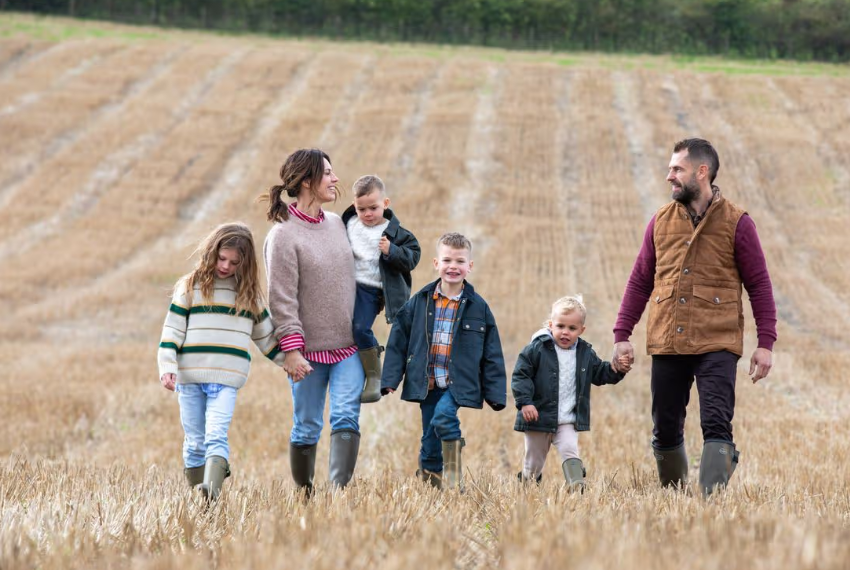
The UK has been losing over 1,000 farms annually, many of them small family-run operations. The average age of a British farmer is now around 59, raising questions about generational renewal.
Sovereignty and Food Security
Brexit proponents emphasise the broader gains of sovereignty: control over laws, trade policy and immigration. They argue that agricultural reform is part of a long-term transition toward a more sustainable and market-oriented system.
Critics counter that reduced domestic production may increase reliance on imports, shifting food security considerations from national to global supply chains.
The debate reflects a wider question: can political independence translate into agricultural stability?
Food production operates on biological timelines rather than electoral cycles. Crops must be planted and harvested regardless of policy debates. Livestock must be fed daily. Margins remain sensitive to both global commodity markets and domestic regulation.
For some farmers, Brexit represents opportunity — particularly those exploring diversification, direct-to-consumer sales or new export markets beyond Europe. For others, the transition has been disruptive and financially challenging.
An Industry in Transition
The British farming sector is not collapsing, but it is evolving under significant pressure. Environmental reform, technological innovation and market adaptation continue alongside political change.
Whether Brexit ultimately delivers the agricultural “freedom” once promised remains a matter of perspective.
What is clear is that sovereignty alone does not eliminate economic complexity. For farmers working the land, the conversation is less about slogans and more about viability — about whether revenues can keep pace with costs and whether the next generation will see a future in British agriculture.
As policy continues to develop, the relationship between political ambition and agricultural reality remains an unfolding story — one measured not in speeches, but in fields and farm accounts across the country.