Clarkson’s bold decision with beer: How the product launch campaign helped build Jeremy Clarkson’s £75 million beer business empire.
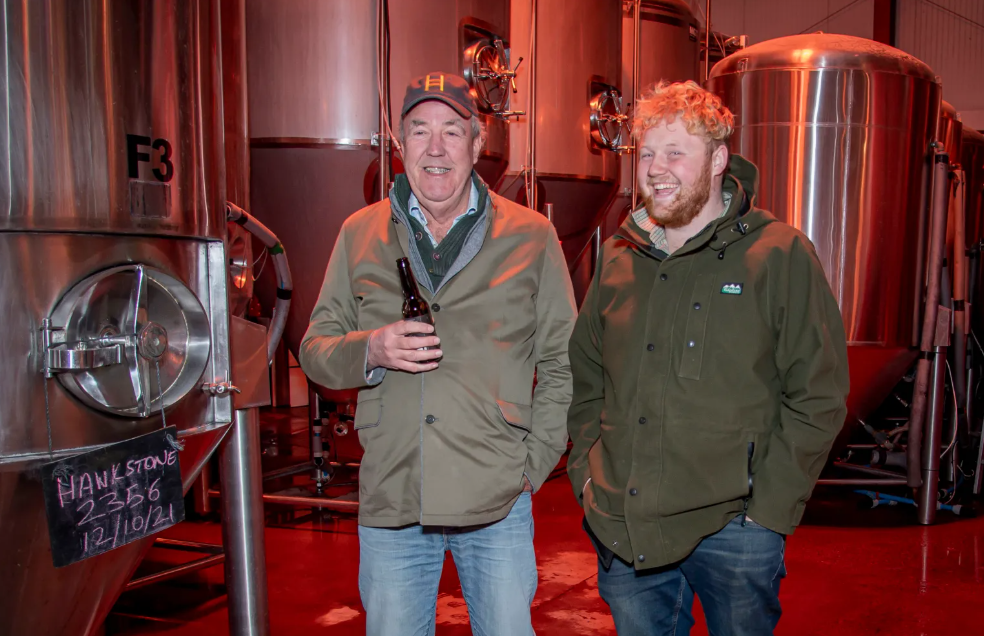
When Jeremy Clarkson first stood in a freezing tractor shed on his Cotswolds farm staring at tonnes of unsold barley, few would have predicted that moment would spark a £75 million brewing enterprise.
Yet five years after its improvised beginnings, Hawkstone Brewery has become one of the most commercially successful celebrity-backed drinks brands in Britain — and, more significantly, a case study in how value can be added to struggling farm produce.
A Surplus With Nowhere to Go
The origins of Hawkstone trace back to Clarkson’s early days running Diddly Squat Farm. After harvesting approximately 1,000 acres of malting barley, he faced a harsh lesson in agricultural economics. Major maltsters showed little interest in relatively small-scale supply from a new entrant to farming, while grain merchants offered prices that barely covered production costs.
For many farmers, that scenario would have meant absorbing a loss and moving on to the next season. Clarkson chose a different path.
Rather than selling raw grain at depressed prices, he decided to convert it into a finished product — beer. It was, in essence, vertical integration born of necessity. If the commodity market would not reward the crop, perhaps the retail market would.
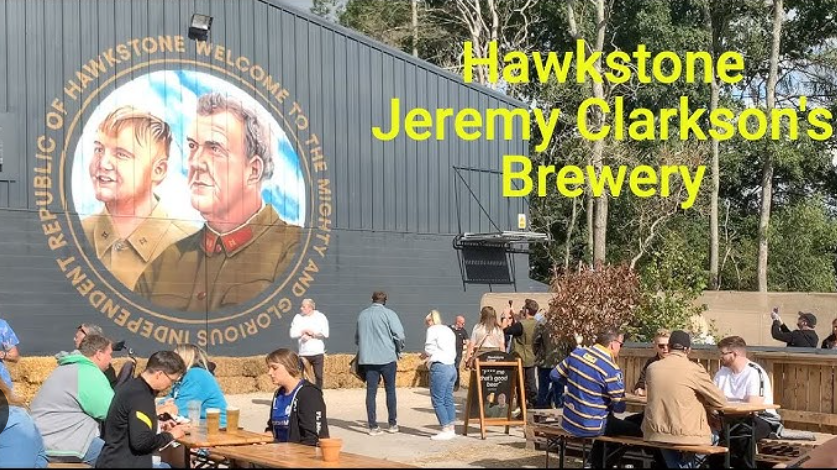
The brand took its name from the Hawkstone Pillar, a historic landmark near the farm, signalling its local roots from the outset.
Launching Against the Odds
Hawkstone’s debut in October 2020 appeared ill-timed. Britain was deep into pandemic restrictions. Pubs were closed or operating under severe limitations. The hospitality sector — the natural home of any new lager — was effectively paralysed.
Observers questioned the wisdom of launching a premium beer into such uncertainty. But the conditions that seemed unfavourable would ultimately prove advantageous.
With travel restricted and entertainment options limited, many households sought small indulgences at home. Premium food and drink sales rose sharply during lockdown periods, and Hawkstone found an audience willing to experiment.
By the time pubs reopened fully, the brand had already built recognition through direct-to-consumer sales and farm shop distribution.
A Rural Supply Chain Model
Unlike many celebrity-branded products, Hawkstone was not simply a licensing exercise. Its supply chain was rooted in Clarkson’s own barley fields and extended to neighbouring farms in Oxfordshire and Gloucestershire.
At a time when global grain markets allow large breweries to source ingredients from multiple continents, Hawkstone committed to British-grown barley. While this approach carries higher costs compared with bulk international imports, it has become central to the brand’s identity.
Clarkson has argued publicly that supporting domestic agriculture was fundamental to the venture. In practice, that commitment has provided local farmers with a reliable buyer for malting barley at a time of price volatility.
The strategy also aligned with a wider consumer trend favouring traceability and regional sourcing.
Breaking Into Retail
Within two years, Hawkstone moved beyond farm shops and online orders into national supermarket chains. Major retailers including Tesco, Sainsbury’s, Waitrose and Morrisons began stocking the lager, signalling mainstream acceptance.
Industry analysts note that shelf space in the UK beer market is fiercely competitive. Established craft breweries often struggle to secure nationwide distribution. Hawkstone’s rapid expansion was undoubtedly aided by Clarkson’s public profile, amplified through the global audience of Clarkson’s Farm.
However, brand recognition alone does not sustain repeat sales. Retail data indicates that Hawkstone’s performance has been strong enough to retain placement against long-standing competitors.
The Pub Trade Challenge
Securing taps in British pubs presents an even steeper challenge. Many establishments operate under “tied house” agreements, restricting the beers they can stock through arrangements with large brewing conglomerates.
Hawkstone’s route into the on-trade market focused on independent pubs. By offering favourable margins and emphasising a direct relationship with publicans, the brand established a foothold outside traditional distribution gatekeeping.
Today, more than 500 independent pubs reportedly serve Hawkstone products, with some operators citing it as a leading seller within the premium lager category.
Expanding the Portfolio
What began as a single lager has diversified into a broader drinks portfolio. Hawkstone now includes IPAs, pilsners and a cider produced from Cotswold apples.
The diversification reflects a common strategy in the drinks industry: extend a recognised brand into adjacent categories once core credibility is established.
The company has also created skilled employment in brewing, logistics and marketing within the region — an important factor in rural areas where job opportunities can be limited.
International Ambitions
With domestic growth stabilised, Hawkstone has begun exploring overseas markets, including Canada and Australia. International expansion presents new challenges: distribution partnerships, regulatory compliance and competition with entrenched global brands.
Yet Clarkson’s international profile may offer leverage. His decades in broadcasting have cultivated audiences far beyond the UK, providing potential entry points into export markets.
More Than a Celebrity Brand?
Sceptics may still categorise Hawkstone as a celebrity-driven novelty. However, the financial valuation — reportedly around £75 million — suggests a business that has moved beyond novelty status.
At its core, the brewery illustrates a broader agricultural lesson: adding value at source can transform the economics of farming. Instead of remaining price-takers in commodity markets, producers who move into processing and branding can capture a greater share of the consumer pound.
For Clarkson, whose career began in motoring journalism and global television, the shift into brewing may represent his most commercially sustainable reinvention yet.
While Diddly Squat Farm has provided entertainment for millions, Hawkstone has provided something more durable — a profitable enterprise rooted in British barley.
In an era where rural businesses face increasing pressure, the brewery stands as an example of how agricultural surplus can be reimagined as opportunity. Whether Hawkstone continues its upward trajectory will depend on maintaining quality, distribution and brand credibility.
For now, however, what started as an unsellable harvest has become one of the most unexpected success stories in Britain’s modern drinks industry.