Jeremy Clarkson Slams Keir Starmer For ‘DESTROYING Countryside’ Despite Farm Tax U-Turn

A simmering row over inheritance tax on farmland, fresh criticism of the UK’s reliance on foreign-trained doctors, and signs of a subdued Boxing Day retail season have combined to expose widening political fault lines across Britain.
In recent days, farmers, health campaigners and retail analysts have each voiced concerns that point to a broader unease about economic direction, government priorities and national resilience.
Farmers Say Inheritance Tax Rise “Not Enough”
The government’s decision to raise the inheritance tax threshold on agricultural assets from £1 million to £2.5 million has brought some relief to farming families. But many argue it does not go far enough.
Ministers had initially defended the lower threshold on the grounds that wealthy investors were using farmland as a vehicle to reduce inheritance tax liabilities. Critics, however, say that approach unfairly penalised multi-generational family farms.
Farmers interviewed in recent days said that while the increase to £2.5 million is welcome, the policy remains flawed in principle. Many believe agricultural land should be treated as a strategic national asset rather than a taxable windfall.
“Food security is national security,” has become a repeated refrain among farming representatives. Several point out that in times of geopolitical tension, the ability to produce food domestically is not merely an economic issue but a matter of resilience.
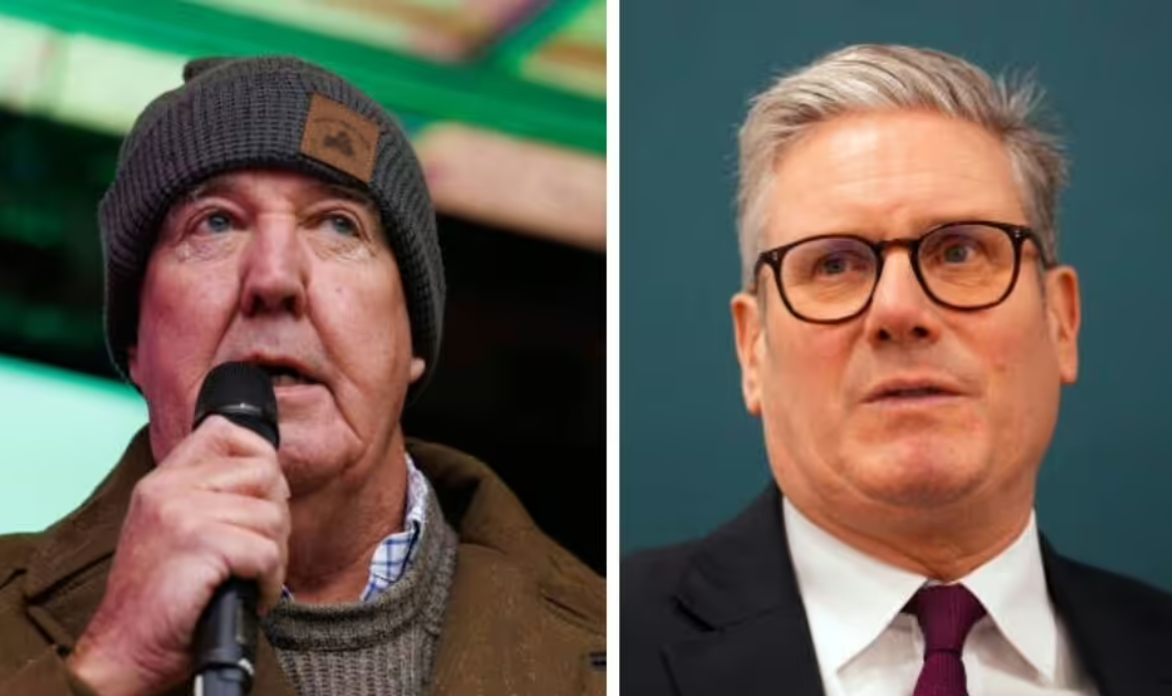
Television presenter and farmer Jeremy Clarkson has emerged as an outspoken critic of the policy, arguing that even the revised threshold risks undermining the countryside. Ministers had hoped the increase would draw a line under months of protests that saw tractors descend on Westminster. Yet rural anger appears far from extinguished.
The dispute has also exposed tensions within Parliament. Labour’s substantial majority includes an unusually high number of MPs representing rural constituencies. Some of those backbenchers are reportedly uneasy about policies perceived as hostile to agricultural communities.

Foreign Doctors and Training Caps Under Fire
Meanwhile, a separate controversy is brewing in the health sector.
According to recent figures from the General Medical Council, around 42% of doctors registered to practise in the UK were trained overseas. That proportion is significantly higher than in comparable European nations such as Germany and France.
Critics argue that Britain’s reliance on international recruitment is a symptom of longstanding training caps that limit the number of domestic medical school places. Aspiring British doctors face intense competition for a restricted number of university spots, despite chronic workforce shortages in the NHS.
The issue has surfaced amid renewed industrial action by resident doctors, formerly known as junior doctors. While pay disputes remain central to their grievances, some have cited limited access to specialist training posts as a contributing factor.
Health Secretary Wes Streeting has acknowledged the need to review training capacity. However, expanding medical education requires substantial funding and long-term planning.
Opponents of the current model argue it is short-sighted to invest heavily in training doctors only to see them leave for countries offering higher salaries and better working conditions. They also question the ethics of recruiting large numbers of clinicians from nations that may themselves face workforce shortages.
Supporters of international recruitment counter that the NHS has always depended on overseas talent and that mobility within global healthcare is inevitable.
Yet the optics are politically sensitive. At a time when immigration policy remains high on the public agenda, reliance on foreign-trained professionals has become part of a broader debate about self-sufficiency and strategic planning.
Boxing Day Blues and Economic Anxiety
On the economic front, early reports suggest Boxing Day sales may have fallen short of expectations.
While definitive figures are still being compiled, some retail analysts estimate that spending could be down by as much as £1 billion compared with last year. Footfall in parts of London has reportedly declined, although online sales complicate the overall picture.
Economists caution that short-term retail fluctuations can be misleading. Nonetheless, subdued consumer confidence would be unwelcome news for Chancellor Rachel Reeves, who is already grappling with sluggish growth.
Britain’s economy has flatlined in recent quarters, and inflationary pressures have eroded household purchasing power. Even when shoppers are presented with discounts, many appear reluctant to spend freely.
Retailers warn that consumer caution can quickly translate into reduced tax revenues and further pressure on public finances.
The broader mood, analysts suggest, is one of uncertainty. High interest rates, rising mortgage costs and concerns about job security have combined to temper enthusiasm for discretionary spending.
A Test of Political Authority
Taken together, the disputes over farm taxation, medical workforce planning and retail performance illustrate the challenges facing the government.
With a commanding parliamentary majority, ministers possess the legislative power to enact reforms. Yet political authority is not measured solely in numbers.
Rural unrest, NHS workforce strains and economic anxiety each represent potential flashpoints. The coming months may determine whether policy adjustments can restore confidence across these sectors.
For farmers, the question remains whether inheritance tax changes will truly safeguard generational continuity. For aspiring doctors, the issue is whether training pathways will expand to match ambition. And for retailers, the immediate concern is whether cautious consumers will loosen their purse strings.
In each case, the stakes extend beyond individual industries. They touch on fundamental questions about national resilience, economic vitality and public trust.
As debates continue, one theme recurs: in uncertain times, the intersection of personal prosperity and national policy becomes more politically potent than ever.