From Field to Flour: The Real Profit Behind Jeremy Clarkson’s Wheat Harvest
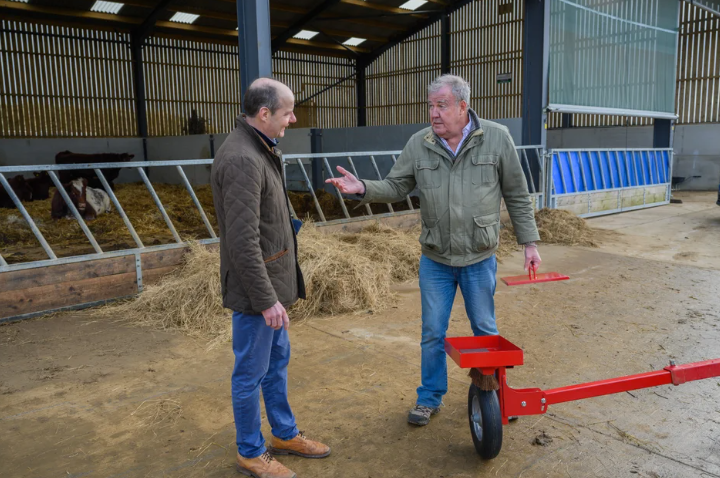
Jeremy Clarkson has faced drought, flooding, livestock chaos and bureaucratic hurdles since taking over Diddly Squat Farm. But this week, the former Top Gear presenter encountered a different kind of test — one measured not in horsepower or headlines, but in protein percentage.
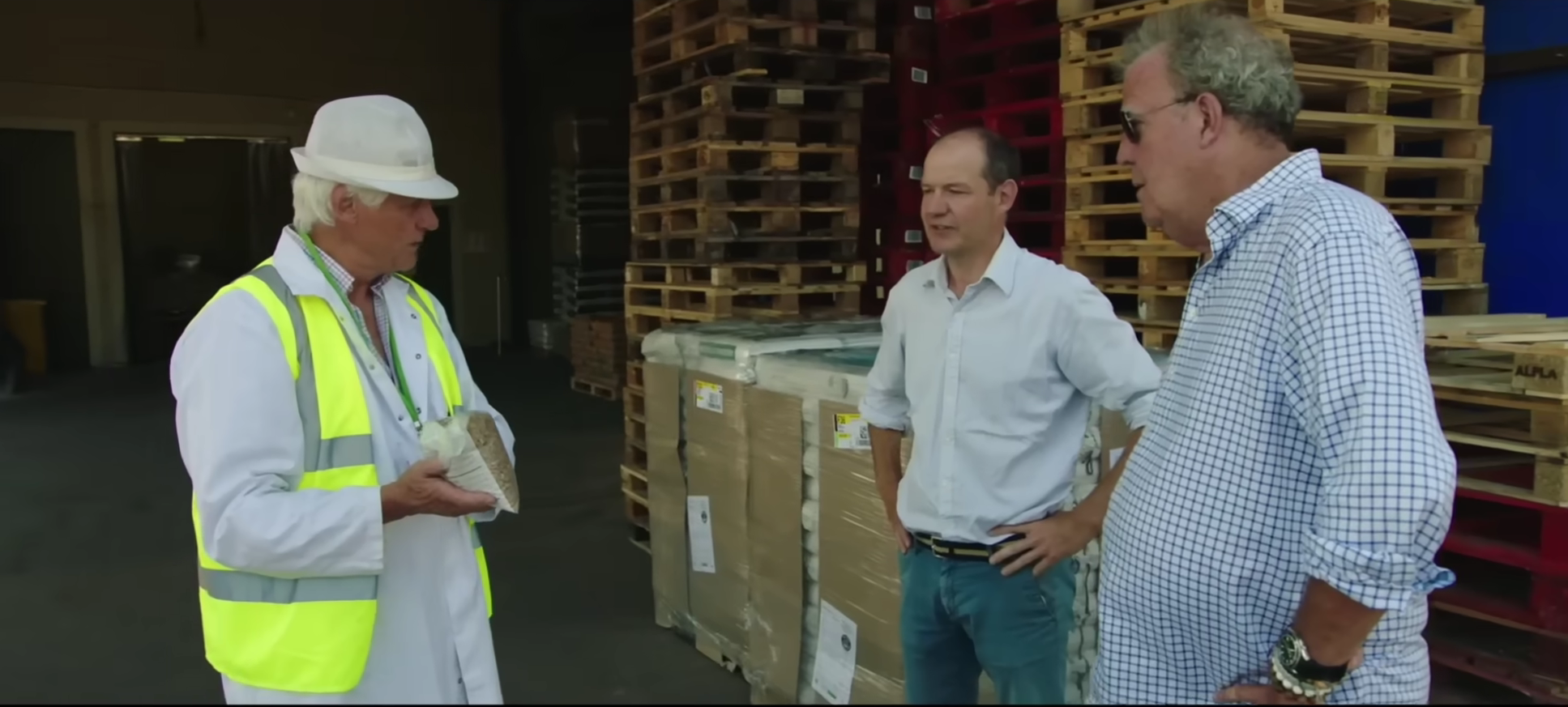
Standing inside a traditional mill, Clarkson watched as a small paper sample bag containing his home-grown wheat was carried off for laboratory testing. The result would determine whether his harvest would be sold as premium milling wheat — destined for bread flour — or downgraded to animal feed.
The difference was significant.
“If it ends up as flour for bread, that’s top dollar,” Clarkson explained, barely disguising his anticipation. But before any deal could be struck, the wheat had to pass inspection by Paul, the miller responsible for quality control.
The Five-Minute Verdict
At the heart of the evaluation was a single number: protein content. For milling wheat, the target benchmark sits at 13 percent or above — the threshold that ensures strong gluten formation, crucial for bread structure and texture.
“You’re aiming for 13,” Paul told Clarkson. “That’s your Premier League milling wheat.”
The analogy seemed apt. Milling wheat commands significantly higher prices than feed-grade grain, and for farmers operating on tight margins, that percentage point can mean the difference between a modest return and a profitable season.
While Clarkson waited for the lab result — a process Paul said would take just five minutes — the conversation turned to market values.
Premium milling wheat was quoted at approximately £185 per tonne. Feed wheat, by contrast, would fetch closer to £155 per tonne.
The gap may appear small on paper, but across dozens or even hundreds of tonnes, the financial impact becomes substantial.
Clarkson, never shy about negotiation, floated the idea of asking for £200 per tonne — a bold opening bid designed to test the waters.
“I’m really useless at haggling,” he admitted, half-joking, as farm manager Charlie Ireland offered cautious advice.

The Result: 13.05 Percent
When Paul returned with the lab data, suspense filled the room.
“The first number is one,” he began. “The second number is three… then a point… zero… five.”
13.05 percent.
Just above the target.
For Clarkson, it was vindication. For the miller, it was a strong endorsement of quality.
“This is probably as good as I’ve seen so far,” Paul confirmed.
The grain had officially qualified as premium milling wheat.
From Field to Flour
The approval not only secured a higher price but also meant the wheat would be milled into flour for bread production — a significant milestone for Diddly Squat Farm’s diversification ambitions.
Clarkson has increasingly sought ways to add value to farm produce rather than selling purely as commodity goods. Milling wheat into flour, particularly if linked to branded or artisanal bread products, opens opportunities beyond raw bulk sales.
The economic logic is straightforward: higher protein equals stronger flour; stronger flour equals commercial baking demand.
With protein levels above 13 percent, Clarkson’s wheat meets specifications for bread flour production, placing it firmly within the premium category.
The Negotiation
Although Clarkson had jokingly prepared to demand £200 per tonne, the final discussion landed in the £180–£185 range — a realistic figure aligned with current market conditions.
For many farmers, locking in milling contracts at premium rates represents stability in an otherwise volatile agricultural economy. Grain prices fluctuate based on global supply, weather events, energy costs, and geopolitical tensions.
In recent seasons, British arable farmers have faced unpredictable yields due to climate variability. Protein content, influenced by nitrogen management and growing conditions, can vary significantly from year to year.
That makes this result particularly meaningful.
A Boost for Morale — and Margins
Beyond the financial benefit, the successful grading offers a morale boost at Diddly Squat Farm.
Clarkson’s farming journey has been marked by setbacks — from crop failures to livestock complications — often under the scrutiny of television cameras. Achieving premium grade wheat demonstrates operational improvement and attention to agronomic detail.
Protein levels above 13 percent are not accidental. They require careful fertiliser application, soil management, and timing — elements that Clarkson has increasingly delegated to experienced agricultural advisers.
While he may remain the public face of the farm, much of the technical precision stems from collaboration with skilled professionals.
What It Means for the Season Ahead
Securing milling-grade wheat strengthens Diddly Squat’s financial outlook for the year. Higher returns per tonne can offset rising input costs, including fertiliser, fuel, and machinery maintenance.
However, the broader agricultural picture remains challenging. Wheat markets are influenced by global production trends, and UK farmers continue to navigate changing subsidy frameworks and environmental compliance requirements.
Still, on this occasion, the numbers worked in Clarkson’s favour.
“This is fantastic news,” he said, visibly relieved.
A Lesson in the Details
The moment underscores a broader truth about modern farming: success often hinges on technical margins invisible to most consumers.
A decimal point in a protein reading can determine whether grain becomes artisan bread or poultry feed. Behind every loaf on supermarket shelves lies a chain of scientific testing, pricing negotiations, and agricultural risk.
For Clarkson, the outcome represented more than a commercial win. It validated months of work in the field — proof that amid unpredictable weather and fluctuating markets, careful crop management can deliver tangible rewards.
As the wheat heads off to be ground into flour, the story of this harvest moves from soil to bakery.
And for once, the numbers were firmly in Diddly Squat’s favour.