DEPTH DEFIED: Rick Lagina Pierces 120-Foot Barrier, Revealing Evidence of $290M Deposit
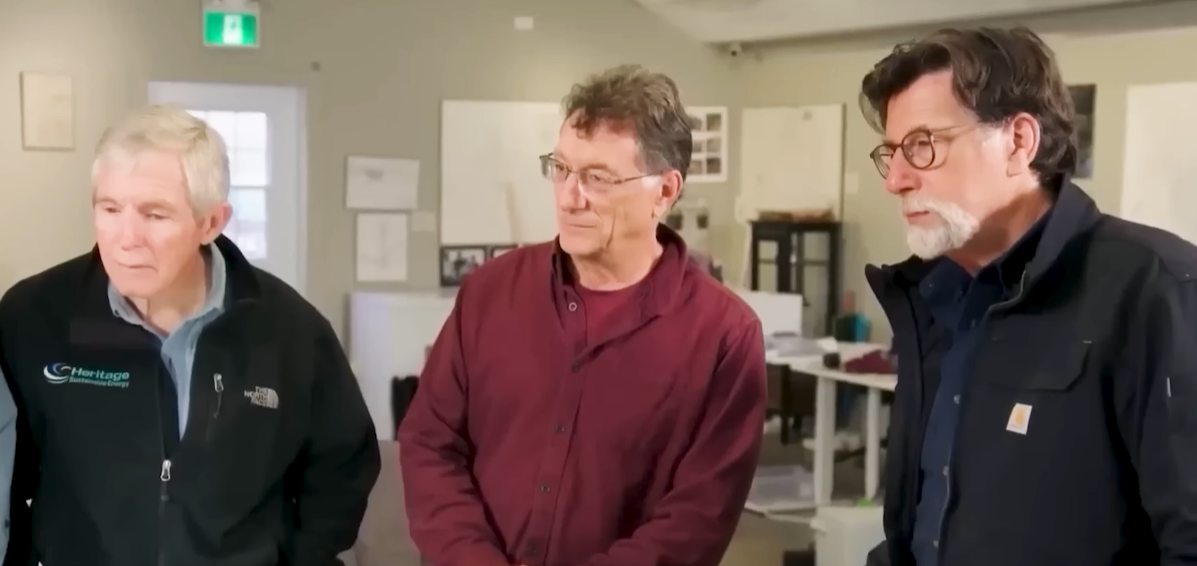
At 4:47 AM on a late summer morning, the longest-running treasure hunt in history shifted from the realm of legend into the world of physical fact. After 23 years of methodical investigation, Rick Lagina and his team have successfully bypassed the island’s notorious flood tunnel defenses, recovering core samples from a depth of 120 feet that provide “undeniable proof” of human construction and a massive metallic deposit.
Beyond the “Ceiling”
For over two centuries, 90 feet has acted as a functional ceiling for Oak Island searchers. At that depth, the island’s sophisticated hydraulic traps typically trigger, flooding shafts with seawater and collapsing excavation walls. However, using a precision drilling protocol developed over three years, the team successfully penetrated the bedrock without activating the defensive system.
The results have stunned the geological community. At 115 feet, the drill encountered structural timber preserved in an anaerobic (oxygen-free) state—a condition that does not occur naturally at that depth. This suggests the builders didn’t just dig a hole; they engineered a sealed environment designed to last indefinitely.
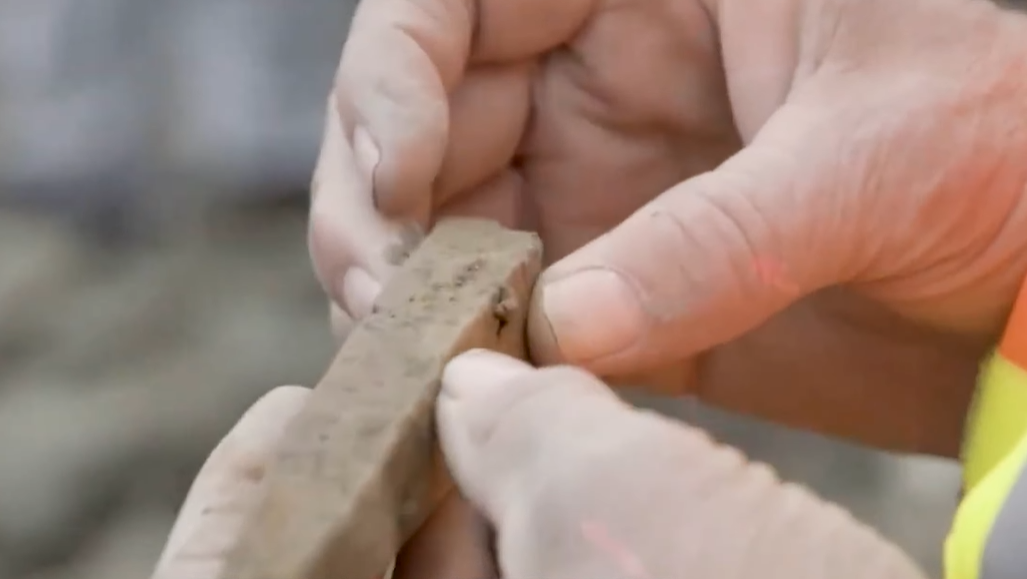
[Image: Rick Lagina inspecting a 120-foot core sample in the pre-dawn light]
The $290 Million Chemical “Fingerprint”
While the drill has not yet physically “struck gold,” the geochemical evidence is being described as a “smoking gun.” Independent laboratory analysis of the 120-foot core revealed intense oxidation patterns and chemical signatures consistent with long-term contact between organic materials and precious metals.
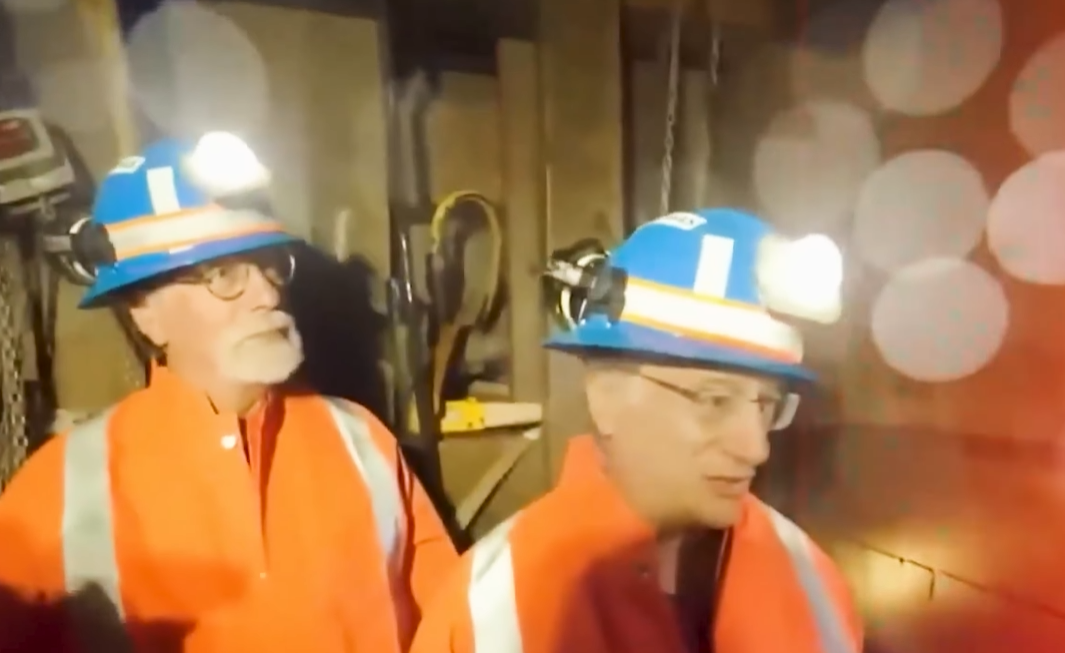
Using specific gravity measurements and volume modeling, geochemists have estimated the metallic mass at a conservative midpoint of $290 million.
“This is not a treasure announcement; it is an evidence announcement,” Rick Lagina stated with his trademark restraint. “We have recovered the chemical imprint that a massive metallic object leaves behind when it has been sealed in the earth for centuries. Six words from our geologist changed everything: ‘This did not form here naturally.’“
A Multi-Level Defense
The discovery at 120 feet fundamentally rewrites the “Money Pit” model. For decades, it was assumed the treasure sat within the flood tunnel network. The new data suggests the flood tunnels were merely a “ceiling” or a defensive layer, protecting a far deeper, sub-flood installation.
The presence of “engineered backfill”—a deliberate mixture of non-local soils—at 110 feet further indicates a sophisticated concealment strategy. The builders were not merely hiding a stash; they were protecting a site intended for long-term survival, potentially housing historical records or cultural artifacts whose value transcends the $290 million gold estimate.
23 Years of Preparation
For Rick Lagina, now 65, the discovery is the culmination of a journey that began with a Reader’s Digest article in his youth. His commitment to “the question” rather than “the payout” has been the driving force behind the most disciplined search in the island’s history.
“I wasn’t committed to finding treasure,” Lagina remarked to his team. “I was committed to understanding what happened here. At 4:47 AM, that understanding became complete. We now know, with physical certainty, that something was built and something was placed deep beneath this island.”
As the fellowship prepares for the next phase of recovery, the atmosphere on Oak Island has changed. The skepticism that has haunted the search since 1795 has been silenced by a cylinder of earth. The secret the island guarded for 227 years has finally been reached.