New historical clue unearthed on Oak Island: A copper plate suggests a connection to Sir William Phips from the 17th century.
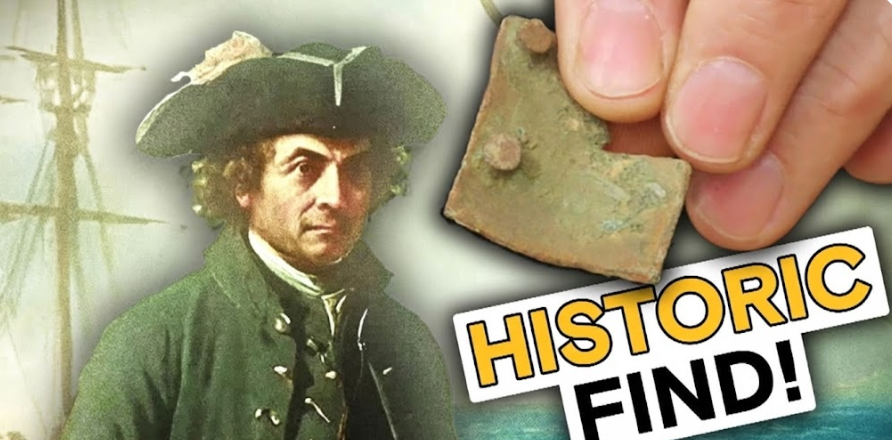
Oak Island, NS — In a remarkable development for the long-running investigation into Oak Island’s enduring treasure mystery, a team of archaeologists and treasure hunters has unearthed a copper plate at Lot 5 that may significantly alter the narrative surrounding the island’s most mysterious features. The find, which emerged from spoils recently excavated near a rounded stone foundation along the shoreline, appears to date back to the 1600s, offering compelling evidence of activity on Oak Island that predates the discovery of the famed Money Pit.
The discovery took place as metal detection expert Gary Drayton and team member Peter Fornetti scanned a large pile of soil and debris removed from the stone foundation. Initial investigation revealed an array of historically significant artifacts, including Venetian trade beads and iron tools linked to the birthplace of Sir William Phips, the 17th-century English naval officer credited with salvaging massive amounts of Spanish silver from the sunken ship Concepción in 1687. It was in this context that the copper plate was detected. The object, initially appearing as a simple fragment, was revealed to be a riveted belt or satchel plate. Its craftsmanship and metal composition suggest that it could have belonged to a soldier or sailor, potentially tied to maritime expeditions of the late 17th century.
Upon further examination at the Oak Island lab, archaeometallurgist Emma Culligan analyzed the plate using a Skyscan 1273 CT scanner and X-ray fluorescence spectrometer. These tests confirmed that the plate is made from a copper alloy containing zinc, iron, lead, and arsenic, the latter of which is often present in early modern metallurgical processes. “The presence of arsenic suggests an older origin,” Culligan noted. “This could reasonably place the plate in the late 1600s, which aligns with the period when Sir William Phips conducted his expeditions.” Carmen Legge, a blacksmithing expert consulted by the team, further indicated that the plate’s riveted construction is consistent with military or maritime usage, raising the possibility that it was a functional, decorative piece linked to Phips’ crew or associates.
The implications of this discovery are significant. Lot 5 has long been regarded as a peripheral site on Oak Island, but the accumulation of artifacts—including the newly analyzed copper plate—suggests it may have served as an operational base or staging area. The discovery of items with direct connections to known historical figures strengthens long-standing theories that the island was used as a secure storage location for treasures salvaged from the Concepción. According to historian Scott Clarke, who has extensively researched Freemason networks and early English expeditions, the presence of copper plates, beads, and iron tools indicates the likelihood that individuals associated with Phips and his Freemason colleagues may have intentionally deposited these materials on Oak Island to safeguard them.

While the copper plate itself does not yet provide a definitive link to Phips, its metallurgical profile and associated artifacts point toward a broader narrative. Clarke suggests that the plate could have functioned as part of a uniform or satchel, potentially containing insignia or regiment numbers. Such markers, if confirmed, would offer a tangible connection between the physical remains on Lot 5 and the historical record of Phips’ Spanish treasure expeditions. “If we can tie this plate to a military unit or crew member, it might help identify the team responsible for constructing the Lot 5 foundation and, by extension, the surrounding structures,” Clarke explained.
The discovery also raises intriguing questions about the relationship between Lot 5 and the Money Pit area, including the so-called Eye of the Swamp. Historical accounts suggest that former landowner Anthony Graves may have encountered Spanish silver in the swamp, hinting at multiple interlinked caches across the island. The proximity of the copper plate to other items, such as iron tools and Venetian trade beads, reinforces the notion of deliberate deposition rather than incidental loss. It also strengthens the hypothesis that Oak Island was not merely a site of treasure burial but a sophisticated operational landscape designed to conceal valuable cargo in multiple layers, perhaps employing architectural strategies to mislead or delay unauthorized access.
Laboratory analysis remains ongoing, with researchers focusing on potential inscriptions, regimental identifiers, and additional metallurgical studies to confirm age and provenance. Early findings, however, already suggest that Lot 5 could represent one of the earliest documented phases of organized activity on Oak Island, potentially bridging historical events with the material culture uncovered over the past two centuries. The team’s approach reflects a rigorous, interdisciplinary methodology, combining metal detection, CT scanning, X-ray spectroscopy, and blacksmith expertise to build a comprehensive picture of the artifacts’ significance.

For viewers and enthusiasts of Oak Island, the copper plate discovery marks a milestone. It provides one of the strongest material links to a historically documented European figure associated with New World treasure movements. While no singular artifact can answer all questions, the growing body of evidence at Lot 5 contributes to an evolving narrative that is both historically grounded and consistent with observed geological and architectural features on the island. Future work may include additional excavations at Lot 5, targeted exploration of nearby swamp areas, and further lab-based analyses aimed at confirming the presence of Spanish silver or other precious materials linked to Phips’ expeditions.
Ultimately, the copper plate discovery underscores the meticulous nature of Oak Island research and the value of modern archaeometallurgical techniques in corroborating historical hypotheses. By systematically linking artifacts to known historical events and figures, the team is gradually revealing the operational and strategic logic that may have guided treasure placement on the island. While mysteries remain, the evidence from Lot 5 now provides a tangible, scientifically supported thread connecting 17th-century European treasure salvaging to the centuries-long enigma of Oak Island—a connection that could reshape our understanding of one of history’s most enduring treasure legends.