Season 13 of Oak Island concludes in utter astonishment after an incredible new discovery!
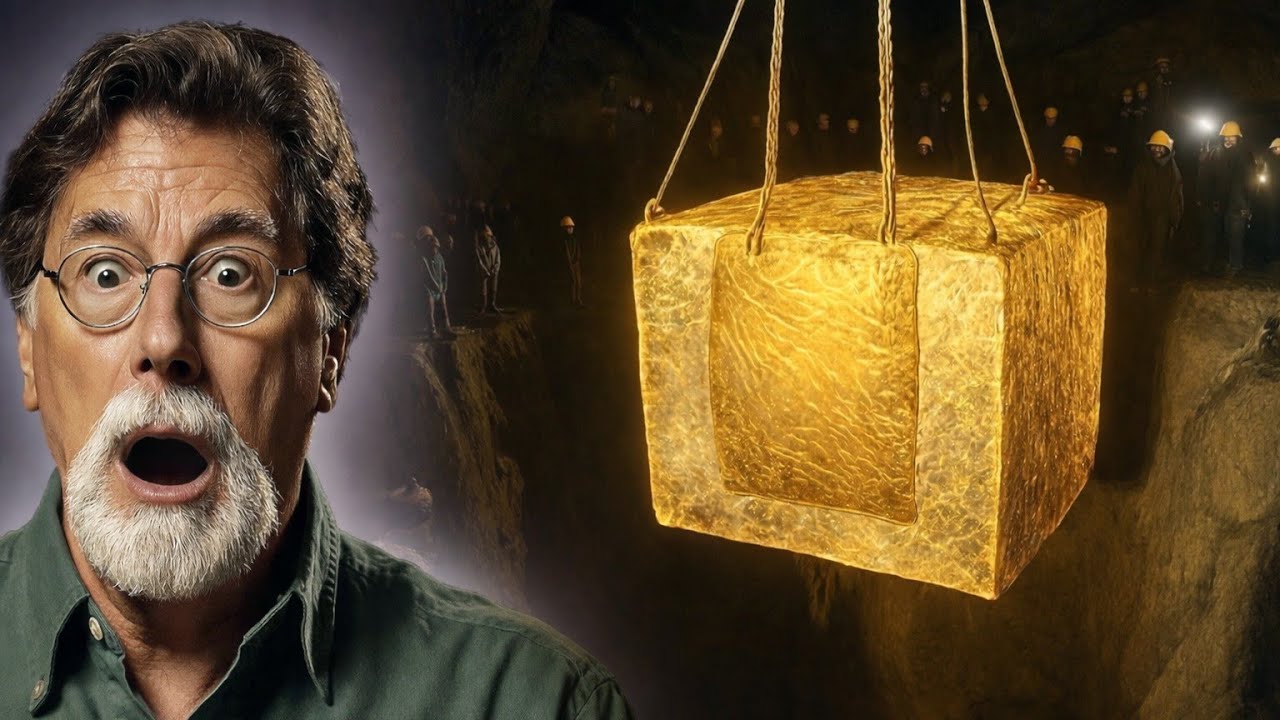
A dramatic new development during the latest phase of drilling on Oak Island has captured the attention of researchers and long-time followers of the centuries-old mystery. According to reports from the exploration team featured on The Curse of Oak Island, drilling operations in the Money Pit area may have intersected a previously unknown underground chamber — one that appears to be intentionally constructed rather than a natural geological formation.
If confirmed, the discovery could represent one of the most significant moments in the island’s long search for answers.
An Unexpected Signal at Depth
The discovery reportedly began during a routine overnight drilling operation. Sensors monitoring pressure and resistance in the borehole suddenly behaved in an unusual way. Instead of showing the steady resistance expected from compacted soil or bedrock, the readings abruptly dropped.
For a brief moment, the drilling team believed the instruments might have malfunctioned.
However, when a fiber-optic camera was lowered into the shaft to inspect the anomaly, the footage revealed something unexpected. The camera appeared to enter an open cavity deep underground.
According to team members present during the operation, the walls visible in the footage did not resemble natural rock formations. Instead, they appeared smooth and structured, with large stone surfaces arranged in a way that suggested deliberate construction.
The location of the void was also surprising. It lay beneath ground that had already been explored multiple times by previous search efforts, raising questions about whether earlier investigations may have passed close to the feature without detecting it.
Reaching Deeper with the Cerberus Shaft
The potential chamber was discovered during drilling associated with a new steel caisson shaft installed in the Money Pit region earlier in the season.
The massive drilling structure — nicknamed “Cerberus” by the crew — was designed to reach depths beyond previous excavations. Reinforced with heavy steel casing, the shaft was intended to stabilize the notoriously unstable ground that has frustrated treasure hunters for more than two centuries.
Oak Island’s geology has long complicated exploration efforts. Water intrusion, shifting layers of clay, and remnants from earlier search operations have made controlled excavation extremely difficult.
Cerberus was built specifically to overcome those challenges.
By late in the season, the shaft had reached depths exceeding 200 feet, pushing into layers of earth rarely examined with modern technology.
Early Clues from Artifacts and Timber
Before the chamber discovery, the season had already produced several intriguing finds.
Metal detecting expert Gary Drayton recovered a small metal artifact from spoil material brought up during drilling. Although not made of precious metal, laboratory analysis suggested the object could date to the late 1600s.
The artifact’s craftsmanship appeared too refined to belong to early treasure hunters known to have searched the island in the 18th and 19th centuries.
Around the same time, excavators uncovered a group of wooden beams buried deep in dense clay layers. Unlike the rough timber fragments seen in earlier digs, these beams appeared shaped and possibly part of a larger engineered structure.
Carbon dating tests indicated that some of the wood could predate the first recorded discovery of the Money Pit in 1795.
For the team, the findings strengthened the theory that significant activity may have taken place on Oak Island long before documented treasure hunts began.
The Moment the Camera Entered the Void
When the fiber-optic camera descended through the Cerberus borehole and entered the suspected chamber, team members reportedly gathered around monitors to watch the live video feed.
At first, the camera passed through cloudy water and sediment suspended in the shaft. Then the image suddenly cleared as it entered open space.
The footage appeared to show a chamber lined with dark stone blocks fitted tightly together.
The material did not resemble the island’s natural limestone bedrock. Instead, it looked like polished stone slabs arranged in a deliberate pattern.
One of the most intriguing details was a circular metal plate embedded in one wall. The object appeared etched with complex markings and symbols that researchers have not yet fully interpreted.
Below the plate, additional carvings were reportedly visible in the stone, including geometric shapes and cross-like symbols.
Although the team has not released detailed images publicly, experts consulted by the project have suggested the materials may include basalt — a volcanic rock not native to Nova Scotia.
If that identification proves correct, it would imply the stone had been transported to the island from elsewhere.
Experts Begin Examining the Evidence
Following the discovery, images and data from the chamber were shared with a number of specialists, including archaeologists, metallurgists, and historians.
Preliminary analysis has focused on both the unusual stonework and the metal plate embedded in the wall.
Some experts have suggested the plate could be made from a historic alloy such as electrum, a natural mixture of gold and silver used in various ancient cultures.
Others have emphasized that the markings carved into the stone may provide important clues about the structure’s purpose.
At this stage, researchers caution that conclusions remain preliminary. Additional analysis and further exploration will be needed before the chamber’s origins can be determined.
A New Direction for the Investigation
For Rick Lagina and Marty Lagina, the discovery marks another major step in their decades-long investigation of Oak Island’s mystery.
Since the television series began documenting their efforts, the team has uncovered numerous artifacts and structural features suggesting that the island may have hosted complex underground engineering at some point in the past.
The possible chamber could represent a new piece of that puzzle.
Whether it proves to be a hidden storage space, part of a tunnel network, or something else entirely remains uncertain.
What is clear is that the discovery has shifted the focus of the ongoing search.
Rather than simply looking for buried valuables, the investigation is increasingly centered on understanding who may have built such structures — and why.
As researchers prepare for the next phase of excavation, Oak Island once again finds itself at the center of an enduring historical mystery.
After more than two centuries of speculation, the island’s secrets may be closer to the surface than ever before.