THE STARBURST CONNECTION: Industrial Discovery at Smith’s Cove Challenges Oak Island Legend

The long-standing narrative of Oak Island as a mere repository for pirate gold is facing a significant scientific challenge following a series of unusual discoveries at Smith’s Cove. Emma Culligan, the team’s lead metallurgical researcher, has identified a “distinctive starburst pattern” on a newly recovered cast-iron stove door—a symbol that remarkably matches a button found on a completely different part of the island.
The find has forced the Lagina brothers and their team to pause their hunt for “treasure” to consider a more grounded, yet equally compelling theory: that Oak Island was once the site of a highly organized industrial operation.
A Symbol Across the Island
The heavy, corroded door was pulled from four feet beneath the rocky shoreline of Smith’s Cove by Gary Drayton and Alex Lagina. While the object was initially encased in a thick mineral crust, Culligan’s laboratory analysis revealed the star-shaped design.
“I find the design quite unique,” Culligan noted during the reveal. The connection to a button previously discovered on Lot 5 suggests that the inhabitants of the island were not merely transient treasure hunters, but a disciplined group with shared equipment and perhaps a shared purpose.
The Manganese Timeline
While the team initially hoped the stove door might be a relic from an ancient era, Culligan’s chemical analysis of the iron provided a reality check. High levels of manganese detected within the metal point toward a manufacturing date in the mid-1800s.
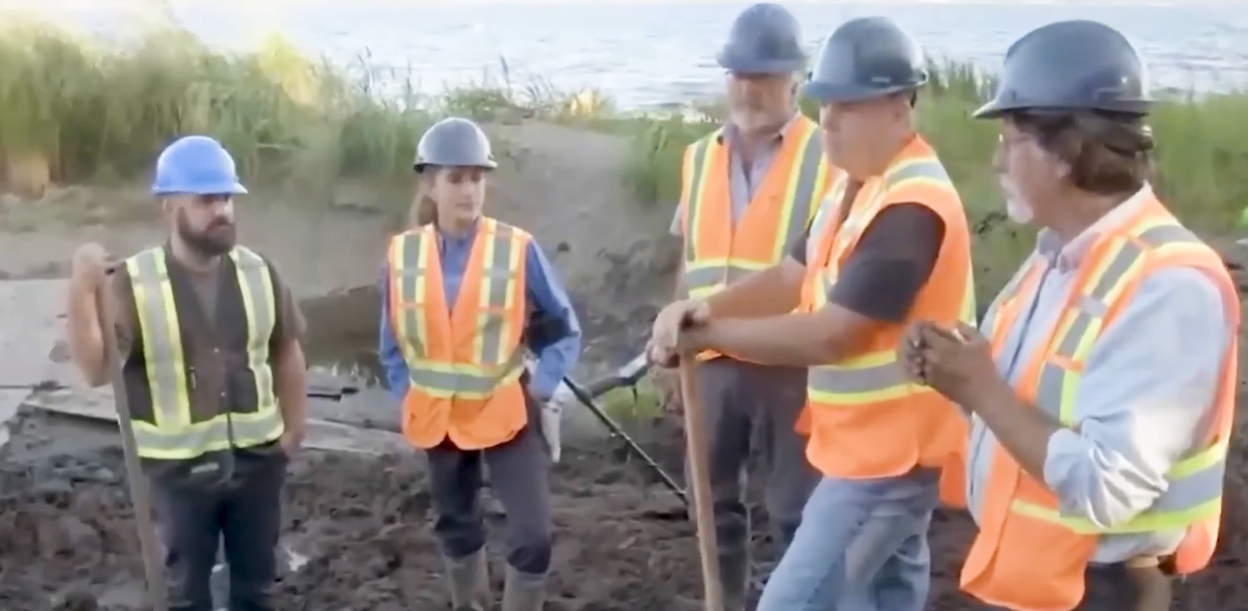
This timeline aligns with the known history of “searcher” activity on the island. The door likely belonged to one of the many crews that arrived in the 19th century, such as the Onslow or Truro companies. These men lived in harsh conditions, building work camps and industrial platforms to combat the island’s notorious flood tunnels.
Echoes of the Restalls
Further detection in the area yielded a “chaotic mix” of more modern debris, including heavy bolts and nails. Culligan and the team identified these as construction materials likely used by the Restall family during their tragic 1960s excavation attempt.
The grouping of these nails in rows and bolts in clusters suggests the remains of a buried wooden platform or protective casing. Rather than pointing to a pirate vault, these artifacts appear to be a “buried blueprint” of the many failed attempts to solve the island’s mystery.
The “Dry Hole” at HN15.5
While Smith’s Cove provided physical artifacts, the drilling team faced disappointment elsewhere. Based on theories from geoscientist Dr. Ian Spooner, the team targeted a new borehole, labeled HN15.5, seeking a hidden chamber 127 feet below the Garden Shaft.
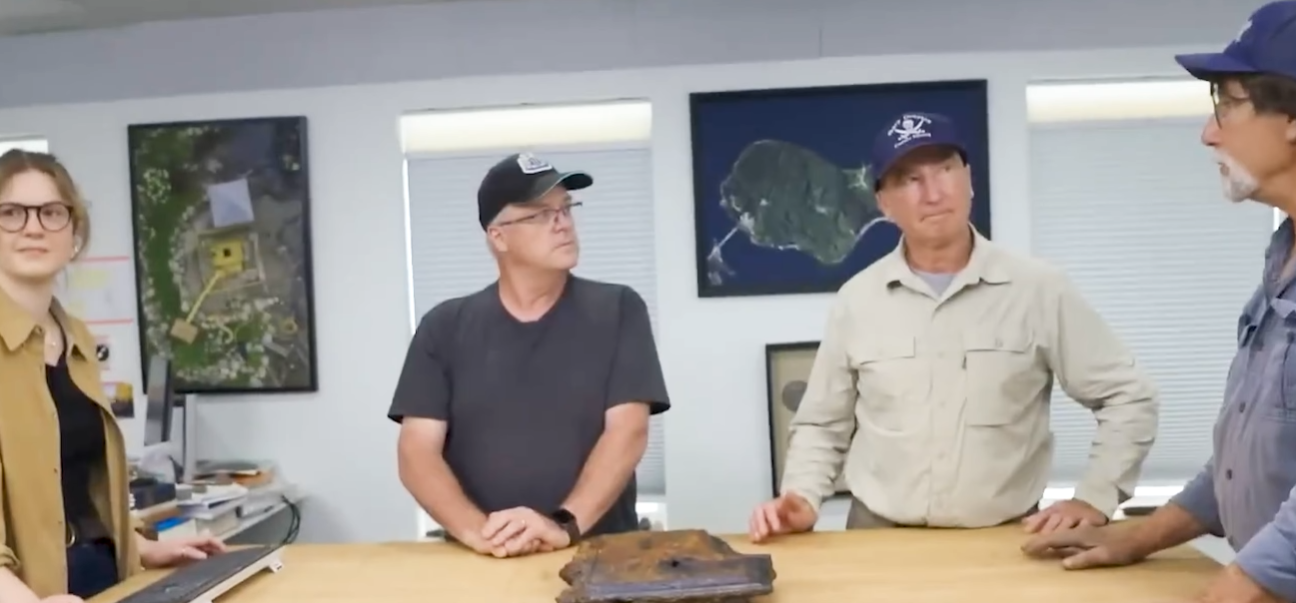
However, the results were sobering. Soil samples showed no evidence of a void, and water testing revealed no traces of precious metals. “Everything appears clean and ordinary,” reported the research team, prompting Marty Lagina to redirect efforts toward the Chappelle and Heden shafts.
History vs. Hollywood
As the investigation continues, the evidence increasingly points toward a “working island” characterized by brick-making, leather tanning, and mining. While these industrial explanations lack the cinematic flair of the Knights Templar or Spanish Galleons, Culligan argues that every artifact—even a rusty hinge—tells a vital story.
“The real treasure of Oak Island might be the truth of what actually happened here,” the team reflected. Whether the starburst symbol represents a specific military unit or merely a popular 19th-century foundry design, it provides the first real mapping of the people who struggled against the island’s elements long before the modern era.