THE CURRENCY OF CONSPIRACY: Oak Island Finds Rewrite Colonial Timeline
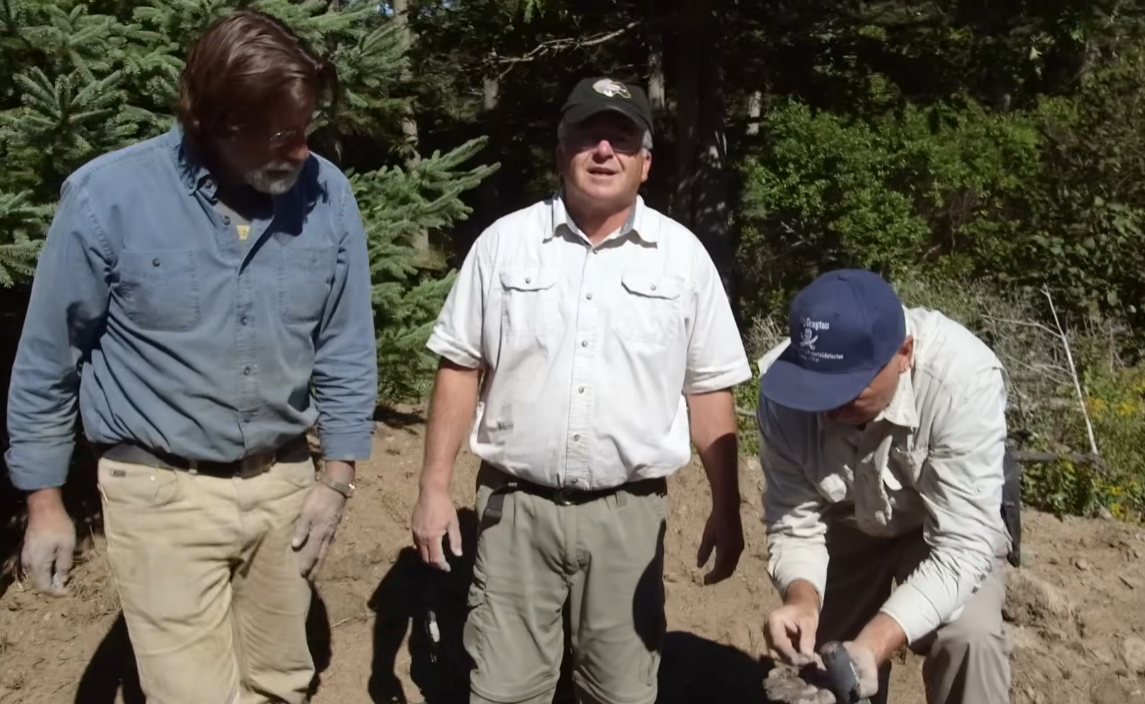
After 231 years of search and struggle, the mystery of Oak Island is finally speaking a language the world understands: the cold, hard clink of silver and gold. Recent discoveries by the Lagina brothers and their team have shifted the focus from speculative digging to rigorous archaeometallurgy, as a series of coin finds on the island’s western side suggest a deep, military-grade history predating the 1795 discovery of the Money Pit.
For Rick and Marty Lagina, the latest breakthroughs represent the “irrefutable proof” required to justify over a decade of multimillion-dollar excavations. The evidence isn’t just in the value of the metal, but in the stories the coins tell.
The Shilling That Shook the Lab
The most significant scientific revelation came from the Oak Island Laboratory, where archaeometallurgist Emma Culligan utilized a Skyscan 1273 CT scanner and X-ray fluorescence (XRF) mapping to identify a heavily worn silver fragment found on Lot 5.
While initially suspected to be Spanish, the XRF scan revealed the faint letters “GVLI” and a distinct “ribbon” design. The verdict: an English William III shilling dating to the 1690s. This 17th-century coin was found in a stone-lined foundation that also contains mortar matching materials found 100 feet deep in the Money Pit.
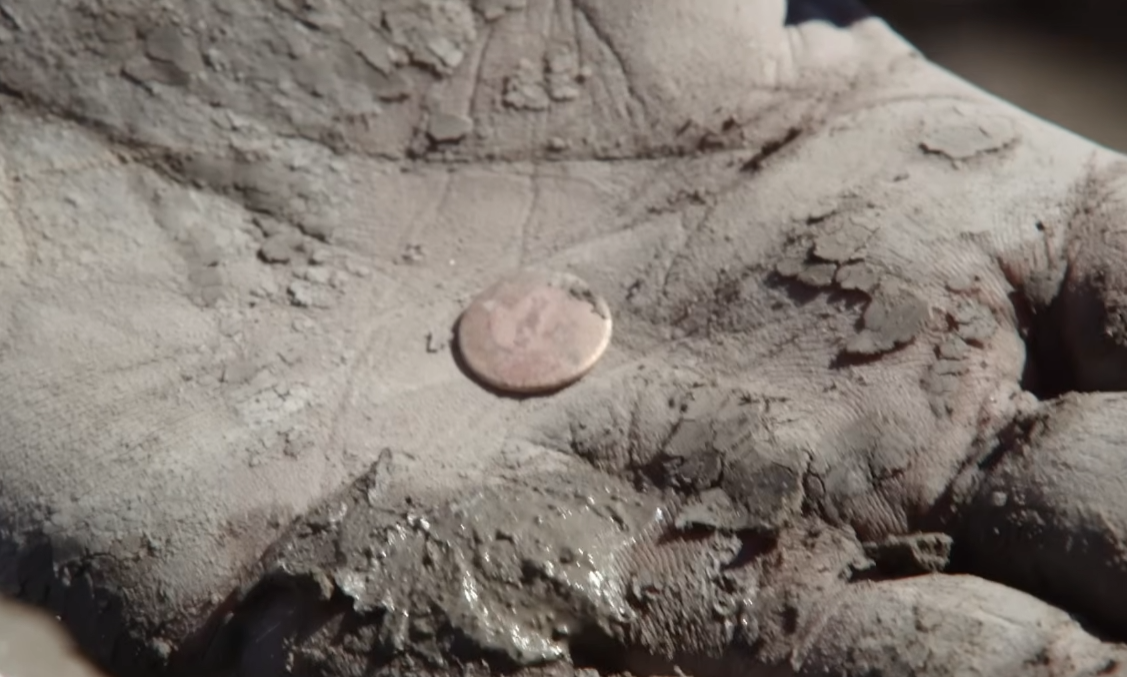
“This pushes the timeline back into the late 1600s,” noted archaeologist Laird Niven. The discovery lends weight to a theory proposed by historians Graham Harris and Les MacPhie, who believe English allies of Sir William Phips made secret attempts to recover buried treasure on the island between 1690 and 1750.
The “Money” in the Money Pit
The team also celebrated a “top-pocket find” deep within the Money Pit’s spoils. What initially appeared to be a gold coin was later revealed to be a gold-plated British military button. While perhaps disappointing to a casual treasure hunter, to Rick Lagina, it is a “highly meaningful” artifact.
The presence of an 18th-century officer’s button at extreme depths suggests that the British military—a group with the engineering discipline to construct complex flood tunnels—was active in the Money Pit area long before the public even knew the pit existed.
Pirates and “Maravedis”
The discoveries aren’t limited to the British. In the island’s mysterious swamp, the team recovered a strange copper coin featuring a distinct numeral “8.” Metal detection expert Gary Drayton identified it as a potential Spanish Maravedi, possibly dating to the 1500s or 1600s.
“It’s a pirate coin in the swamp,” Marty Lagina exclaimed, though he remained characteristically cautious. “One doesn’t quite get you all the way there, but it certainly moves the dial.”

The practice of “cutting” coins—found in several locations across the island—further supports a narrative of colonial-era payment. Between the 15th and 18th centuries, Spanish silver was often quartered to make change for crew members or soldiers, a practice common among both official navies and outlaw privateers.
The Search for the “Mother Lode”
With coins and buttons appearing from Lot 4 to the depths of the Money Pit, the Lagina team is now zeroing in on Lot 5 and the shoreline features. The goal is no longer just to find a chest of gold, but to prove that Oak Island served as a sophisticated, long-term military or treasury outpost.
As Gary Drayton famously says, “Where there’s one, there’s more.” For the millions of viewers following the search, the hope remains that these individual coins are merely the “scatter” leading to the primary vault.