THE 92-FOOT BREAKTHROUGH: Terrifying Collapse Reveals “Engineered” Wall Beneath Oak Island
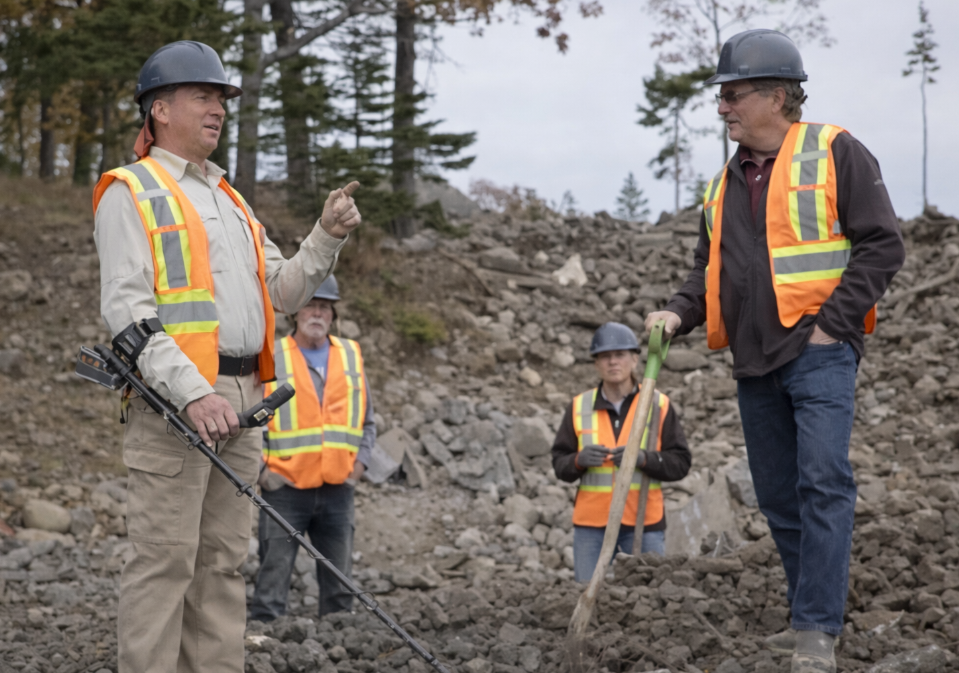
The 200-year-old mystery of Oak Island may have just surrendered its most significant secret to date. In a dramatic turn of events during the filming of Season 13, a massive subterranean collapse at the 92-foot mark has exposed what lead investigator Rick Lagina describes as a “clearly engineered” stone structure that could rewrite the history of the legendary treasure hunt.
The incident, which occurred during a deep-shaft excavation, began as a routine dig before the ground suddenly buckled under the weight of heavy machinery. As crew members scrambled to safety, hundreds of tons of soil and debris vanished into a void, momentarily halting the multimillion-dollar operation.
A Wall in the Dark
Once the dust settled and safety protocols were established, the team lowered a high-resolution camera probe into the fresh crater. What appeared on the monitors stunned the veteran treasure hunters: behind the jagged wall of the collapse stood a perfectly straight, orderly stone formation approximately 10 to 12 feet wide.
“This doesn’t look like a natural rock layer,” Rick Lagina noted while reviewing the footage. “The alignment is too precise, the surfaces too flat. It has all the hallmarks of a man-made wall.”
Engineers on-site estimate the structure could be the outer casing of a long-rumored underground chamber or vault. If these estimates hold true, some historical experts suggest the find could protect a hoard valued anywhere from $50 million to $150 million.
Data Points to a “Void”
The visual evidence was quickly bolstered by cutting-edge geological analysis. Rick and Marty Lagina called in a team of geologists to perform high-resolution ground-penetrating radar (GPR) and density scans of the unstable zone.
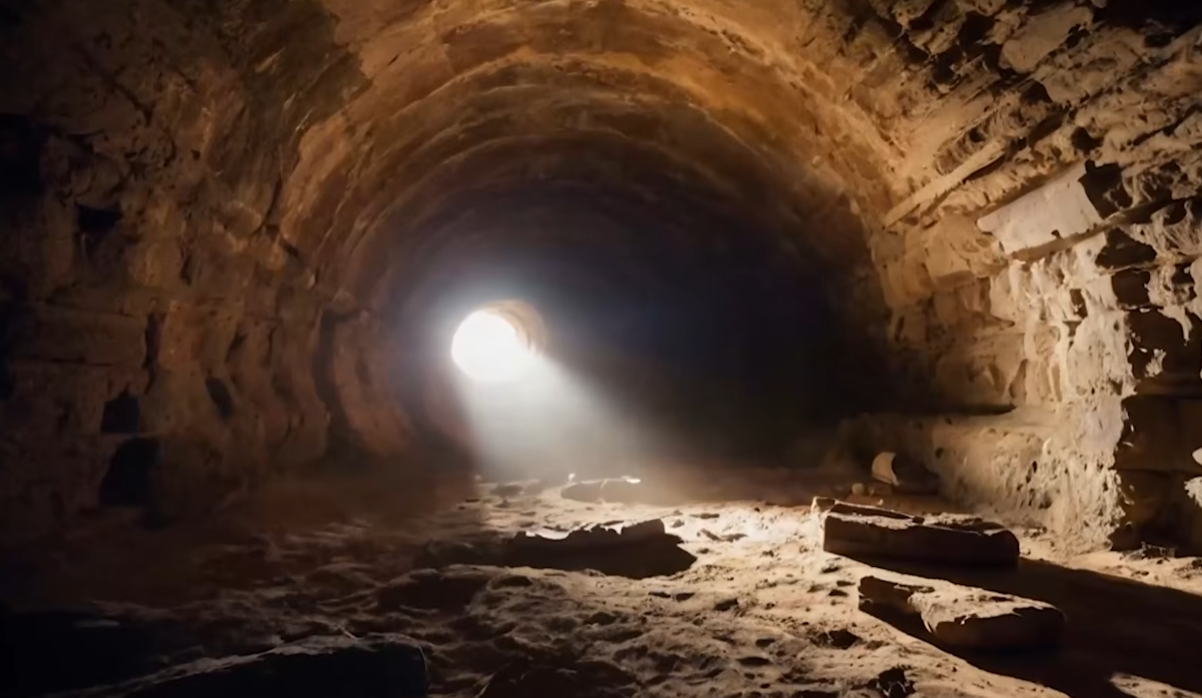
The results were uncharacteristically clear: the scanners identified a 12-to-20-foot wide “void zone”—a hollow space beneath the stone wall. In the context of Oak Island’s history, such a reading is rarely a fluke. It typically indicates the presence of an empty chamber, a tunnel, or an artificial vault.
“We’ve seen clues for years—coconut fibers, wooden platforms, parchment fragments,” said Marty Lagina. “But we’ve rarely seen a structural wall and a density void correlate so perfectly at this depth.”
The Shadow of the Flood Tunnels
Despite the excitement, a palpable sense of danger hangs over the site. The collapse occurred near the depth where previous expeditions, dating back to 1804, encountered the island’s most lethal defense: the flood tunnels.
These ancient booby traps, engineered to submerge the shaft with seawater as soon as a searcher nears the “vault,” remain the team’s primary concern. “If we rupture a feeder line now,” one engineer warned, “this entire 100-foot pit will be a lake in minutes.”
To mitigate this, the team has shifted from heavy excavation to “controlled drilling.” This involves using narrow, fiber-optic-equipped rigs to pierce the target zone without destabilizing the surrounding soil or triggering a catastrophic flood.
A 200-Year-Old Climax
With over $70 million spent across 40 different expeditions over the last two centuries, the pressure on the Lagina brothers has never been higher. Critics have long argued that Oak Island’s “structures” are merely natural limestone sinkholes, but the Season 13 discovery of a 15-foot wide, straight-edged wall provides the most concrete rebuttal to skeptics in decades.
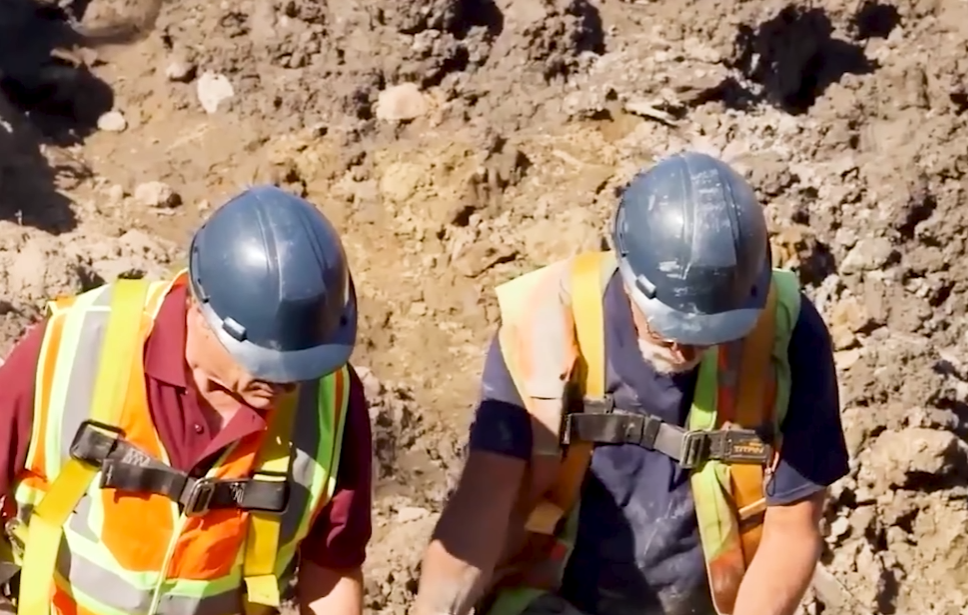
As the team prepares for the next phase of controlled drilling, the atmosphere on the island is a mix of exhaustion and electric anticipation. For the first time, the “X” on the map isn’t just a theory—it’s a stone-cold reality visible on a monitor.