BEYOND THE MONEY PIT: Lot 5 Discovery Rewrites North American History
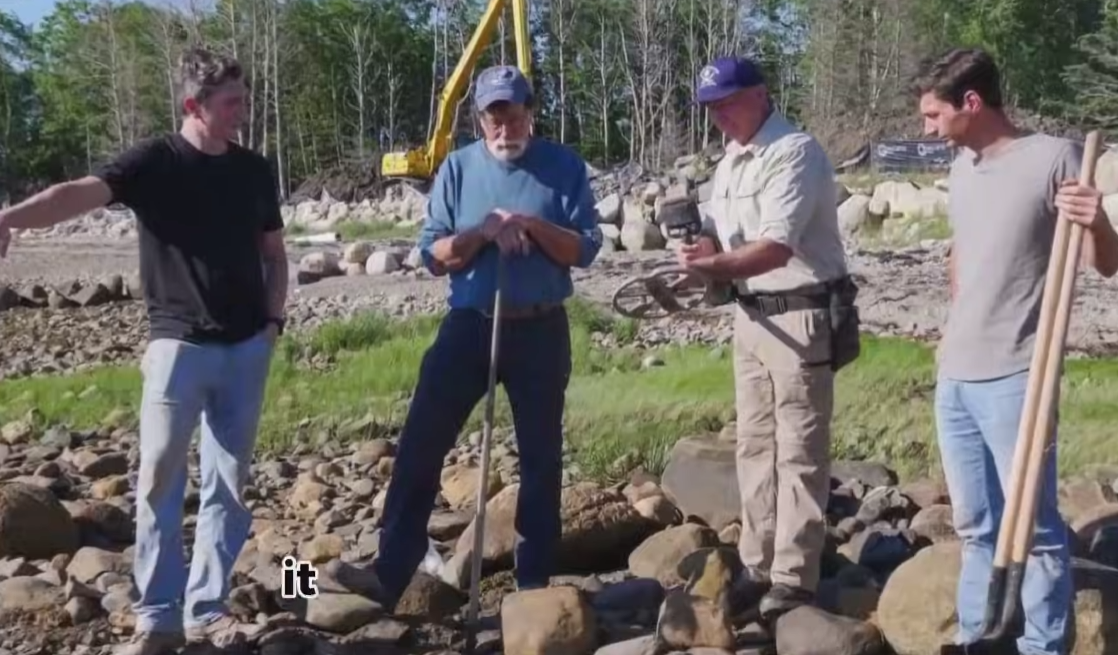
For 227 years, the world’s most famous treasure hunt was focused on a single, flooded hole on the eastern edge of Oak Island. But as of early 2026, the narrative of the “Money Pit” has been fundamentally upended. Following the 2022 acquisition of the long-forbidden “Lot 5,” researchers have unearthed a cache of artifacts so diverse and ancient that they threaten to dismantle established timelines of trans-Atlantic exploration.
The four-acre parcel, which sat undisturbed for decades under the stewardship of a private owner who refused to sell, has yielded what experts are calling the “missing link” of the Oak Island mystery.
The Roman Connection: 300 BC
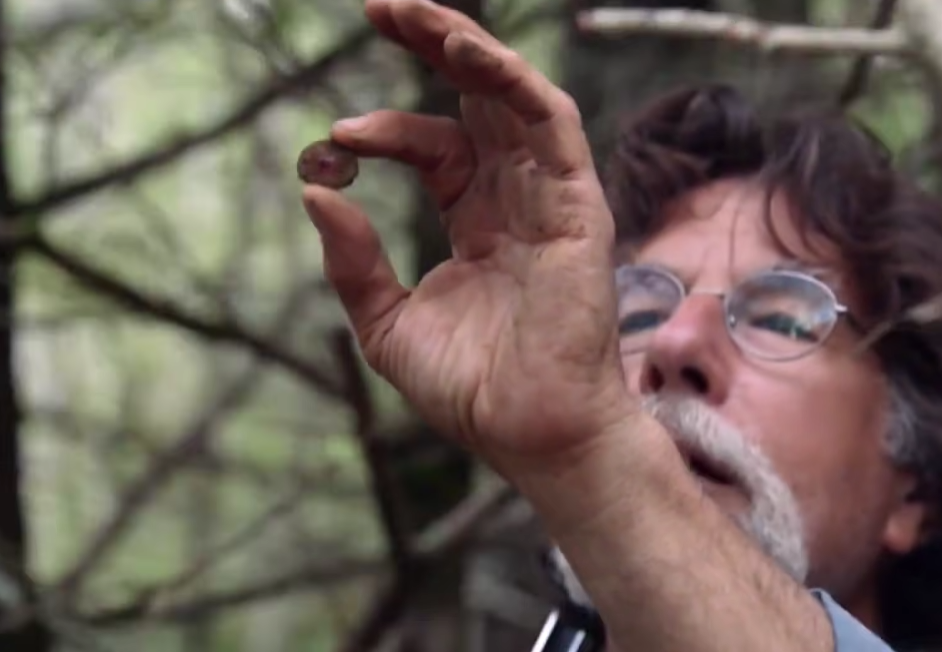
The most staggering find emerged within days of the search team breaching the Lot 5 soil. Metal detection expert Gary Drayton recovered a cluster of five heavily corroded coins. Among them was a tiny metal half-coin that underwent rigorous laboratory testing. The results were explosive: the artifact originated in the Roman Republic approximately 2,325 years ago.
While the discovery of a 300 BC Roman relic in Canadian soil lacks independent academic authentication to stand as an official historical milestone, its presence—alongside four other ancient currencies—suggests a deliberate deposit rather than an accidental drop by a passing sailor. “Finding one coin is a fluke; finding five is a map,” noted one researcher on site.
The 13-Foot Blueprint
Just yards from the coin strike, excavators uncovered a massive underground stone foundation hidden beneath layers of purposeful backfill. The rectangular structure, containing pottery and iron tools from the early 1700s, suggests a sophisticated staging ground for offloading cargo decades before the “Money Pit” legend began in 1795.
However, it was a circular depression near the shoreline that truly stunned the crew. Upon stretching a measuring tape across the sunken pit, the team realized the hole measured exactly 13 feet in diameter—the identical dimensions of the original Money Pit shaft discovered across the island two centuries ago. Ground-penetrating radar has already detected dense anomalies and wooden beams deep beneath this second “vault,” which experts believe served as a decoy or a secondary storage facility.
[Image: A side-by-side comparison of the original 1795 Money Pit blueprints and the newly discovered 13-foot shaft on Lot 5]
The Templar Link Confirmed
The archaeological “jackpot” continued with the recovery of a scalloped lead token. Isotope testing conducted at a university laboratory confirmed the lead ore matched European mines from the 1300s. Crucially, the chemical signature is a perfect match for the famous medieval lead cross discovered on the island’s beach years prior.
This elemental “fingerprint” provides the first hard data linking the Knights Templar to the western shore of the island. It suggests that highly funded, secretive expeditions were visiting Nova Scotia at least a century before Christopher Columbus, carrying religious relics and commercial barter tokens.

A New Map of History
The sheer density of Lot 5’s artifacts creates a confusing but undeniable timeline:
-
300 BC: Roman Republic currency.
-
1300s: Templar-linked lead tokens and crosses.
-
1700s: Sophisticated stone staging grounds and secondary shafts.
The evidence suggests that Oak Island was not a one-time pirate bank, but a secure, repeating destination for underground operations spanning over two millennia. As Rick and Marty Lagina prepare for the 2026 season, the focus has shifted from the “Money Pit” to managing coastal water levels and breaching natural cavities in the island’s bedrock.
After 200 years of searching the east, it appears the truth was waiting in the west.