THE “GRAND SCHEME” OF OAK ISLAND: Massive Stone Road and Maritime Artifacts Unearthed in the Swamp
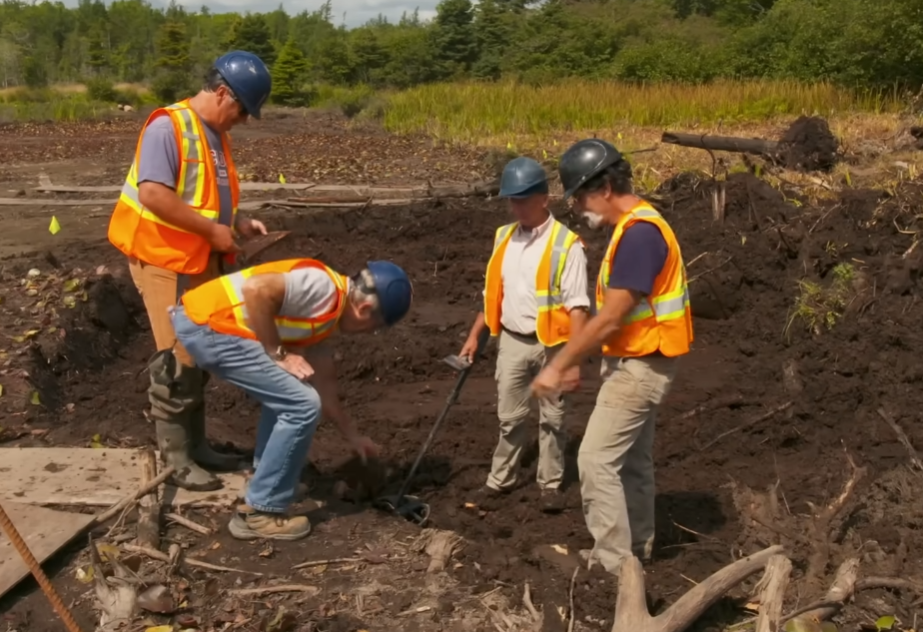
The 225-year-old mystery of Oak Island has taken a dramatic turn as brothers Rick and Marty Lagina unearth what archaeologists are calling a “massive undertaking” hidden beneath the muck of the triangle-shaped swamp. The discovery of a sophisticated stone road, complete with wooden cribbing and 16th-century maritime tools, suggests the island was once the site of a large-scale offloading operation—long before the “Money Pit” was officially discovered.
What was once dismissed by skeptics as a natural bog is now revealing a carefully engineered infrastructure that Rick Lagina believes was designed to be hidden once its purpose was served.
A Road Built to Last
Leading the excavation, Dr. Aaron Taylor and the team have exposed a “rubbly pathway” that transitions into a formal stone road supported by heavy timber underpinnings. The structure doesn’t just sit on the mud; it is bolstered by perpendicular logs and “cut stakes” that imply a professional level of construction.
“Every scoop, we’re going back another hundred years in time,” one worker remarked as the excavator reached the peat layer contemporaneous with the road’s construction. The road appears to lead from the uplands down toward the southeast corner of the swamp, suggesting the existence of a former harbor or slipway where large vessels could have been tethered.
The Smoking Gun: Coal and 16th-Century Iron
Perhaps the most “compelling evidence” found this week is the abundance of coal and charcoal scattered along the pathway. According to the team, there was no documented need for coal on the island during the post-1795 search era until at least 1860. Its presence deep within the swamp layers suggests a “burn event” or industrial activity that predates known history.
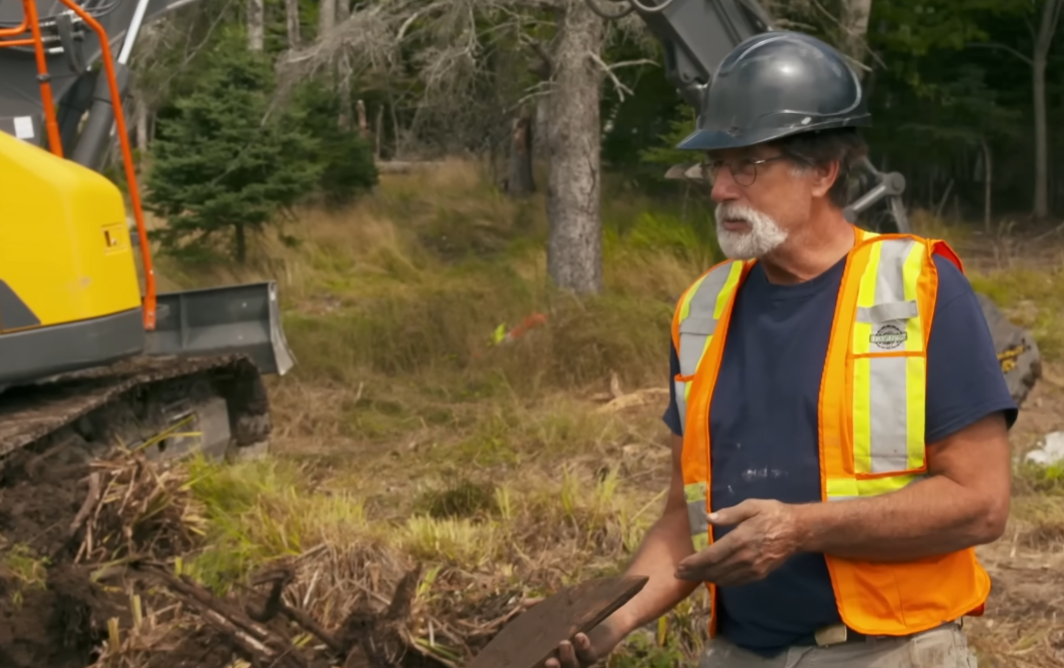
This aligns with a “three-point hitch” iron chain and hook recently recovered and dated by blacksmithing expert Carmen Legge to the 1500s. “To me, you could hook a box or something very heavy… and pull it right up that road,” Rick Lagina noted. “It fits the idea of a tender bringing material from a larger ship offshore to a crafted wharf.”
“Treasure in Kegs”
Metal detection expert Gary Drayton’s discovery of a keg lid at the “cultural level” of the mud has sent shockwaves through the camp. Drayton was quick to point out that in the 17th and 18th centuries, kegs weren’t just for gunpowder or spirits—they were the primary vessels for transporting coins and bullion.
The radius of the lid and accompanying staves are currently being compared to similar barrel fragments found in the Money Pit in 1861. If they match, it would provide the first direct physical link between the swamp’s “ship wharf” and the legendary treasure shaft located hundreds of yards away.
The “Aha Moment” for Marty Lagina
Even Marty Lagina, who famously remained a “swamp skeptic” for years, admitted he was wrong about the extent of the workings. “I thought there was nothing, and there’s a lot there,” he said, eyeing the steady row of retaining rocks Billy Gerhardt’s bucket has exposed.

The team is now preparing for a “chemical trace analysis” on the wood and coal to identify their country of origin. As the excavator pushes further into the alignment of the stone road, the “Fellowship of the Dig” remains convinced that the data is leading them directly to the source of the 225-year-old mystery.