Clarkson’s Farm Confirmed for Season 6 Production: Expansion, Pressure, and the Future of Diddly Squat
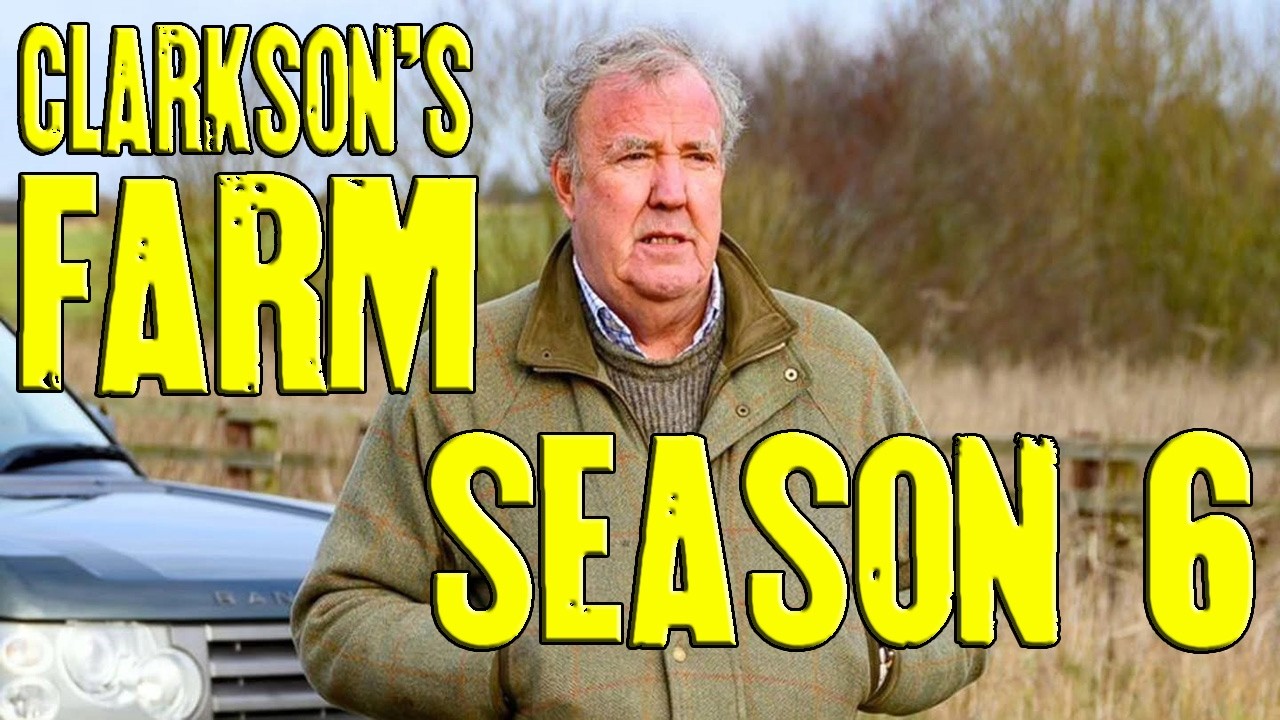
The confirmation that Clarkson’s Farm Season 6 is officially in production marks a significant milestone not only for fans of the series, but also for the evolving business and agricultural operation behind Diddly Squat Farm. From a production standpoint, the announcement signals continuity in one of the most unexpected success stories in modern documentary television—where entertainment, real farming challenges, and rural economics intersect in real time.
For analysts following the series, Season 6 is not simply another chapter in Jeremy Clarkson’s farming experiment. It represents a transition point where the farm has fully evolved from a personal passion project into a multi-layered commercial ecosystem, encompassing agriculture, retail branding, tourism pressure, and increasingly complex operational logistics.
A Farming Operation That Outgrew Its Origins
When Clarkson’s Farm first aired, it was widely framed as a celebrity learning exercise—an inexperienced landowner attempting to understand the realities of British agriculture. However, by Season 5, the structure of Diddly Squat Farm had fundamentally changed.
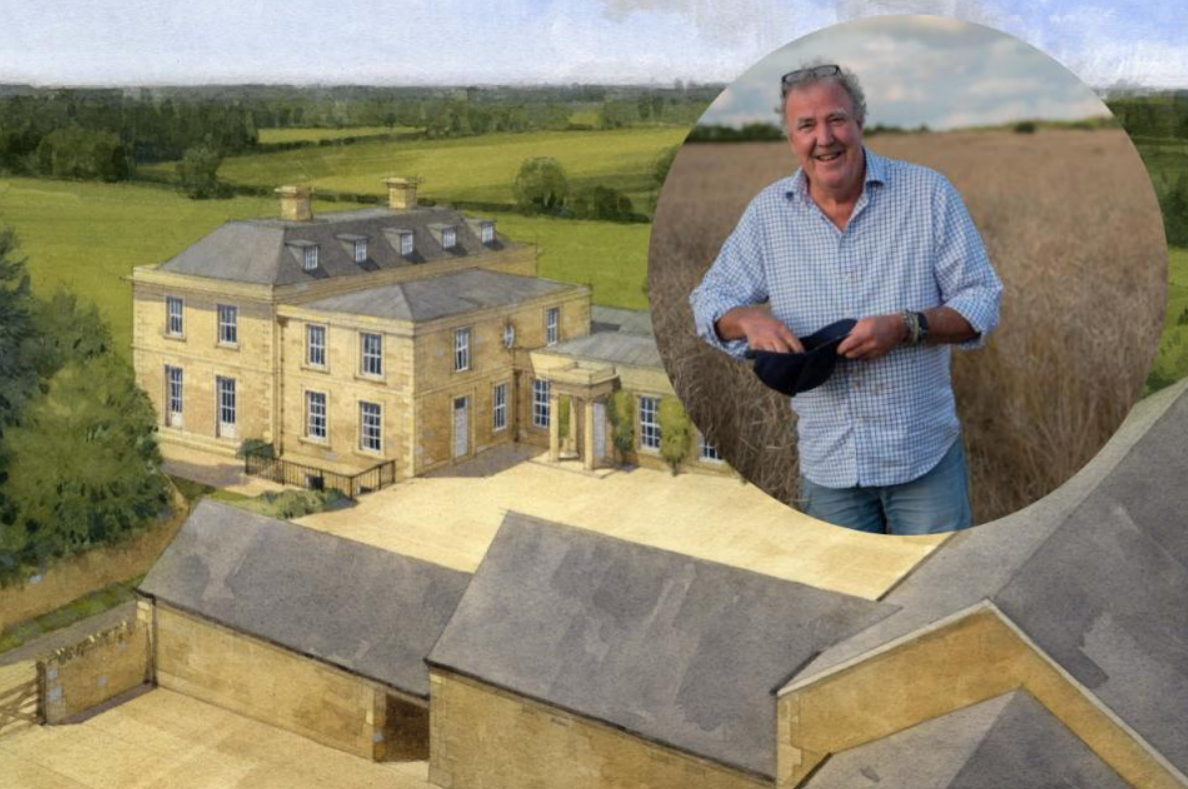
What began as a 1,000-acre experimental farm has now become a hybrid enterprise combining arable production, livestock management, retail distribution, on-site tourism, and nationwide product marketing. The farm shop alone has evolved into a commercial landmark, drawing thousands of visitors and creating logistical challenges that extend far beyond traditional farming concerns.
Season 6 arrives in the context of this expansion. The question is no longer whether Clarkson can farm—it is whether the operation can scale sustainably under increasing demand, regulation, and public attention.
Operational Pressure and Structural Strain
From an agricultural analysis perspective, Diddly Squat Farm now operates under three simultaneous pressures:
- Production Pressure: Maintaining crop yields and livestock efficiency in an unpredictable climate environment
- Commercial Pressure: Managing retail demand, branded product distribution, and supply chain consistency
- Public Pressure: Handling tourism, media attention, and infrastructure strain on rural roads and facilities
Each of these factors alone would challenge a mid-sized farm. Combined, they create a system where operational balance becomes fragile and highly dependent on key individuals.
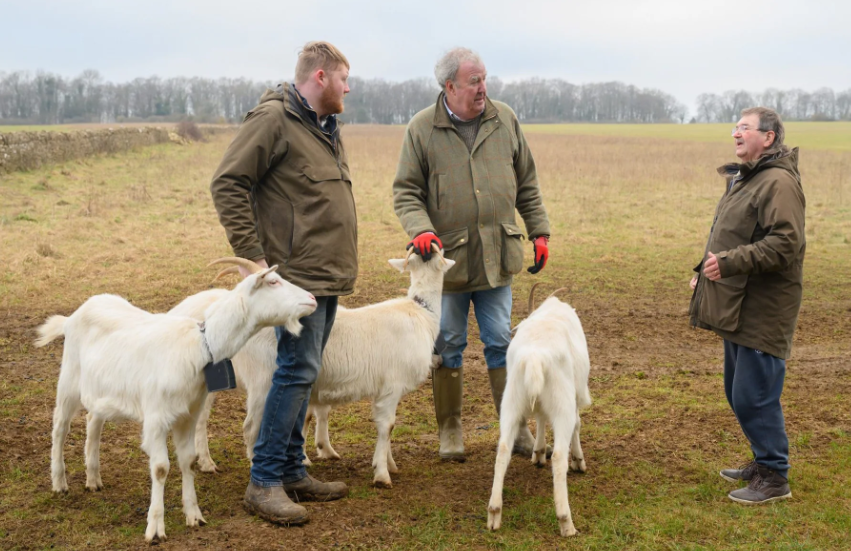
Jeremy Clarkson remains the central decision-maker, but his role is increasingly less about day-to-day farming and more about strategic oversight and brand direction. This shift naturally raises questions about delegation, particularly to figures like Kaleb Cooper and agricultural advisor Charlie Ireland, both of whom have become essential to operational stability.
The Kaleb Factor: Operational Backbone of the Farm
Kaleb Cooper’s role is expected to become even more prominent in Season 6. As the primary hands-on operator, he represents continuity in the field while Clarkson focuses on broader decisions and media-facing responsibilities.
Analysts predict that Season 6 may further highlight this dynamic imbalance: Clarkson as the strategic figurehead, Kaleb as the operational executor, and Ireland as the structural advisor ensuring agricultural viability.
This tri-layer system has so far prevented operational collapse under expansion pressure. However, as the farm scales further, the efficiency of this structure will be tested more rigorously than ever before.
Agricultural Reality vs Media Growth
One of the defining tensions of Clarkson’s Farm is the conflict between agricultural reality and media-driven expansion. Unlike traditional farms, Diddly Squat operates under constant visibility. Every operational decision is potentially part of a narrative arc, which adds both opportunity and constraint.
Season 6 is expected to deepen this tension. As the farm becomes more commercially valuable, decisions may increasingly be influenced by audience expectations, production requirements, and brand continuity rather than purely agricultural logic.
This raises an important analytical question: can a working farm remain fully functional while also operating as a global entertainment product?
Infrastructure Challenges Ahead
With increasing visitor numbers and continued retail success, infrastructure pressure remains one of the most critical issues heading into Season 6. Previous seasons have already highlighted congestion problems, parking limitations, and local regulatory friction.
If production continues to document real-time operations, viewers may see:
- Expansion attempts of farm retail capacity
- Continued negotiation with local authorities
- Traffic and land management challenges
- Possible redesign of visitor access routes
These are not minor issues; they are structural constraints that directly influence the farm’s ability to function at scale.
Financial Expansion and Brand Consolidation
Beyond agriculture, Season 6 is also likely to reflect the ongoing monetisation of the Clarkson farming brand. Products linked to Diddly Squat Farm have already established national recognition, turning the farm into a hybrid of agricultural production and lifestyle branding.
This creates both opportunity and risk. On one hand, diversified income streams reduce reliance on crop yields. On the other, they increase operational complexity and require supply chain reliability that traditional farms rarely manage at this scale.
From a business perspective, Season 6 may therefore focus more heavily on consolidation rather than expansion—stabilising what already exists rather than aggressively scaling further.
Predicting Season 6 Story Arcs
Based on current operational patterns, analysts anticipate several key narrative directions:
- Increased focus on labour management and delegation systems
- Greater emphasis on weather-driven crop unpredictability
- Expansion or restructuring of farm retail operations
- Deeper involvement of Kaleb Cooper in strategic decisions
- Potential regulatory challenges related to land use and visitor access
Each of these arcs reflects a maturing operation moving from experimentation to long-term sustainability challenges.
Conclusion: A Turning Point Season
The confirmation of Season 6 in production is more than a renewal announcement—it is a signal that Clarkson’s Farm has entered a new phase of evolution. The farm is no longer simply documenting agricultural learning; it is now managing the consequences of its own success.
From an analytical standpoint, Season 6 may ultimately be remembered as the point where Diddly Squat Farm transitions from “celebrity farm project” into a fully established, multi-layered rural enterprise with national visibility and real-world operational consequences.
As production continues, one question will define the season more than any other: can Clarkson’s Farm maintain its identity while continuing to grow beyond the limits of traditional farming structures?
The answer, as always on Diddly Squat Farm, will depend on weather, decisions—and whether the system holds together under its own success.