Clarkson’s Farm Season 5 Episode 1: A New Beginning Built on Pressure, Recovery, and Many New Things
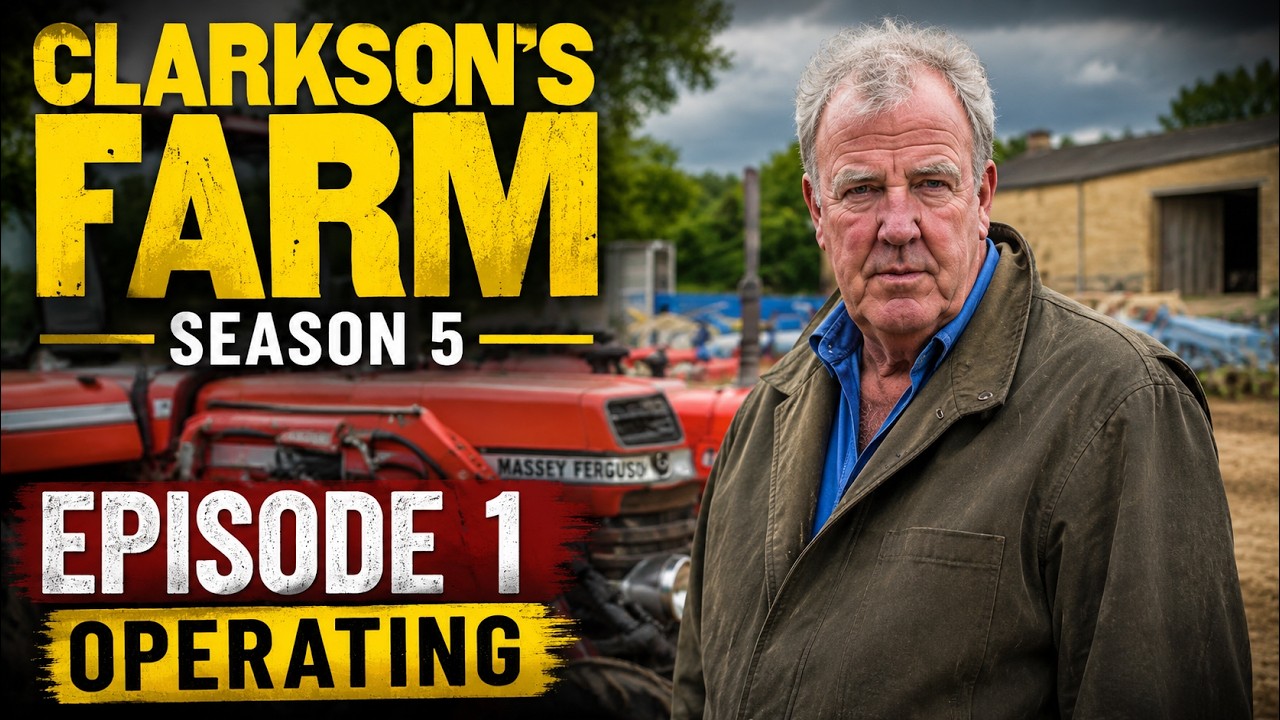
The first episode of Clarkson’s Farm Season 5 arrives with a very different energy from the early days of the series. When the show began, its charm came from Jeremy Clarkson’s outsider status: a famous broadcaster learning, often painfully, how difficult farming really is. By Season 5, however, Diddly Squat is no longer just a farm with a camera crew. It has become a rural brand, a visitor attraction, a political talking point and a commercial machine that now has to prove it can still function as a farm.
That is what makes Episode 1 so important. It is not simply opening another season. It is resetting the central question of the programme. Can Clarkson still tell an honest farming story when his farm has become a national attraction? And can the series keep its original appeal while dealing with bigger business pressures, public attention and Jeremy’s own health concerns?
The episode appears to begin from a place of vulnerability. Jeremy’s health scare changes the tone immediately. In previous seasons, his impulsive behaviour was mostly used for comedy. He would buy the wrong machine, misjudge the weather, argue with Kaleb Cooper or push Charlie Ireland to the edge of patience. But in Season 5, that same impulsiveness has a more serious edge. The viewer is no longer only laughing at a man who refuses to listen. They are watching someone who may need to change the way he lives and works.
From an analytical point of view, this gives the new season its strongest emotional foundation. Farming has always been physically demanding, but the show now places that demand directly against Jeremy’s limits. If Episode 1 is setting the pattern for the season, then one of the main developments may be a conflict between ambition and restraint. Jeremy wants the farm, the shop, the pub and the wider business to grow. His body, however, may force him to accept that not everything can be solved by noise, speed and stubborn confidence.
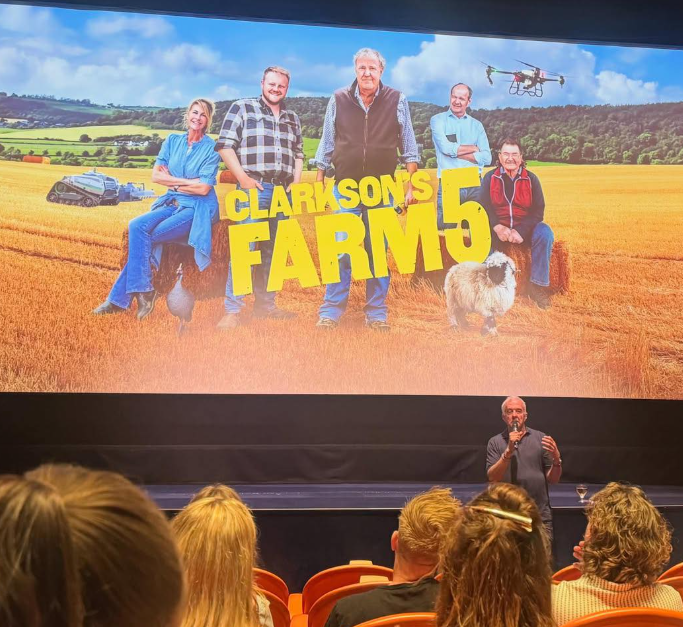
This is where Kaleb Cooper’s role could become more important than ever. Kaleb has long been the practical centre of the series. He understands the land, the timing, the machinery and the consequences of delay. In Episode 1, his presence is likely to serve as more than comic opposition. He may become the person who represents continuity when Jeremy is distracted by bigger ideas. If the season moves into high-tech farming, foreign methods and new systems, Kaleb’s reaction will be crucial. His scepticism often protects the show from becoming too polished.
The theme of technology also suggests a major turning point. Clarkson’s Farm has always worked best when Jeremy tries to modernise something without fully understanding the consequences. Season 5 seems ready to take that idea further. The farm’s move toward advanced methods could produce some of the funniest moments of the season, especially if Kaleb is forced into unfamiliar territory. But beneath the humour, there is a serious question. British farming is under pressure from costs, policy changes, weather uncertainty and public misunderstanding. Technology may help, but it is rarely simple or cheap.
Episode 1 may therefore introduce a wider argument: the future of farming will not be protected by nostalgia alone. Clarkson’s Farm has often celebrated traditional rural skill, but it has also shown how fragile farm economics can be. If Jeremy looks abroad for answers, the show may use that journey to compare British farming with more automated or efficient systems elsewhere. The result could be one of the season’s strongest educational threads.
The pub adds another layer. The Farmer’s Dog is not just a side project anymore. It is a symbol of Jeremy’s attempt to connect farming, food, hospitality and local supply chains. On paper, it sounds like the perfect extension of Diddly Squat. In practice, it brings infrastructure problems, staffing issues, visitor management, theft, waste, parking pressure and financial uncertainty. Episode 1 may begin to show that a busy pub does not automatically mean a profitable pub.
This could become one of the most revealing parts of Season 5. Many viewers see crowds and assume success. Clarkson’s Farm often does the opposite. It shows the hidden costs behind visible popularity. If the pub is full but still struggling financially, the show can explore a reality that many small rural businesses understand: turnover and profit are not the same thing.
Charlie Ireland’s role will likely be central here. As ever, Charlie represents the financial conscience of the programme. He is the person who turns Jeremy’s ideas into numbers, and those numbers usually remove the romance from the plan. In Season 5, Charlie may become even more important because the operation has grown too large for guesswork. The farm is no longer dealing only with crops and animals. It is dealing with public traffic, hospitality costs, supply problems and reputation management.
Lisa Hogan may also take on a stronger balancing role. Her presence has often softened the programme, but she also sees the emotional cost of Jeremy’s decisions more clearly than most. If the season continues to examine his health, workload and refusal to slow down, Lisa may become the person who challenges him on a personal level rather than a practical one.
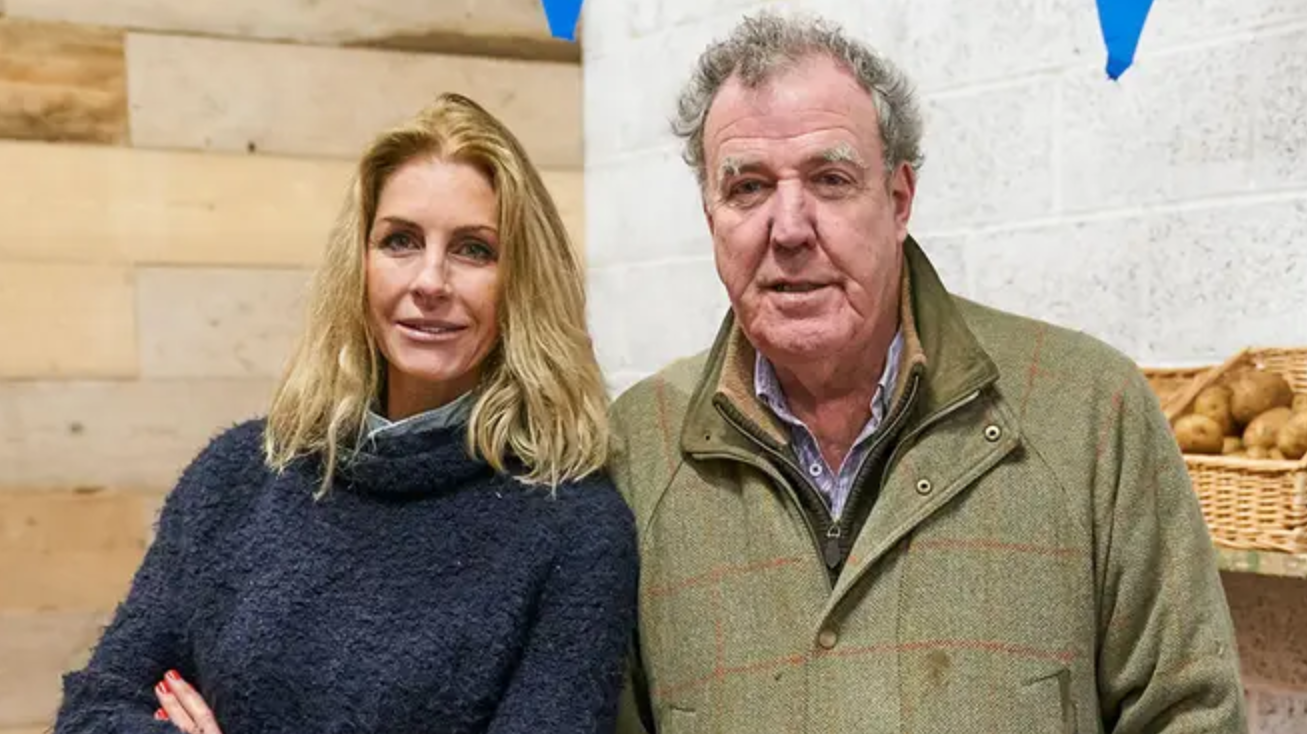
The most likely direction after Episode 1 is a season built around pressure from every side. The farm needs to become more efficient. The pub needs to justify itself. Jeremy needs to protect his health. Kaleb needs to adapt to changes he may not fully trust. Charlie needs to keep the numbers under control. And the wider farming community remains caught in a period of uncertainty.
That is why Episode 1 matters. It signals that Clarkson’s Farm is no longer only about a celebrity learning how to farm. It is about what happens when a farm becomes a business empire, a public symbol and a personal test all at once.
If the rest of Season 5 follows this path, the programme could deliver one of its most revealing chapters yet. The humour will still be there, but the real story may be sharper: Jeremy Clarkson has built something much bigger than he expected. Now he has to find out whether he can keep it alive without losing the simplicity that made people care in the first place.