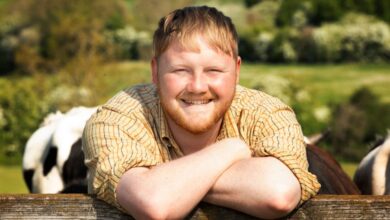
Farmers Rush To Jeremy Clarkson’s Defence Over FRESH Social Media Controversy Amid Labour Battle.
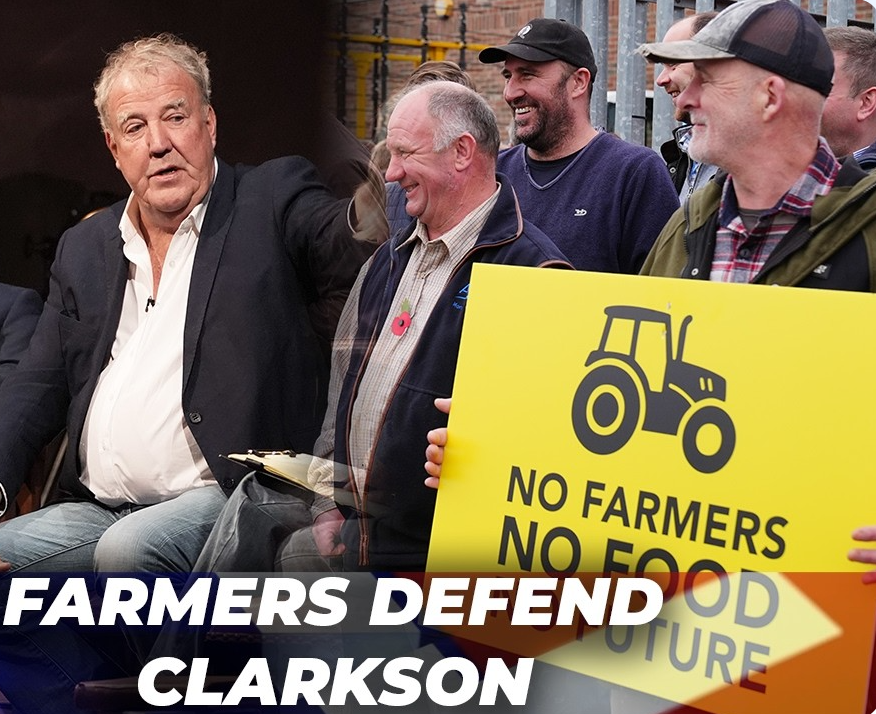
Amid a run of public disputes and political interventions, Jeremy Clarkson has once again found himself at the centre of national conversation—this time over the cost of a steak. The 64-year-old broadcaster and farmer is facing criticism after customers questioned the pricing of food at his new Oxfordshire pub, The Farmer’s Dog, a venture that forms part of his expanding rural business empire.
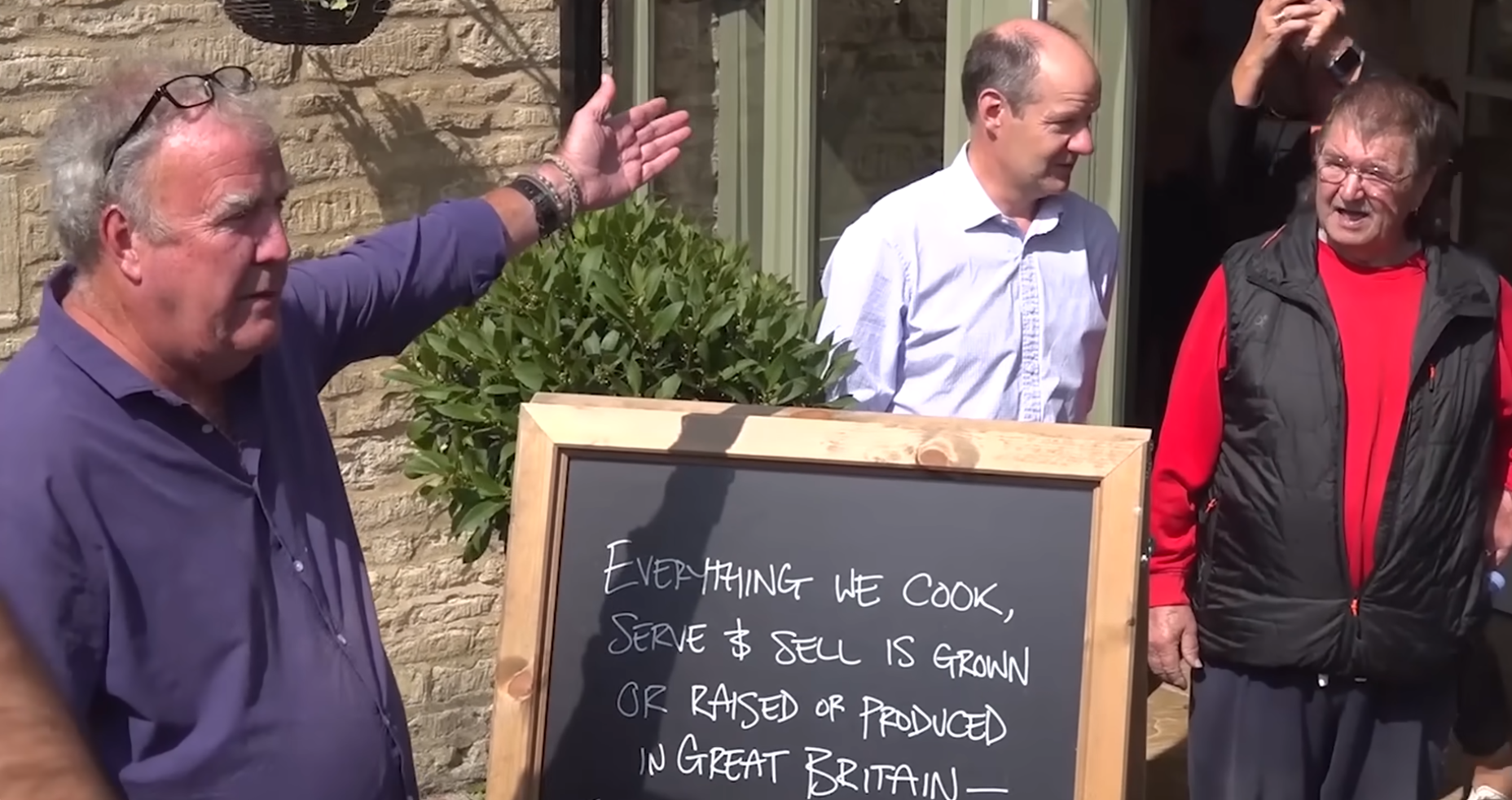
The pub, which opened earlier this year near Burford, was launched with a clear promise: all food would be made using British produce sourced from local farmers. Clarkson framed the project as both a commercial risk and a statement of principle, designed to support domestic agriculture at a time when many farmers say margins are shrinking and costs are rising. Yet the reality of running such a business has proven complicated.
On opening day, Clarkson publicly acknowledged problems in the kitchen, telling followers on social media that operational issues had affected service. He also claimed the pub was losing roughly £10 per customer due to the cost of ingredients, staffing and compliance. That context, however, did little to quiet reaction when the pub promoted a seasonal special: a fillet steak with carrots, mash and local cabbage priced at £28.
The image, shared on the pub’s official Instagram account, quickly drew attention. Some users praised the presentation and the emphasis on traceable British meat. Others questioned whether the portion size justified the price. Comments ranged from scepticism over value to accusations that the cost was excessive, particularly given that the meat and vegetables were produced locally.
Supporters were quick to respond. Several pointed out that comparable dishes in other pubs and restaurants frequently exceed £40, especially when premium cuts are involved. Others argued that transparency over sourcing should be factored into the price, noting that consumers often demand British produce while resisting the higher costs that come with it.
The dispute reflects a broader tension Clarkson has been highlighting since becoming a farmer himself, a journey documented in Clarkson’s Farm. The programme has built a wide audience by showing the realities of modern farming, from unpredictable weather and volatile markets to bureaucracy and planning disputes. Clarkson has repeatedly argued that public expectations around food prices are often disconnected from the economics of producing that food sustainably in the UK.
That argument has intensified in recent weeks as Clarkson has become more vocal about government policy. In newspaper columns and public appearances, he has criticised Labour’s economic plans, particularly changes affecting farming taxation and inheritance rules. He has suggested that these measures place additional strain on family farms already facing reduced subsidies and higher operational costs.
Despite having undergone heart surgery in October and being advised to rest, Clarkson travelled to Westminster to attend a large farming protest. His presence drew attention not only because of his celebrity status but because of the blunt tone he adopted when addressing the crowd. Speaking candidly, he described how his own perceptions of farmers changed once he began working the land himself, saying he had underestimated the complexity, risk and financial exposure involved.
During the speech, Clarkson highlighted the escalating cost of machinery, noting that a medium-sized tractor can cost around £200,000, with combine harvesters reaching well beyond that. He also spoke about regulatory pressures, fertiliser costs, environmental compliance and what he described as a disconnect between policymakers and rural reality. His remarks were met with strong approval from the assembled farmers.
The protest also drew political attention. Conservative leader Kemi Badenoch confirmed she had spoken with Clarkson ahead of the rally, saying their discussion focused on how the opposition could hold the government to account over agricultural taxation. While acknowledging that immediate reversals were unlikely, she suggested sustained pressure could force a rethink.
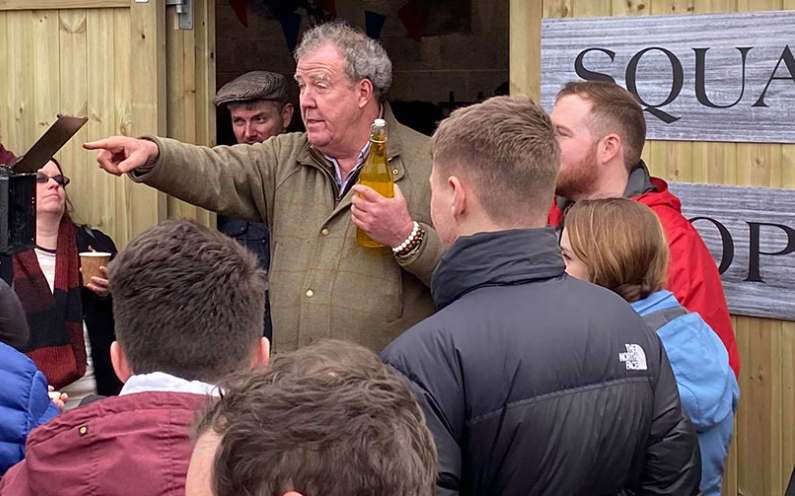
Clarkson’s critics argue that his platform risks oversimplifying complex policy debates and inflaming tensions. Supporters counter that his visibility has brought unprecedented attention to issues that rarely reach urban audiences. That same dynamic is visible in the pub pricing row: a single steak has become a symbol of a much wider argument about food, farming and public expectations.
For Clarkson, the controversy appears to underline the point he has been making consistently. British farming, he argues, cannot survive if consumers demand low prices while insisting on high standards, local sourcing and environmental responsibility. Whether in a field, a television studio or behind a pub menu, that contradiction remains unresolved.
As The Farmer’s Dog continues to operate and Clarkson’s Farm prepares future episodes, the debate is unlikely to fade. What began as a discussion about a £28 steak has become part of a larger national conversation about who bears the cost of supporting British agriculture—and whether the public is willing to pay it.