Jeremy Clarkson Opens Up About the Hard Truths of Farming: A Realistic Look at His Farm
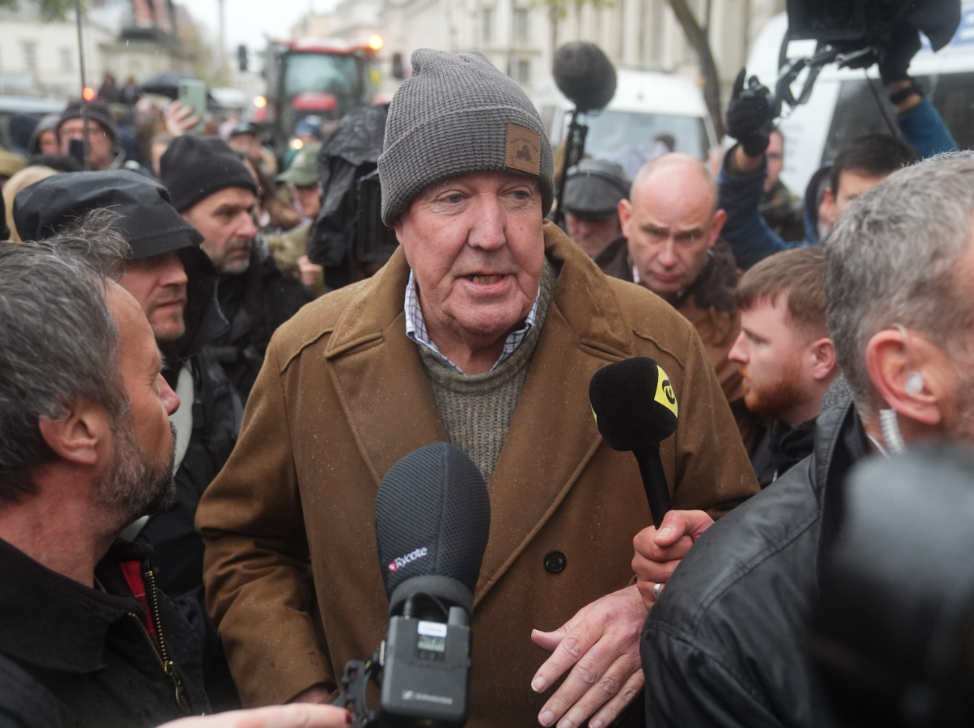
Jeremy Clarkson has certainly made his mark on the farming world since embarking on his rural life at Diddly Squat Farm in the Oxfordshire countryside. His unique journey into farming, documented in his hit Amazon Prime series Clarkson’s Farm, has not only entertained audiences but also highlighted the deep struggles faced by modern-day farmers. In a candid reflection of his experiences, Clarkson sheds light on the difficult and often misunderstood realities of farming, touching on topics ranging from government policies to the challenges of running a farm without the proper skills or knowledge.
While Clarkson’s charm lies in his comedic approach to farming, his commentary offers an honest and at times unsettling view of an industry that is struggling under the weight of economic pressures and government-imposed regulations. As a farmer with no formal training, Clarkson has discovered just how much more difficult it is to sustain a farm than simply “planting seeds and hoping for food to grow.” He has become a vocal critic of the policies and regulations enforced on British farmers, particularly those linked to the net zero emissions target. Clarkson believes that policies like these, introduced by people who are disconnected from the daily reality of farming, are threatening the livelihood of family-owned farms and undermining food security.
The Challenges of Farming: Clarkson’s Personal Struggles
Clarkson is refreshingly open about his lack of expertise when it comes to running a farm. From the start of his farming journey, he has struggled to understand the complexities of farm management. Despite this, Clarkson has made it clear that farming is far from being as simple as it may seem. As a self-proclaimed “worst businessman” and someone without the patience required for farming, Clarkson’s journey has been riddled with mistakes, yet it has also revealed his deep respect for the farmers who have honed their skills over generations.
In a particularly humorous moment from the show, Clarkson confesses that even after two years, he still finds himself calling on his farm manager, Caleb Cooper, to help with basic tasks. Clarkson’s farming mishaps—such as crashing tractors, knocking down gateposts, and misjudging machinery sizes—are part of what has made his series both relatable and endearing. However, his efforts to understand the realities of farming have provided valuable insights into the everyday struggles farmers face, from unpredictable weather to bureaucratic red tape that makes running a farm even more difficult.
What has become clear through his experience is that farming is a multifaceted job that requires not only practical skills but also business acumen, an understanding of weather patterns, and the ability to make quick decisions. Clarkson, however, admits that he does not possess all these skills, and that’s where the real challenge lies. As he humorously puts it, farmers must be midwives, vets, agronomists, businesspeople, and more—all roles he has struggled to keep up with. But despite his flaws and constant learning, Clarkson has been able to provide a unique perspective on what it truly takes to sustain a farm in modern Britain.
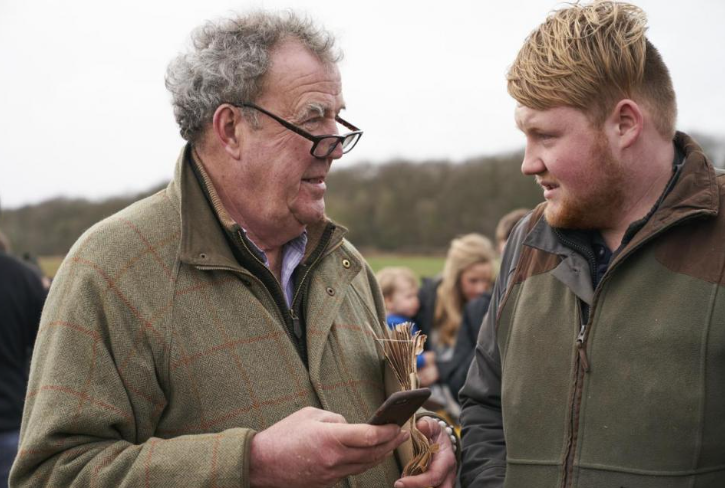
Farming and the Future: Clarkson’s Take on Net Zero and Its Impact
One of Clarkson’s most vocal criticisms has been the government’s push for net zero emissions targets and its impact on British agriculture. While climate change is an important issue, Clarkson argues that the way these policies are being implemented could push farmers out of business rather than help them adapt. Farmers like Clarkson and his colleagues face significant challenges, including rising costs, bureaucratic hurdles, and a lack of sufficient support for transitioning to sustainable farming practices. Clarkson’s frustration is clear when he discusses the absurdity of government mandates, like the requirement for electric tractors, which, as he points out, are impractical for many rural areas due to long charging times and the lack of power sources in fields.
He also points out the flawed logic behind the “net zero” policy, noting that while British farms are being made to follow strict regulations, imported goods from countries with looser environmental standards are allowed to flood the market. Clarkson sees this as a hypocrisy—while the UK pushes its farmers to adopt sustainable practices, the same products are being brought in from countries that fail to meet the same environmental standards. This not only undercuts British farmers but also increases carbon emissions from transportation, making the entire system self-defeating.
As Clarkson continues to learn the ropes of farming, he has become a reluctant advocate for his fellow farmers, and his voice has echoed the concerns of many who feel their livelihoods are at risk. His stance on net zero is rooted in the belief that the policies are unfairly targeting farmers without offering a clear path to success. For Clarkson, the main concern is not just the future of his own farm but the future of farming in Britain. His criticism of these policies highlights the very real consequences that regulations have on family-run farms and the challenges farmers face when navigating a system that often feels out of touch with the realities of agricultural life.
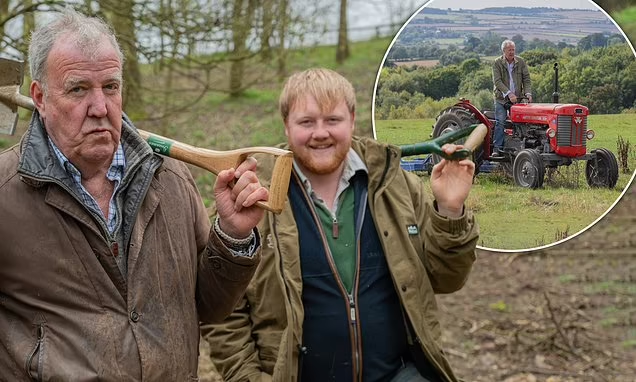
A Glimpse Into the Reality of Farming Through Clarkson’s Eyes
What Clarkson’s series does so well is highlight the tension between government policy and the realities of rural life. His witty, often irreverent, take on farming serves as a platform for viewers to better understand the struggles and triumphs of the farming community. While his journey has not been without its missteps and frustrations, Clarkson’s commitment to learning and his dedication to the farming community have made Clarkson’s Farm not only entertaining but also an eye-opener.
Clarkson’s foray into farming is not just about showcasing the highs and lows of rural life; it’s a wake-up call to the broader public about the challenges farmers face. His journey raises important questions about the future of farming, food security, and the impact of government regulations. As he continues to learn and grow into the role of a farmer, Clarkson’s story is one that resonates with many—both in the farming community and beyond—and serves as a reminder of the importance of supporting local agriculture.
The series may be humorous and light-hearted at times, but it provides a much-needed glimpse into the complexities of farming in modern Britain. And while Clarkson may not have all the answers, his efforts to learn, understand, and advocate for farmers have already made a significant impact. In an era where farming is under constant pressure, Clarkson’s voice is a powerful reminder that it is time for the industry to be taken seriously—and for its future to be safeguarded.