Inside the Abyss: Josh Gates Uncovers Secret Nazi Tunnels in Poland
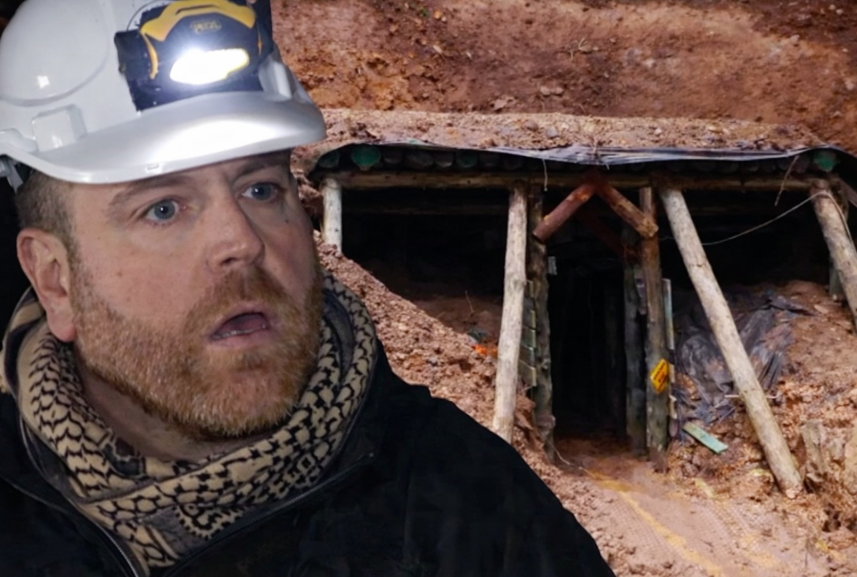
History has a way of burying its darkest secrets, but in the small town of Lubań, Poland, those secrets are being pulled back into the light. In a gripping episode of Expedition Unknown, host Josh Gates joins a team of dedicated researchers to explore a massive, forgotten underground tunnel system carved through an extinct volcano by the Nazis during World War II.
A Modern Discovery of a Dark Past
The expedition begins with a high-tech “snake cam” lowered into a narrow borehole. For Sebastian, the lead researcher on the project, this moment is the culmination of years of work. As the camera descends, it reveals a breathtaking sight: a massive, cavernous tunnel, complete with original railroad tracks and abandoned mining carts. This visual confirmation proves that a long-rumored Nazi map of the area was not just a myth—it was a blueprint for a subterranean fortress.
The scale of the project is staggering. Sebastian’s team has worked non-stop in three shifts a day just to gain access to the main artery of the complex. To enter, they must remove a “buffer” wall—a 30-foot-thick barricade of stacked stones intentionally placed by the Nazis to seal the tunnel’s contents from the world.
Stepping Into a Frozen Moment
As Josh Gates steps through the breached wall, he enters a space that has been frozen in time for over 80 years. The air is damp, the ground is muddy, and the threat of collapse is ever-present as the original wooden supports rot away.
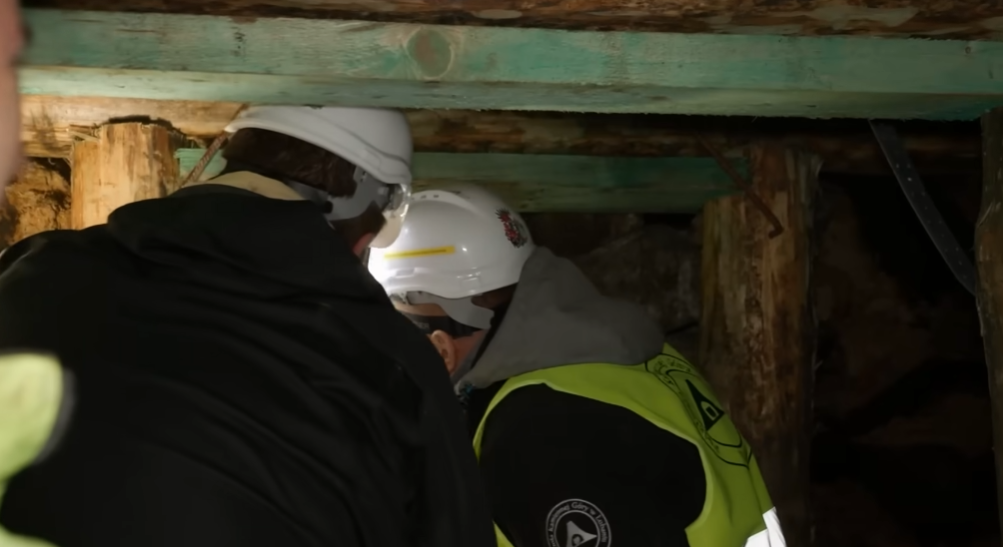
The tunnel is a marvel of brutal engineering. The Nazis bored through solid basalt—one of the hardest rocks on earth—to create this massive intersection. Strewn across the floor are tools left exactly where they were dropped: pickaxes leaning against walls and drill bits lying in the mud. Gates notes the eerie atmosphere, remarking that it feels as though the workers simply vanished mid-shift.
The Human Cost of Secret Projects
While the engineering is impressive, the reality of the tunnel’s construction is chilling. During World War II, Germany established over 450 forced labor and extermination camps in Poland. The Lubań complex was almost certainly built using slave labor from a nearby forgotten camp.
“This is a literal scar in the countryside of Poland,” Gates observes. The absence of personal items among the tools suggests a workforce that owned nothing—prisoners who were forced to toil in the darkness to support the Third Reich’s failing war effort.
Unsolved Mysteries and Dangerous Dead Ends
Despite having a map, the team discovers that the tunnels don’t always go where they are supposed to. At a major four-way intersection, the map’s accuracy begins to fail, suggesting secret chambers or unfinished deviations that were never recorded.
The exploration reaches a perilous climax at a dead-end where fresh drill marks and discarded bits indicate the workers were pushing further into the rock until the very end. However, massive cracks in the ceiling signify that the mountain is reclaiming the space. Every second spent underground is a calculated risk against a billion pounds of basalt.
A Light at the End of the Tunnel
For the people of Lubań, these tunnels are more than just an archaeological site; they are a tangible link to a dark chapter of their history. Sebastian hopes to eventually turn the complex into a museum, transforming a site of forced labor into a place of education and remembrance.
As Josh Gates emerges back into the sunlight, the full picture of the Lubań complex remains incomplete. With a radar station and a weapons factory still to be fully excavated, the secrets of the Third Reich’s underground world are only beginning to be revealed.