CLONDYKE CRISIS: Mass Crew Defection Triggers Operational Crisis Between Beets and Schnabel Syndicates
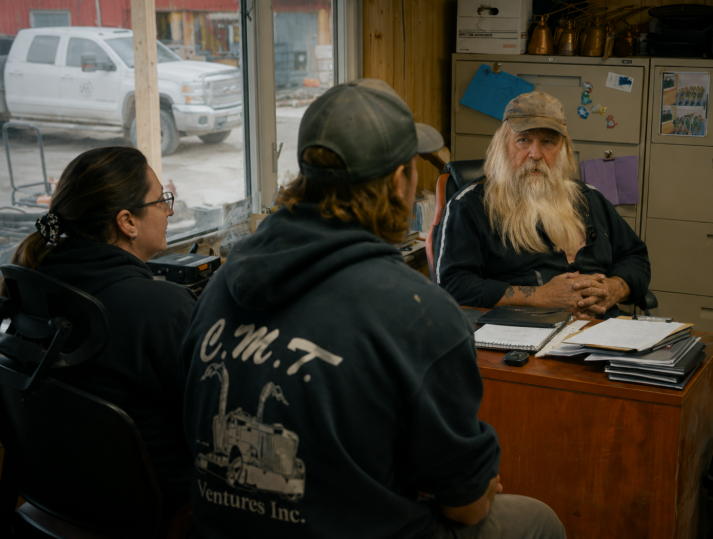
A bitter human resources cold war has officially erupted across the frozen placer claims of the Klondike, pitting the legendary “King of the Klondike” Tony Beets against his primary billionaire rival, Parker Schnabel. In an unprecedented logistical mutiny, seven of Beets’ elite, highly specialized heavy equipment operators—including veteran hand Jacob—abruptly walked off the Paradise Hill claim in the middle of the night, reporting directly to the front lines of Schnabel’s rapidly expanding Indian River operation.
The mass exodus has exposed a glaring cultural divide between the two mining syndicates. Defecting operators openly cited the severe psychological strain of working under the volatile, notoriously aggressive management style of Beets, contrasting it with the structured, highly professional environment cultivated by the younger Schnabel.
“It’s a little weird to hear ‘please’ and ‘thank you’ all the time rather than somebody that’s just been called a [expletive] at 7:30 in the morning,” one defecting operator remarked from the safety of Schnabel’s claim. “When you compare to Tony Beets, it’s like he’s on a very, very far end of a spectrum in terms of how you treat people.”
Stagnation Breeds Resentment
While the influx of veteran operators has drastically accelerated Schnabel’s daily haul capacity, it has triggered unexpected friction within his existing core workforce. Loyal, long-term Schnabel employees expressed immediate frustration that the Beets camp refugees were instantly granted command of premier heavy machinery, effectively bypassing internal seniority lines.

“It definitely annoys me hiring all these new people and they just come and get to run whatever piece of equipment they want,” an anonymous veteran crew member complained. “But the people that have been here a while are just kind of stuck where they are. Poor Evan has been working here for years and he knows how to run a hoe, but yet they keep him still running a plant, which I think is bull.”
Disaster at Paradise Hill
Back at Paradise Hill, a defiant Beets publicly dismissed the defections, labeling the departed crew members “weasels who can’t tough it out.” However, the severe labor shortage immediately forced the multi-millionaire patriarch out of his command center and directly into the dirt to keep his $16 million seasonal operation afloat.
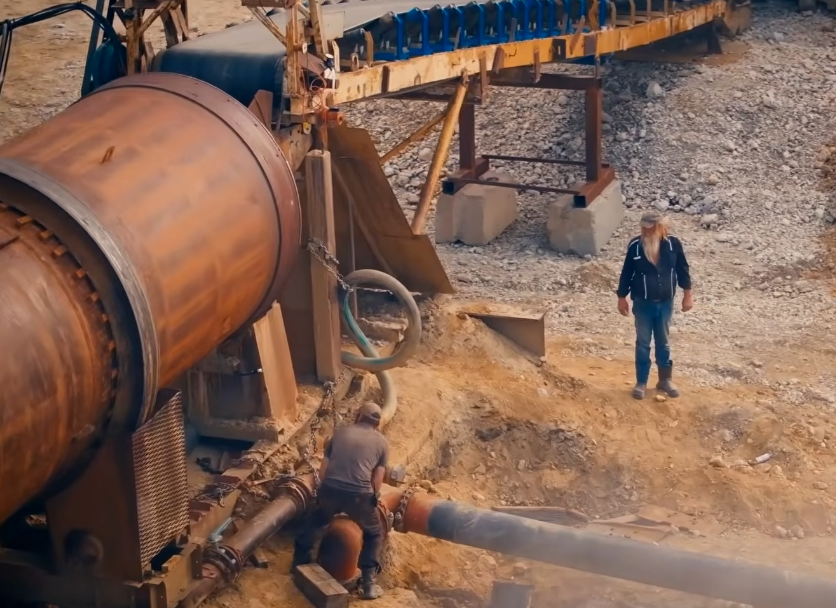
The labor deficit proved catastrophic at the Paradise Hill trommel plant. Tasked with running the massive “Slucifer” and the new $1 million “Findal” plant simultaneously within a 46-acre cut, Beets’ remaining, highly inexperienced skeleton crew committed a series of devastating mechanical blunders.

During the inaugural seasonal startup, site supervisor Cousin Mike failed to properly monitor the pre-wash water infrastructure. Operating with zero water pressure, dry pay dirt instantly backed up into the trommel, completely burying the main feed conveyor belt. Upon inspecting the structural failure, an incensed Beets discovered that the crew had neglected to install six essential support rollers beneath the belt, allowing the heavy material to pinch and stall the motor, while critical upper and bottom bearings had been left completely ungreased.
“She’s your party, young fella,” Beets barked at his supervisor before retreating to Indian River. “I can’t stand looking at them. This is about time that we get going around there.”
Schnabel’s $750,000 Stockpile Gamble
Despite winning the recruitment war, Schnabel is facing an existential crisis of his own as the brutal sub-zero winter freeze looms. With over 300,000 cubic yards of high-grade pay dirt still trapped in the Golden Mile cut, the operation hit a severe logistical bottleneck: crews could not strip the next phase of overburden because there was physically nowhere to dump the waste material.
In a high-stakes executive gamble, Schnabel ordered site supervisor Tyson Lee to completely shut down both of the operation’s premier wash plants—Slucifer and Big Red. The controversial operational halt will cost the company an estimated $750,000 in lost gold production for every week the plants sit idle.
The entire plant crew was immediately reassigned to operate an emergency armada of haul trucks, racing to move the remaining 300,000 yards of pay dirt into two massive, unprecedented stockpiles. By completely emptying the Golden Mile pit by the end of the week, Schnabel intends to backfill the mined-out cut with fresh overburden stripped from adjacent ground, securing a lucrative head start for the 2027 mining season.

“It sucks doing that, because when have we not sluiced something we pulled out of a pit?” a reluctant Tyson Lee remarked.
“I know, but when have we had a pit that needed to get stripped into and we didn’t get the pay out of it? That’s a bigger problem,” Schnabel countered. “I really don’t like [screwing] over our future selves. Much rather the present than the future.”
A Depressing Gold Room Ledger
The severe economic reality of the strategic plant shutdown manifested during the weekly gold weigh-in alongside veteran gold room technician Chris Doumitt. With two primary plants offline for the majority of the week, the company recorded its worst financial performance of the season, marking the third consecutive week of falling yields.
Weekly Cleanup Tally
The Golden Mile: 53.65 ounces (Down from a 240-ounce average)
Bridge Cut (Plant Bob): 129.05 ounces (Down from a 156-ounce average)
Rock Sand: 123.55 ounces (Slight increase from 76 ounces)
Total Weekly Yield: 306.25 ounces (Valued at $1,071,000)
While the weekly totals left the management team visibly depressed, the operation officially crossed the critical 7,000-ounce seasonal milestone, bringing the current running total to 7,048.55 ounces. With the industrial stockpiling offensive successfully cleared, Schnabel is banking on an unseasonably warm autumn to fire the plants back up and recoup his short-term losses on the back end.