Crisis and Salvation in the Gold Rush: Rick Ness Finds a Ray of Hope in Parker Schnabel
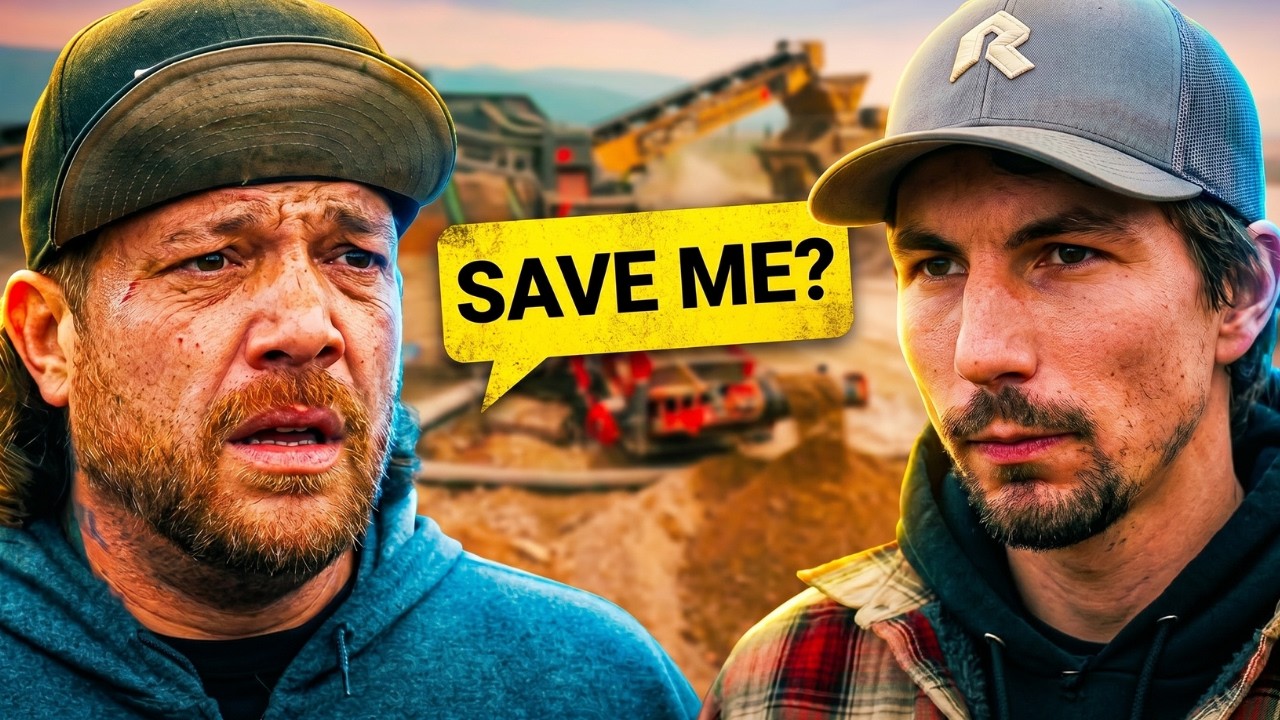
The unforgiving Yukon landscape has once again tested the mettle of miners on Gold Rush, and this season, Rick Ness faced a challenge that threatened to derail everything he had worked toward. After nearly two months of intense labor and close to a million dollars invested in the Valhalla cut, Ness and his team hit a massive layer of clay that blocked access to the gold-rich pay dirt. What began as a high-stakes gamble to secure a record season quickly turned into a season-defining crisis. With winter approaching and equipment failing, the future of Ness’s operation hung by a thread.
The Valhalla cut had been a promising opportunity to transform Ness’s season. However, after relentless work, the discovery of thick clay made progress virtually impossible. The physical and financial toll was immediate: fuel costs skyrocketed, machinery suffered wear and tear, and precious days slipped away under the constant pressure of the Yukon sun. Facing the reality of a blocked cut, Rick was forced to make the gut-wrenching decision to abandon the site. The setback not only jeopardized his seasonal goals but also raised the very real possibility that his operation might need to be sold to survive.
With Valhalla behind him, Rick pivoted back to a familiar site: Vegas Valley, known from the previous year’s $2.1 million haul. Yet even this site came with its own set of nightmares. Permafrost walls threatened to collapse at any moment, and stabilizing the terrain required painstaking labor. As if that were not enough, his aging excavator finally failed when the bucket tore apart against the frozen ground. Without a functioning bucket, the team could not safely continue excavation. At this point, the season appeared all but lost unless a replacement could be found immediately.
In a defining moment, Rick Ness turned to an old ally: Parker Schnabel. Visiting Parker’s massive Hunker Creek operation, Rick was reminded of the scale, efficiency, and success possible in the Klondike. Parker, who runs one of the largest mining operations in the Yukon, was in the middle of a season that included four active wash plants, multiple D11 bulldozers, and a nonstop flow of heavy equipment. Despite the stark contrast between Parker’s empire and Rick’s struggling operation, the meeting proved to be more than a simple equipment transaction; it became a lifeline and a source of renewed determination.
After searching through Parker’s yard, the two miners located a worn but usable excavator bucket. Parker joked about charging Rick $10,000, but ultimately agreed to sell it for $5,000. The simple handshake sealed more than a business deal—it represented hope, support, and the enduring camaraderie that defines the Yukon gold mining community. For Rick, the replacement bucket offered a chance not only to salvage the season but to regain confidence and momentum after a period of crushing setbacks.
This episode in Rick’s season also highlighted the broader realities of gold mining in the Klondike. Even the most skilled and experienced miners operate under narrow margins for error. A single miscalculation or equipment failure can have cascading effects, putting months of effort and hundreds of thousands of dollars at risk. For Ness, the Valhalla cut was more than just a missed opportunity—it was a stark reminder that success in the Yukon requires constant adaptation, careful planning, and sometimes, a little help from trusted allies.
Beyond the immediate operational challenges, the story underscores the emotional and psychological weight of the mining profession. Rick Ness has consistently demonstrated resilience through injuries, equipment failures, and financial strain, yet even he confronted the possibility of stepping away from mining entirely. The conversation with Parker revealed the human side of the operation: exhaustion, doubt, and the delicate balance between ambition and sustainability. Their exchange also emphasized that the pursuit of gold is inseparable from identity and personal investment for miners in the Klondike.
Looking ahead, the replacement of the excavator bucket sets the stage for a critical recovery phase. Rick and his team must stabilize Vegas Valley, navigate the challenges of permafrost, and carefully plan each move to make up for lost time. Analysts predict that the lessons from Valhalla—both the risks of overextension and the value of strong alliances—will influence decision-making throughout the remainder of the season. Observers will be watching closely to see how quickly the crew regains operational efficiency and whether the momentum from this lifeline can translate into a successful season.
The narrative also offers a broader lesson about relationships in the gold fields. While machinery, claims, and strategy are essential, the human connections that sustain operations are just as critical. Parker Schnabel’s willingness to assist Rick exemplifies the sense of community and mutual respect among seasoned miners. It demonstrates that even in a highly competitive environment, collaboration and trust can make the difference between failure and recovery.
In conclusion, Rick Ness’s season illustrates both the perils and resilience inherent in Klondike gold mining. From the collapse of Valhalla to the lifeline provided by Parker Schnabel, the journey has been a dramatic testament to endurance, skill, and human connection. While the threat of financial and operational failure loomed large, the intervention allowed Ness to continue his pursuit of gold, underscoring that in the Yukon, success is as much about relationships and resourcefulness as it is about the ore itself. For viewers, the season provides a vivid illustration of the highs, lows, and relentless challenges of modern gold mining, reminding everyone that in the Klondike, perseverance can turn near defeat into a renewed fight for survival.