Parker Schnabel Deploys Massive Equipment as His Season Takes an Unexpected Turn
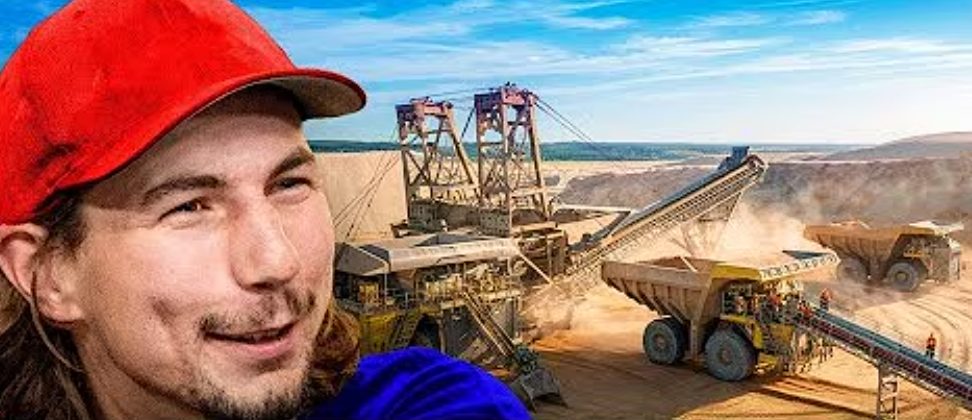
Parker Schnabel is facing one of the most punishing seasons of his mining career, as relentless mechanical failures, logistical missteps, and declining gold yields threaten to derail his ambitious target of 8,000 ounces. What began as an optimistic push toward 10,000 ounces has now turned into a season defined by constant firefighting—and the pressure is only building.
From the outset, Schnabel’s operation has been plagued by inefficiencies. Long haul distances, poorly placed wash plants, and bottlenecks in pay-dirt transport have forced the crew to work non-stop for four straight months. His Dominion Creek claims, once hailed as a potential gold powerhouse, have produced results that are consistent—but consistently poor.
To compensate, Parker made a bold move early in the season: introducing two mammoth A60 rock trucks capable of moving nearly double the dirt of standard haulers. These giant machines give his team the ability to move up to 600 yards of pay per hour—an essential boost if he hopes to maintain production levels. But with increased power comes increased risk. Running such massive equipment at full capacity means any breakdown could instantly shut down an entire wash plant.
And that is exactly what happened.
High Stakes at the Long Cut
At the long cut, where enormous volumes of downstream material must be moved to keep operations steady, 22-year-old greenhorn James CTS found himself behind the wheel of one of the A60s. Eager to prove himself, he quickly settled into his role—until an unexpected alarm echoed through the truck’s cabin.
Uncertain of the issue, James radioed foreman Mitch, who was already balancing an overloaded schedule. As James attempted to reposition the truck, multiple error codes lit up the dashboard. Moments later, the cause became clear: the companion flange connecting the drive shaft to the rear wheels had snapped. The damage cascaded into the brake lines and hydraulic hoses, immobilizing the 60-ton hauler with a full load of pay dirt still in the bed.
With no spare trucks available—and Parker refusing to pull resources from other sites—the entire operation ground to a halt.

Emergency Repairs Under Intense Pressure
Lead mechanic Taylor immediately took charge, racing against time to unload the dirt and begin repairs. Releasing 60 tons of material from a damaged hauler is dangerous work. One wrong move could cause a catastrophic collapse. Tensions flared, and at one point a frustrated mechanic snapped at Mitch, telling him to grab a wrench if he wanted the job done faster.
The mechanical team replaced hydraulic hoses, repaired brake lines, rewired electrical connections, and painstakingly mounted a replacement drive shaft. Every step required precision. A misaligned component could destroy the machine the moment it moved.
Remarkably, within six grueling hours, the massive A60 was brought back to life. Mitch immediately put the truck back into the rotation, hauling pay dirt to revive the stalled wash plant. But the cost of the breakdown had already rippled through the operation.
Production Takes a Major Hit
The truck failure forced Parker to make a difficult decision: temporarily shutting down one wash plant. This meant losing the ability to process 300 tons of pay dirt per hour—a devastating blow in the middle of an already underperforming season. As Parker noted, “We can’t keep up with only one truck here. Let her run out of dirt, and turn her off.”
By week’s end, the impact became clear in the gold room. Cleanout numbers fell below expectations. Instead of the triple-digit results the team desperately hoped for, the total came in underwhelming—and worse, it continued a downward trend from the previous week. With the season now at its halfway point, the crew has recovered just over 4,175 ounces—barely half of their reduced 8,000-ounce target.
Two consecutive weeks of declining production is a warning sign Parker cannot afford to ignore.
The Gamble That Could Break the Season
Schnabel’s strategy of overloading his A60 rock trucks—ignoring manufacturer limits and his father’s long-standing advice—has generated short-term gains but long-term consequences. The catastrophic breakdown serves as a stark reminder of the risks involved in pushing machinery beyond its limits.
Every hour a truck is down means lost dirt, lost processing time, and lost gold. The financial cost goes beyond repairs—downtime consumes fuel, labor hours, and precious working season days. With only a limited crew available and two wash plants currently carrying the load, the operation is stretched thin. Any additional failure could trigger a chain reaction of shutdowns.
Now the question becomes: Will Parker adjust his strategy—or continue pushing his equipment and crew to the edge?

The Road Ahead: A Race Against Time
As Parker bagged the gold after another disappointing cleanup, the message was clear: production must increase immediately. With thousands of ounces still needed and the season slipping away, every hour of uptime matters.
The crew returns to work with renewed urgency, fully aware that another breakdown could permanently derail their hopes of reaching 8,000 ounces. Equipment must run flawlessly. Hauling must stay continuous. And gold yields must improve.
The fight for gold is far from over—but the window for recovery is narrowing. For Parker Schnabel, the road ahead will test not only his equipment but his leadership, strategy, and ability to adapt under pressure.