Parker Schnabel’s Biggest Gold Find EVER in Alaska!
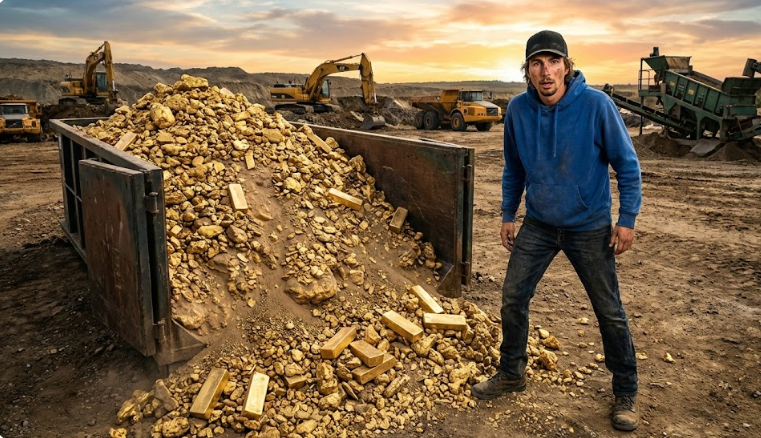
For years, Parker Schnabel has been known as one of the most ambitious operators on Gold Rush. This season, however, his operation has moved into entirely new territory. What began as a calculated expansion into difficult Alaskan ground has developed into a discovery valued by independent estimates at close to $80 million, a figure that places this find among the most significant ever documented on the programme.
This development is not simply about headline numbers. It reflects a strategic shift in how large-scale placer mining is now being approached in the far north. Schnabel’s decision to pursue a stretch of land long avoided by other miners was rooted in data rather than folklore. While the ground carried a reputation as unstable and unforgiving, recent survey work told a different story.
According to those familiar with the operation, Schnabel commissioned a quiet geological assessment using advanced laser-based terrain mapping. The results pointed to the remnants of an ancient waterfall system buried beneath permafrost. In placer mining terms, this is critical. Waterfalls act as natural concentration points, allowing heavy gold to settle over long periods of time. What Schnabel’s models suggested was not scattered pay, but a dense, continuous deposit shaped by thousands of years of natural processes.
Reaching that gold, however, required more than confidence in a computer model. The physical challenge of thawing frozen ground remains one of the most expensive and time-consuming obstacles in northern mining. Schnabel responded by restructuring his operation, splitting crews and machinery between established ground and the new cut. This decision placed enormous pressure on logistics, staffing, and cash flow, particularly early in the season when fuel consumption and equipment wear are at their highest.

At the centre of the operation stood “Big Red,” Schnabel’s custom-built wash plant. Designed to process massive volumes of material, the plant became the backbone of the new site. Its scale also meant that any mechanical interruption carried serious consequences. Early breakdowns brought production to a standstill, underlining a reality often overlooked by viewers: downtime, even measured in hours, can erase weeks of progress.
Once repairs were completed and material began flowing steadily, the character of the ground changed everything. Early cleanups revealed unusually heavy gold lines across the sluice mats, confirming that the geological theory was translating into real recovery. Within days, production levels exceeded expectations, moving from modest returns to outputs that rivalled full-season totals at smaller operations.
From an analytical standpoint, the importance of this discovery extends beyond its size. It demonstrates the growing role of precision surveying and data-driven decision-making in modern placer mining. Schnabel’s approach contrasts sharply with the intuition-based methods used by previous generations. While experience remains essential, technology is increasingly determining where capital and effort are deployed.
The announcement of an $80 million valuation inevitably sparked online debate, including long-standing claims that television productions influence results. Within the mining industry, such suggestions carry little weight. Introducing significant quantities of gold into frozen ground would require coordination, cost, and secrecy on a scale that seasoned operators consider implausible. More importantly, the consistency of recovery, equipment wear patterns, and geological samples align with what would be expected from a genuine high-grade deposit.
What deserves closer examination is the financial reality behind the headline figure. Gross value does not equal personal profit. Royalty agreements with landowners typically remove a substantial percentage before expenses are considered. On top of that come fuel costs, wages for skilled crews, equipment depreciation, environmental remediation, and regulatory compliance. These obligations can reduce net returns dramatically, even in exceptional seasons.
In Schnabel’s case, the discovery may serve an additional purpose beyond immediate recovery. Public confirmation of ground quality can strengthen negotiating positions with partners, lenders, and neighbouring claim holders. In competitive regions, demonstrating proven value can also discourage rival expansion into adjacent areas, protecting long-term access to productive ground.
There is also a cultural dimension. Mining legends often begin with stories of ground others refused to touch. By applying modern analysis to an area steeped in cautionary tales, Schnabel has effectively rewritten that narrative. The site once associated with failure is now being discussed as a cornerstone of future operations.
As the season continues, the key question will not be how much gold remains, but how sustainably it can be extracted. Permafrost conditions, seasonal limits, and regulatory oversight will shape what is achievable year over year. If managed carefully, this discovery could support production well beyond a single season, offering stability in an industry known for volatility.
What this moment ultimately represents is evolution. Gold mining, as shown through Gold Rush, is no longer defined solely by endurance and instinct. It is increasingly driven by analysis, calculated expansion, and disciplined execution. Parker Schnabel’s latest success illustrates that transition clearly. Whether this becomes the foundation of a long-term legacy or a single extraordinary chapter will depend on how the operation adapts to the realities that follow a find of this magnitude.