Rick Ness discovers $210 million worth of gold in abandoned mine.
In a bold move that could redefine his career, Gold Rush miner Rick Ness has returned to a long-abandoned Klondike mine that many in the industry had already written off. Once dismissed as depleted ground with declining yields, the site is now at the center of renewed excitement after drilling results revealed gold concentrations far exceeding typical mining averages. What was once considered a dead claim may, in fact, be one of the richest untapped deposits in recent memory.
The mine, shut down roughly 15 to 20 years ago, had previously yielded modest returns, with recovery rates falling to around 0.4 ounces per cubic yard—well below profitable levels. Over time, operations ceased, machinery was left to rust, and the site faded into obscurity. But Rick Ness, known for his persistence and willingness to challenge conventional thinking, saw potential where others did not.
Instead of accepting the site’s reputation, Ness and his team revisited historical geological data, including old drilling records and ancient river mapping. Their attention quickly turned to evidence suggesting the area once sat above a buried river channel—a key geological feature known for trapping gold deposits over millions of years. This theory prompted a major exploration effort, with nearly $500,000 invested into a comprehensive drilling program.
The results were striking. Core samples taken between depths of 90 and 110 feet revealed gold concentrations ranging from 2.5 to 3.5 ounces per cubic yard—figures that are five to seven times higher than the Klondike average. More importantly, the data showed consistency across multiple test holes, suggesting not just a localized pocket but a broader gold-bearing system.
Independent geologists were brought in to verify the findings, conducting advanced testing and analysis. Their conclusion reinforced the initial excitement: the site likely contains an extensive underground pay channel with an estimated 95,000 to 105,000 ounces of gold. At current market prices, that places the potential value between $190 million and $210 million.

However, accessing this gold is far from straightforward. The depth and condition of the site present significant challenges. Old tunnels have weakened over time, structural supports have deteriorated, and underground water pressure poses a constant threat. Engineers warned that without substantial reinforcement, sections of the mine could collapse, potentially halting operations entirely.
To mitigate these risks, Ness committed to a full-scale redevelopment. Steel reinforcements, timber supports, and concrete linings were installed across critical areas, adding nearly $1 million to the project’s cost. High-capacity water pumps capable of removing thousands of gallons per hour were also deployed to manage potential flooding. These upgrades, while necessary, significantly increased the financial pressure on the operation.
The total startup investment quickly climbed to between $6 million and $8 million. Daily operating costs now range from $40,000 to $60,000, driven by fuel consumption, labor wages, equipment maintenance, and logistics. With such high expenses, the margin for error is extremely narrow. If the gold fails to meet expectations, the financial consequences could be severe.
Initial production results, however, have provided encouraging signs. After several days of processing, the team completed a major cleanup that yielded between 280 and 320 ounces of gold—equivalent to roughly $600,000. This single run covered multiple days of operating costs and confirmed that the high-grade material identified in drilling does exist in the ground.
As operations continued, production levels increased steadily. Daily recovery soon reached between 350 and 450 ounces, significantly boosting confidence across the site. In response, Ness made the decision to expand operations further, introducing a second wash plant and increasing the fleet of haul trucks to accelerate material movement. The goal was clear: maximize output while the ground continues to perform.
Yet despite the strong early returns, uncertainty remains. Mining history is filled with examples of promising deposits that diminish quickly as excavation progresses. To address this, Ness has pushed for deeper drilling, extending exploration down to 120–140 feet. Some of these deeper samples have continued to show strong gold values, suggesting the pay channel may extend even further.
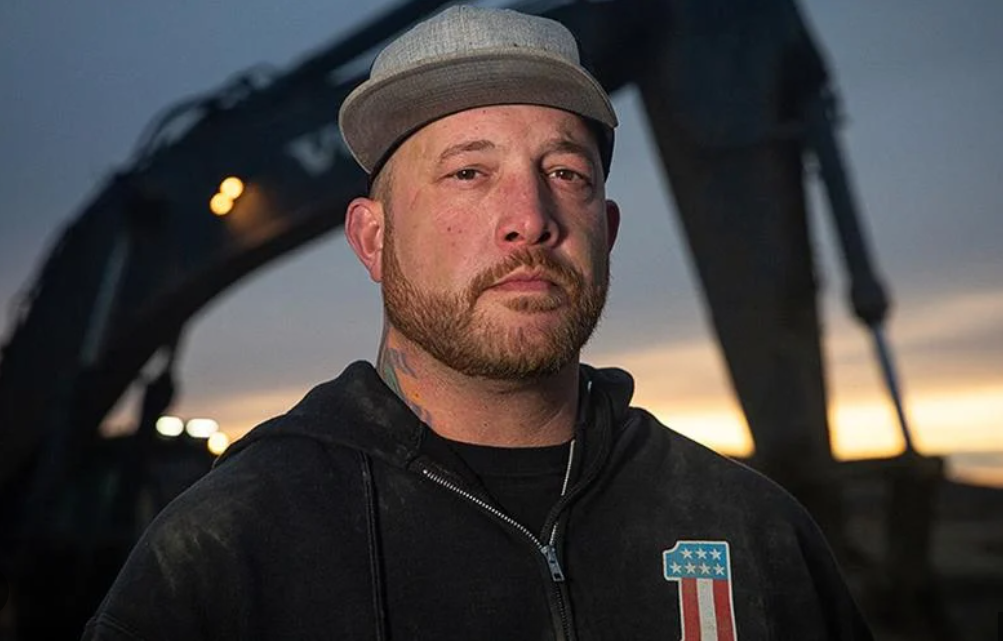
If confirmed, this would transform the operation from a short-term opportunity into a long-term production site with substantial reserves. But if the gold begins to taper off, the aggressive expansion could become a costly miscalculation.
For now, the operation continues at full pace, with crews working around the clock to extract as much material as possible. The atmosphere on-site has shifted from cautious optimism to focused determination. What began as a risky return to forgotten ground is now shaping into one of the most closely watched developments in recent Gold Rush history.
Whether this site ultimately delivers on its full potential remains to be seen. But one thing is certain: Rick Ness has once again demonstrated a willingness to take calculated risks in pursuit of something bigger. And in the unpredictable world of gold mining, that mindset often makes all the difference.