Rick Ness’s spectacular return to Alaska: rising from disaster and finding $180 million worth of gold!

Rick Ness has built his Gold Rush reputation on resilience, but this season in Alaska may become the defining test of his mining career. After a disastrous start marked by rising costs, low gold recovery, equipment trouble, and a major cut collapse, Ness appeared to be heading toward one of the most difficult seasons he had ever faced. Yet, in classic Gold Rush fashion, the story has shifted from near failure to a possible career-changing breakthrough.
From an analyst’s perspective, the most compelling part of Rick’s season is not simply the gold itself. It is the decision-making under pressure. At a point when many mine bosses might have reduced losses and walked away, Rick chose to pursue deeper ground that earlier drilling reports suggested could contain richer pay. That decision may now be turning his operation into one of the most closely watched comebacks in recent Gold Rush history.
The season began with the numbers working against him. Reports from the operation suggested daily running costs of roughly $25,000 to $30,000. That kind of burn rate is severe for any independent miner, especially when gold recovery is coming in far below projections. Fuel, wages, repairs, pumps, haul trucks, loaders, and wash plant maintenance all create a constant financial drain. In mining, hope alone does not keep a camp alive. Gold has to come in fast enough to justify every hour the machines are running.
Rick’s early results did not do that. The upper ground failed to deliver the volume his team needed, and morale began to slip. Crew confidence is often an overlooked factor on Gold Rush, but it can be just as important as machinery. When workers begin to doubt the ground, the leadership, or the plan, productivity suffers. Every breakdown feels bigger. Every delay feels heavier. For Rick, the early part of the season was not just a fight against Alaska’s frozen ground. It was a fight to keep belief alive inside his own camp.
Then came the cut collapse. A muddy wall reportedly close to 40 feet high gave way, trapping equipment, causing flooding, and forcing operations to halt. Early estimates placed the financial damage at more than $2 million. Even if that figure includes lost production and equipment disruption rather than direct repair costs alone, the impact was enormous. In a short mining season, hours matter. A full-site shutdown can change the entire financial outlook.
The collapse also raised a more serious question: was the ground too unstable to keep chasing? In Alaska, deep mining is expensive and dangerous. Water pockets, soft mud, frozen layers, and unstable walls can create conditions where even experienced crews must move carefully. Rick’s choice to go deeper after such a setback therefore carried major operational risk. But it also made sense from a strategic standpoint. If the shallow ground was not paying, staying there would only extend the loss.
The deeper zone, reportedly between 85 and 100 feet, became Rick’s final major opportunity. Old drilling data had suggested unusually strong gold readings at those depths. That type of information can be powerful, but it is never a guarantee. Drill results give miners a window into the ground, not a full picture. The real test comes when the pay dirt reaches the wash plant.
When Rick’s team began working the deeper material, the first signs were encouraging. Core samples reportedly showed heavier pay dirt, repeated gold traces, and improved recovery compared with earlier cuts. The most important detail was consistency. A single strong pan or isolated pocket can mislead a miner. But when multiple drill points begin showing similar pay characteristics, the possibility of a larger gold-bearing system becomes much more credible.
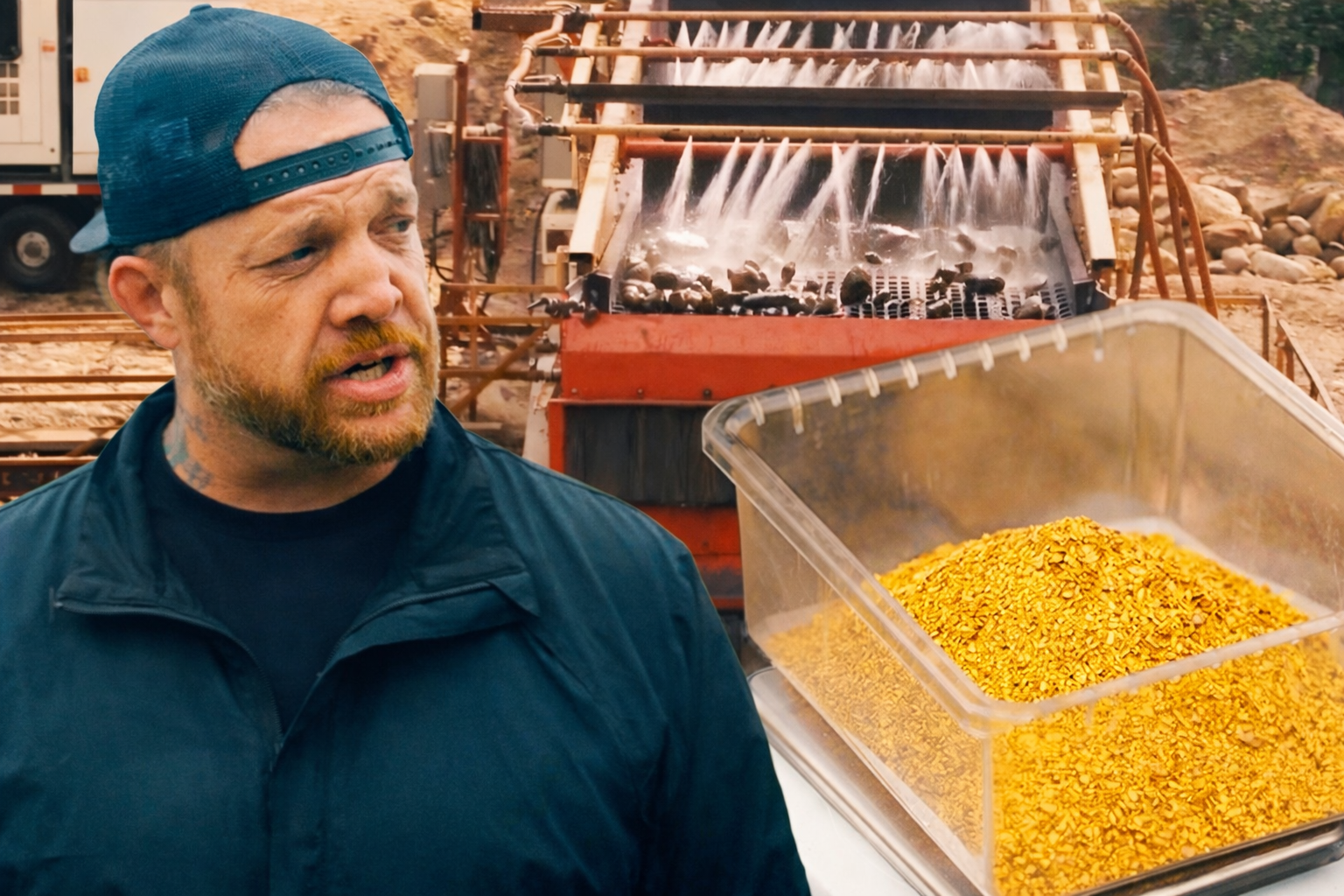
The first major cleanup changed the mood of the operation. Gold recovery reportedly came in far above projections, with trays filling quickly and crew members checking the numbers more than once. For Rick, that moment would have carried more than financial meaning. It would have validated the decision to keep going when the season appeared to be slipping away. In Gold Rush storytelling terms, this is the precise turning point producers look for: a mine boss pushed to the edge, then rewarded for taking a difficult path.
The bigger question is whether Rick has found one rich section or something much larger. Early projections mentioned a potential underground gold system worth between $150 million and $180 million. Such figures should always be treated carefully, because projected ground value is not the same as recovered profit. It depends on how much of the gold can be mined safely, how consistent the grade remains, how much stripping is required, and whether the equipment can survive the workload.
Still, the repeated high readings across different areas suggest Rick may not be dealing with a one-off pocket. If the deeper pay continues across a wider zone, his operation could shift from short-term survival to multi-season planning. That would change everything. Instead of asking whether Rick can save this year, the conversation becomes whether he has found a long-term foundation for his mining future.
That is likely where future episodes will focus. Viewers can expect more drilling, more testing, and greater pressure on the wash plant. Rick may push toward 24-hour operation if the weather window narrows, but that decision would bring another problem: machine fatigue. Running heavy equipment around the clock increases the chance of hydraulic failures, broken tracks, wash plant jams, and expensive downtime. The gold may be there, but the operation still has to physically extract it.

My prediction is that Rick’s season will become a balancing act between opportunity and control. If he pushes too aggressively, one major equipment failure could erase days of progress. If he moves too cautiously, winter could close in before he fully proves the ground. The smartest move would be to mine the richest confirmed sections while drilling ahead to map next season’s expansion.
For Gold Rush, this storyline gives Rick Ness exactly what he needed: a comeback arc with real operational tension. The accident, the financial pressure, the deeper ground, and the major cleanup all create a narrative that feels both personal and technical. Rick is not simply chasing gold. He is trying to rebuild his credibility as an independent mine boss.
If the deeper signals beyond 120 feet are real, this may only be the beginning. Rick Ness could be standing over the most important ground of his career. But as every Gold Rush fan knows, gold in the ground means nothing until it is safely in the jar.